




01. Edit your form online
Type text, add images, blackout confidential details, add comments, highlights and more.

Type text, add images, blackout confidential details, add comments, highlights and more.

Draw your signature, type it, upload its image, or use your mobile device as a signature pad.

Send it via email, link, or fax. You can also download it, export it or print it out.
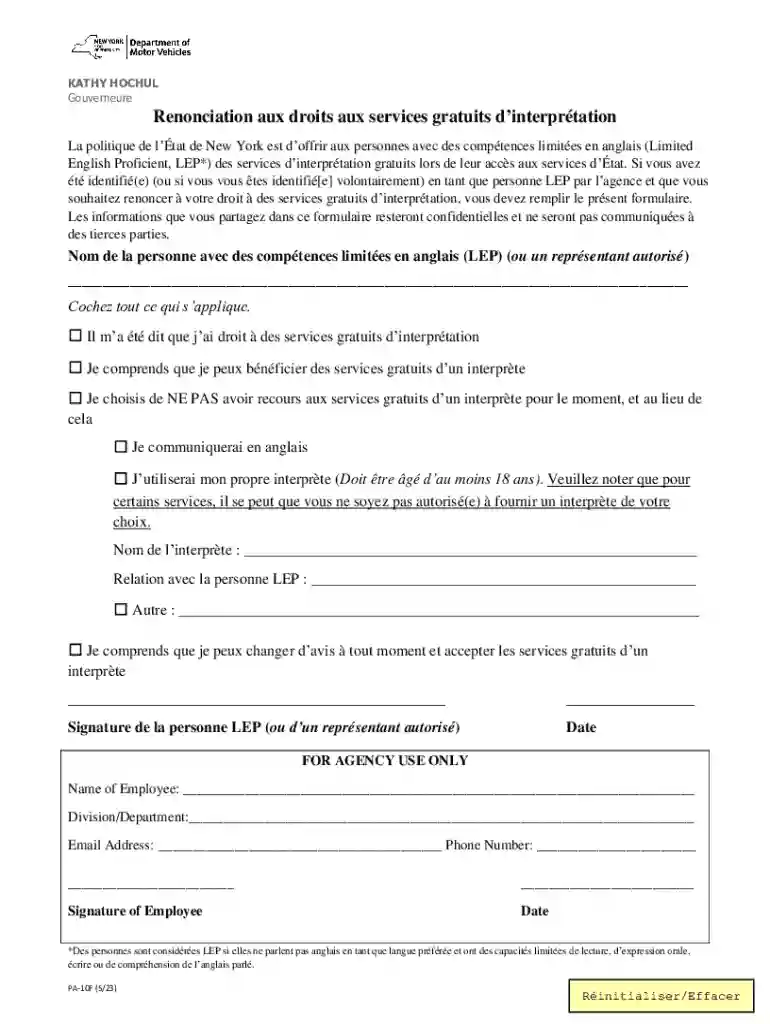
The "Renonciation Aux Droits Aux Services Gratuits D'interprétation" form allows individuals with limited English proficiency (LEP) to voluntarily waive their right to free interpretation services in contexts where such services are usually available to ensure clear communication. The document serves as a formal recognition that the individual either does not require these services or chooses to use an alternative. Understanding its implications is crucial, as it directly impacts the accessibility of information and services.
To effectively utilize the "Renonciation Aux Droits Aux Services Gratuits D'interprétation," the individual, or their authorized representative, must thoroughly review the form to ensure comprehension. Following this, they should accurately complete each section, acknowledging their understanding and intent to waive the provision of interpretation services. This form must be signed and dated to validate the voluntary nature of the waiver. It is then submitted to the relevant entity or agency that provides the interpretation services.
There are specific circumstances in which an individual might choose to waive their rights to free interpretation services, such as:
It's essential to consider these factors carefully before proceeding with the waiver, as the decision could impact the clarity and outcome of communications.
The form is legally binding and should be used in contexts where interpretation services are offered as a complement to services such as healthcare, legal assistance, or public services. It is crucial that the waiver is executed in a manner that reflects true voluntary action and that the individual comprehensively understands the ensuing ramifications.
Each state may have distinct rules regarding the provision and waiver of interpretation services. Individuals considering waiving their rights should review state-specific regulations to ensure compliance and to understand any additional requirements or options available.
At DocHub, your data security is our priority. We follow HIPAA, SOC2, GDPR, and other standards, so you can work on your documents with confidence.


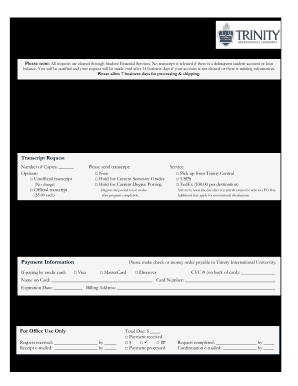
Cochez tout ce qui sapplique : ☐ Il ma t dit que jai droit des services gratuits dinterprtation. ☐ Je comprends que je peux bnficier des services
La garantie concernant ces Services en ligne et/ou le Contenu fourni par le service est offerte en Contrat avec vos droits statutaires qui prvaudront toujours.
Toute personne a le droit, en cas de perscution pour dlits politiques ou pour dlits de droit commun connexes des dlits politiques, de rechercher et de


