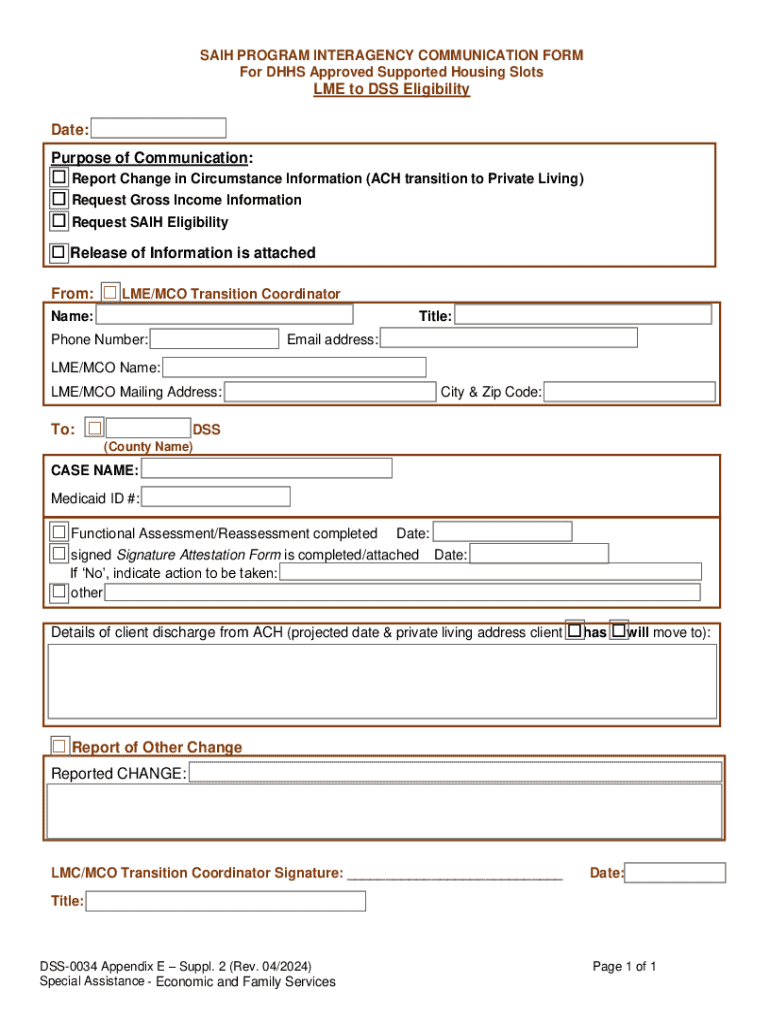







Definition & Purpose of the Saih Program Interagency Communication Form
The Saih Program Interagency Communication Form is a vital instrument used primarily within the supported housing and mental health sectors of the United States. It serves as a structured communication tool that facilitates the coordination between various agencies involved in the Saih Program. Specifically, the form is instrumental for coordinators managing transitions for clients who are shifting circumstances, requesting income information, or assessing eligibility for supported housing slots. The document includes sections dedicated to client details, discharge information, and mandatory signatures, all essential for ensuring compliance and effective communication across agencies.
How to Use the Saih Program Interagency Communication Form
To use the Saih Program Interagency Communication Form effectively, it is crucial to understand its comprehensive structure. Users should:
- Start by accurately filling in the client’s personal details, including their name, contact information, and identification numbers.
- Provide clear details about any changes in circumstances that might impact the client's eligibility or status within the program.
- If needed, accurately request or append income information relevant to the client's current financial situation.
- Ensure that discharge information is precise, detailing the reasons for any transitions and the new placements or services being arranged.
- Acquire all necessary signatures to validate the information provided, ensuring legal compliance and mutual agreement among the agencies involved.
By following these steps, coordinators can ensure that the form functions as intended, facilitating effective interagency communication and decision-making.
Steps to Complete the Saih Program Interagency Communication Form
Completing the Saih Program Interagency Communication Form requires careful attention to detail and procedural adherence:
- Client Information: Begin by entering the client's full name, date of birth, and a unique identifier used within the program.
- Circumstance Update: Document any significant changes in the client’s living situation, income, or support needs.
- Income Verification: Include all necessary income documents or details to support the client's current financial assessment.
- Discharge Details:
- Specify the reason for discharge from any current placement.
- Note any new placements or service referrals.
- Signatures:
- Ensure the client or their legal guardian signs the form.
- Obtain signatures from all involved agency representatives to confirm receipt and agreement of the provided details.
Each section of the form serves a specific purpose, aligning with the document's role in managing client transitions within supported housing frameworks.
Important Terms Related to Saih Program Interagency Communication Form
Understanding key terminology related to the Saih Program Interagency Communication Form is necessary for effective use:
- LME/MCO: Local Management Entities/Managed Care Organizations overseeing mental health services.
- Supported Housing Slots: Designated housing opportunities for eligible individuals within the Saih Program.
- Eligibility Assessment: The process of determining a client’s qualification for program services.
- Discharge Planning: The systematic approach to transitioning clients from one form of support to another.
- Interagency Communication: Collaboration and information exchange among different healthcare and housing agencies involved in the Saih Program.
These terms facilitate a clear understanding of the form’s purpose and functionality.
Legal Use of the Saih Program Interagency Communication Form
The Saih Program Interagency Communication Form must be used in compliance with legal standards governing data privacy and interagency collaboration. It includes measures to:
- Protect client confidentiality under the Health Insurance Portability and Accountability Act (HIPAA).
- Ensure that all personal data is shared only with authorized agencies and individuals.
- Require signed consent from clients or their legal representatives for any amendments or disclosures.
These legal frameworks ensure that the data managed within the form is handled responsibly and ethically.
Key Elements of the Saih Program Interagency Communication Form
Several key elements define the utility and comprehensiveness of the Saih Program Interagency Communication Form:
- Client Information Section: Captures detailed personal data critical for program identification and service provision.
- Circumstance Update: Allows for recording of any changes affecting a client's program participation.
- Discharge and Transition Planning: Ensures seamless movement of clients between services with clear documentation.
- Signatures: Legalizes the information provided and agreements made, confirming the authenticity of data.
- Communication Log: May include sections that facilitate ongoing tracking of client interactions and decisions made among agencies.
These elements collectively inform decisions and coordinate services across the network involved in the program.
Who Typically Uses the Saih Program Interagency Communication Form
The primary users of the Saih Program Interagency Communication Form are professionals within the mental health and housing support sectors:
- LME/MCO Transition Coordinators: Use the form to manage client transitions between different service provisions.
- Supported Housing Managers: Employ the form for allocating housing slots and adjusting client placements.
- Agency Caseworkers: Facilitate communication between agencies and advocate for client needs.
These professionals leverage the form to enhance collaboration and improve service outcomes for clients.


Examples of Using the Saih Program Interagency Communication Form
In practice, the Saih Program Interagency Communication Form is utilized in various scenarios to streamline client care and housing transitions:
- A client experiencing a change in income submits an updated form to reassess their eligibility for continued housing support.
- Upon discharge from a mental health facility, a caseworker uses the form to document the client's new placement in a community residential program.
- An interagency meeting uses the communication form to agree on the next steps for a client's supported housing application.
These examples highlight the form's practical application in enhancing service coordination and ensuring client needs are met efficiently.