Definition & Meaning of Dss-6966
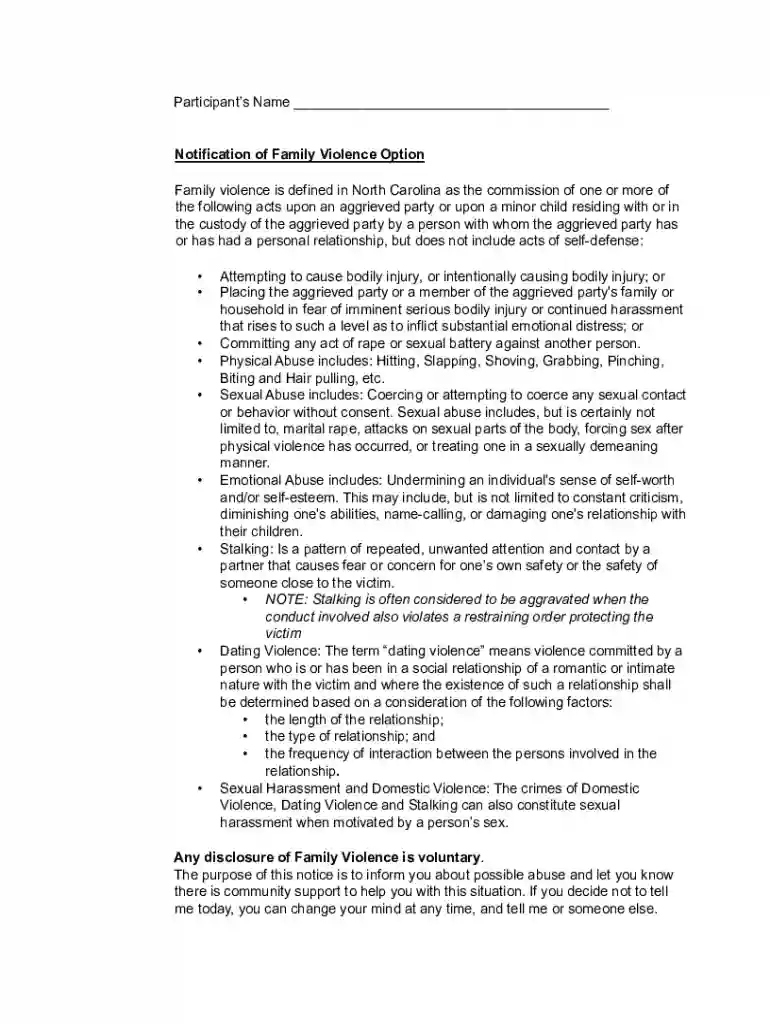
The Dss-6966 form is an official document used for managing detailed procedures related to family violence within North Carolina. This form is instrumental in outlining the various types of abuse, such as physical, sexual, emotional abuse, stalking, and dating violence. Its primary objective is to provide a comprehensive framework that allows for the protection and legal support of victims. It serves as a vital resource for individuals and families seeking to understand their rights and the types of community support available to them in such situations.
How to Use the Dss-6966
To effectively use the Dss-6966 form, follow these steps:
- Identify the Type of Abuse: Determine which category of abuse applies from the options provided, such as emotional or physical abuse.
- Complete the Form: Fill out the sections with pertinent information on the incident, ensuring all fields are addressed to capture the complete situation.
- Consult Legal Assistance: If uncertain about any section of the form, it is advisable to contact a legal expert to ensure accurate and complete information.
- Submit the Form: Submit the completed form to the appropriate local authorities to initiate protective measures or start legal proceedings.
- Keep a Copy for Records: Retain a copy of the completed form for your records and future reference.
How to Obtain the Dss-6966
Obtaining the Dss-6966 form can be accomplished through various means:
- Local Government Offices: Visit your local social services department to request a copy.
- Online Resources: Access the form through official websites that offer downloadable copies for public use.
- Legal Service Providers: Contact local legal aid organizations that may offer the form as part of their support for domestic violence victims.
Steps to Complete the Dss-6966
Completing the Dss-6966 form requires careful attention to detail:
- Personal Identification: Begin by entering your personal details, including full name, address, and contact information.
- Incident Details: Provide a thorough description of the incident, including dates, times, and type of abuse.
- Supporting Information: Attach any evidence or documentation that supports the incident description, such as medical reports or police records.
- Legal Involvement: Indicate any existing legal actions or protective orders in place related to the incident.
- Signature and Date: Conclude by signing and dating the form to verify the accuracy of the information provided.
Key Elements of the Dss-6966
The Dss-6966 form includes several crucial components designed to capture comprehensive information:
- Incident Description: Detailed account of the event(s) including timeframes and circumstances.
- Types of Abuse: Explicit classification of the abuse involved.
- Victim’s Information: Contact and demographic information for the victim.
- Perpetrator Information: Details about the perpetrator, if available.
- Action Sought: What measures or protections the victim is seeking as a result of filing the form.
State-Specific Rules for the Dss-6966
North Carolina has specific legal statutes governing the use of the Dss-6966 form:
- Eligibility: Only residents within North Carolina affected by family violence can use this form.
- Legal Framework: The form is governed by state laws designating specific actions and protections for victims.
- Mandatory Reporting: Certain professionals may be required to report suspected family violence situations when using this form.
Important Terms Related to Dss-6966
Understanding key terms associated with the Dss-6966 is vital:
- Family Violence: Includes a range of abusive behaviors among family members or intimate partners.
- Protective Order: A legal order issued by a court to protect a victim from further harm.
- Legal Declaration: A formal statement submitting true and complete information for legal purposes.
Legal Use of the Dss-6966
The Dss-6966 form serves several legal purposes:
- Documentation: Acts as an official record detailing abuse incidents and supports legal actions.
- Court Proceedings: Used as supporting documentation when pursuing legal protection or filing complaints against the accused.
- Safety Measures: A critical tool for requesting protective measures, such as restraining orders, under state law.
Who Typically Uses the Dss-6966
The Dss-6966 form is primarily used by:

- Victims of Abuse: Individuals experiencing any form of family-related abuse.
- Social Workers and Advocates: Professionals assisting victims in documenting and reporting abuse cases.
- Legal Professionals: Lawyers involved in family law cases where documentation of abuse is necessary.
Examples of Using the Dss-6966
Real-world scenarios where the Dss-6966 form proves essential include:
- Protective Orders: Filing for a restraining order after repeated intimidation by a family or intimate partner.
- Legal Evidence: Using the form to support a case of family violence in court to secure custody of children.
- Community Support: Accessing state-funded resources and support by proving documented abuse through the form.
These blocks provide comprehensive insights into the Dss-6966 form, offering detailed explanations and practical scenarios that underscore its importance and broad applicability in addressing and managing cases of family violence in North Carolina.