







Definition & Meaning
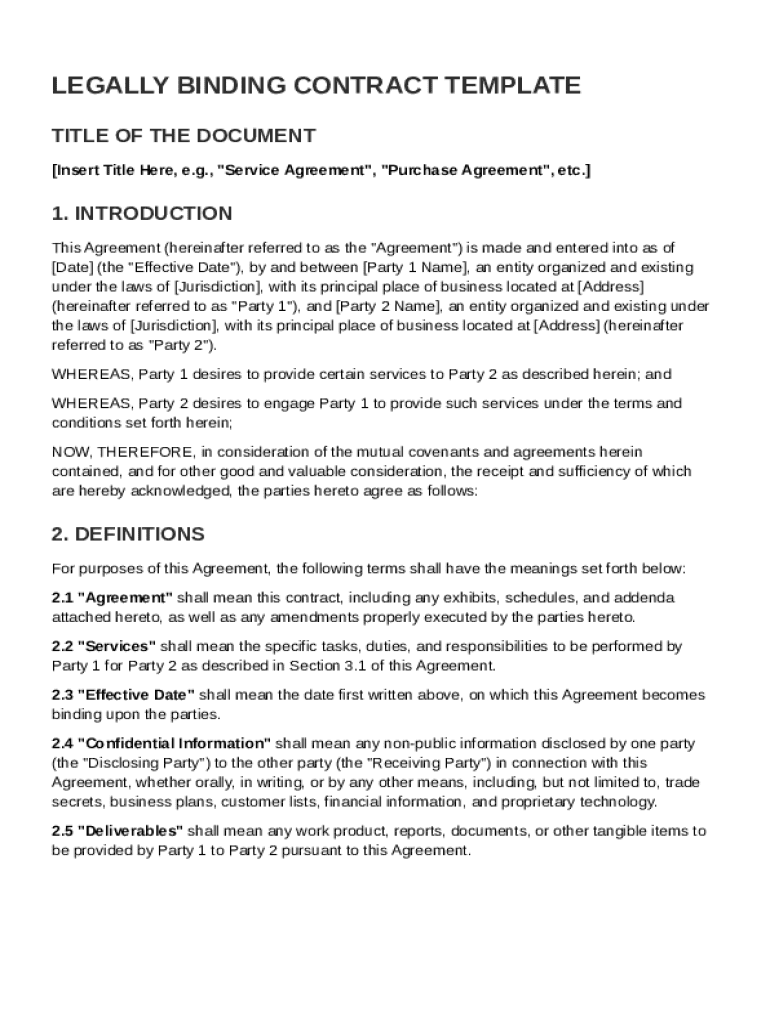
A legally binding contract template serves as a formal framework that outlines terms and conditions agreed upon by two parties, referred to as Party 1 and Party 2. This document typically includes sections such as an introduction, definitions, scope of services, payment terms, confidentiality obligations, and more. Its purpose is to establish clear, enforceable obligations and rights, ensuring that both parties understand their responsibilities. By using a template, users can streamline the process of drafting agreements, reducing time and effort while ensuring that essential legal components are addressed.
Key Elements of the Legally Binding Contract Template
A typical legally binding contract template encompasses several crucial components:
- Introduction: Establishes the parties involved and the purpose of the agreement.
- Definitions: Clarifies key terms used throughout the document to prevent misunderstandings.
- Scope of Services: Details the specific services or products that one party will provide to the other.
- Payment Terms: Outlines payment amounts, schedules, and methods to ensure transparency.
- Confidentiality Obligations: Describes how sensitive information will be protected by both parties.
- Term and Termination: Specifies the duration of the contract and the conditions under which it may be terminated.
- Governing Law: Identifies the jurisdiction’s laws that will govern the contract’s interpretation and enforcement.
- Dispute Resolution Procedures: Provides mechanisms for resolving disagreements, such as mediation or arbitration.
How to Use the Legally Binding Contract Template
To effectively use a legally binding contract template, follow these steps:
- Identify the Parties: Clearly indicate who is involved by their legal names and addresses.
- Customize the Sections: Tailor the template to fit the specific terms and conditions relevant to your agreement.
- Add Specific Details: Include essential details like dates, payment amounts, and deliverables.
- Review and Agree: Have both parties review the document to ensure mutual understanding and agreement.
- Sign the Contract: Each party should sign and date the document, either electronically through platforms like DocHub or on paper.
- Store Safely: Keep digital or physical copies securely for future reference and compliance.
Steps to Complete the Legally Binding Contract Template
Completing a legally binding contract template requires attention to detail and careful coordination between the involved parties:
- Gather Information: Collect all necessary information regarding the services or goods, payment terms, and other pertinent details.
- Draft the Agreement: Use the template to draft a preliminary version of the agreement.
- Consult Legal Advisors: If necessary, seek legal advice to ensure the contract meets all legal requirements and protects your interests.
- Negotiate Terms: Discuss and modify any terms that need adjustment until both parties are satisfied.
- Finalize the Contract: Produce a final version, ensuring all terms are clearly stated and agreed upon.
- Obtain Signatures: Ensure that each party signs the document, indicating their agreement.
- Distribute Copies: Provide copies to all parties involved to ensure everyone has access to the agreed terms.
Legal Use of the Legally Binding Contract Template
Using a legally binding contract template carries several legal implications and benefits:
- Enforceability: The template, once completed and signed, creates obligations that are legally enforceable in a court of law.
- Protection: Safeguards both parties by clearly outlining rights and responsibilities.
- Evidence: Serves as concrete evidence of the agreed terms and conditions should disputes arise.
- Clarity: Reduces ambiguities that may lead to misunderstandings or misinterpretations.
- Compliance: Ensures compliance with relevant legal standards and practices.
Important Terms Related to the Legally Binding Contract Template
Understanding key terms related to a legally binding contract template is essential:
- Party 1 and Party 2: The entities involved in the agreement.
- Consideration: Anything of value exchanged between the parties.
- Offer and Acceptance: The proposal of terms and the agreement to those terms.
- Capacity: The legal ability of parties to enter into a contract.
- Mutual Assent: A mutual agreement on the terms of the contract.
State-Specific Rules for the Legally Binding Contract Template
Legal requirements for contracts can vary by state in the U.S.:
- Jurisdiction: Different states have unique laws governing contract formation and enforcement.
- Specific Clauses: Certain clauses, like non-compete agreements, may be restricted or interpreted differently depending on the state.
- Notarization: Some states require contracts to be notarized for certain types of agreements to be valid.
Examples of Using the Legally Binding Contract Template
Practical examples illustrate the utility of using a legally binding contract template:
- Freelance Services: A freelancer and a client may use a template to formalize agreements concerning deliverables and payment terms.
- Sales Agreements: Businesses can use templates to outline terms related to the sale and delivery of goods.
- Partnerships: Two companies entering a joint venture might use a template to detail shared responsibilities and profits.
These sections combined provide an in-depth exploration of the "Legally Binding Contract Template," offering essential knowledge for users seeking to understand and utilize this valuable legal tool.




