
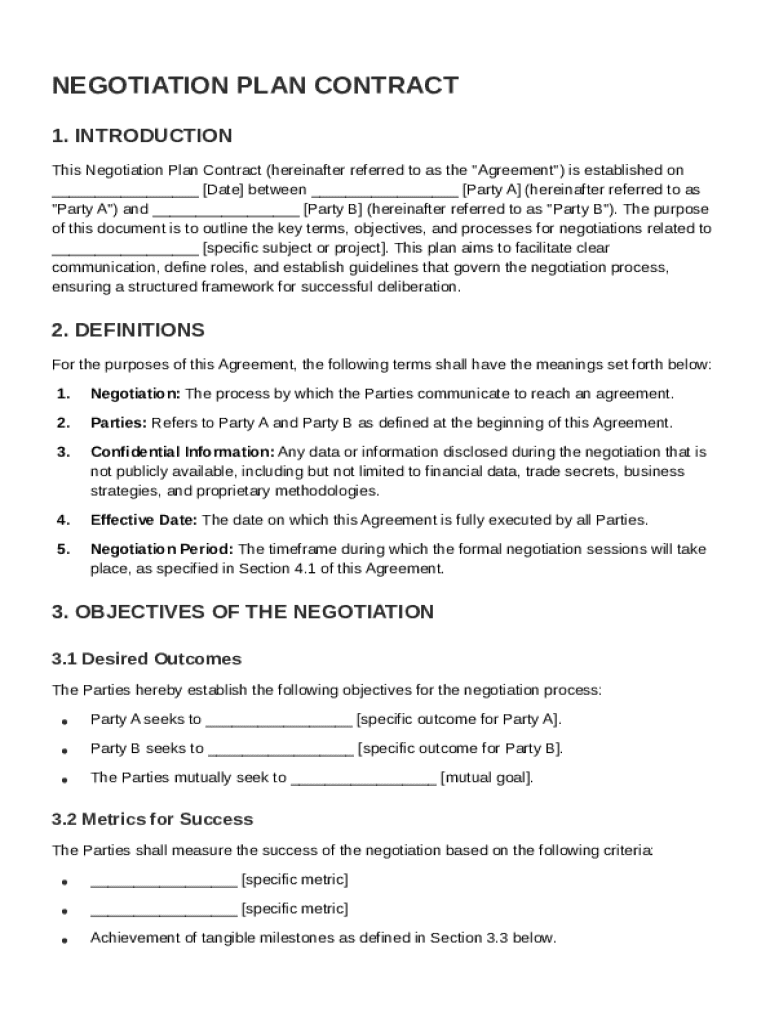







Definition and Meaning
A Negotiation Plan Contract Template serves as a structured outline for negotiations, typically between two parties. It delineates key terms, outlines objectives, and assigns roles and responsibilities. The document specifies the scope of negotiation topics, which can range from pricing and timelines to product specifications. Confidentiality obligations are often a critical aspect, ensuring that sensitive information shared during negotiations is protected. Provisions for conflict resolution and termination further ensure that both parties have a clear understanding of the steps to take should disputes arise. The template aids in facilitating effective communication and structured deliberation, which are essential for achieving mutually beneficial outcomes.
Practical Example and Context
Consider a scenario where two businesses are negotiating a long-term supply contract. The Negotiation Plan Contract Template would include specifics such as delivery schedules, payment terms, and quality standards. By using the template, each party can address these critical areas systematically, reducing the chance of miscommunication. Furthermore, if the negotiations involve international parties, the template can also encompass compliance with cross-border trade regulations, ensuring all legal requirements are met.
Key Elements of the Negotiation Plan Contract Template
The Negotiation Plan Contract Template comprises several vital components that align with its broader objectives.
- Objectives and Goals: Clearly defined goals ensure that all parties are aligned. This could include reaching a consensus on pricing models or finalizing the terms of distribution.
- Role Assignments: Assign roles to negotiation team members, providing clarity on who will handle particular issues, such as financial aspects or technical specifications.
- Timeline for Negotiations: Establish clear timelines to prevent prolonged negotiations and facilitate a timely resolution.
- Confidentiality Clauses: Necessary to protect sensitive information shared between the parties, detailing how data should be handled.
- Conflict Resolution Protocols: Steps for managing any disagreements that may arise during the negotiation process.
Examples of Application
A technology company engaged in a software licensing negotiation might employ this template to outline obligations regarding intellectual property rights, usage limitations, and support services. Once both parties agree to the outlined terms, the chances of disputes are significantly reduced, fostering a collaborative business relationship.
How to Use the Negotiation Plan Contract Template
Effectively using the Negotiation Plan Contract Template involves a series of structured steps.
- Identify Stakeholders: Determine who needs to be involved in the negotiations and their respective roles.
- Customize the Template: Tailor the template to fit the specifics of your negotiation, adjusting terms, and formats as necessary.
- Review Objectives: Outline the desired outcomes for each party, ensuring all interests are documented clearly.
- Draft Initial Terms: Populate the template with proposed terms and generate an initial draft for review.
- Conduct Negotiations: Utilize the structured document as a guide during negotiations, making amendments as needed to reach consensus.
Step-by-Step Implementation
This process can be applied in various situations. For instance, when a nonprofit organization negotiates funding terms with partners, using the template ensures each party's expectations are set clearly at the outset. This structured approach minimizes the risk of future disputes, allowing both entities to focus on their mission objectives.
Who Typically Uses the Negotiation Plan Contract Template
Negotiation Plan Contract Templates are widely used across various sectors. These include:
- Business Executives and CEOs: For complex mergers and acquisitions or strategic alliances.
- Legal Professionals: To ensure all elements of the negotiation comply with legal standards and obligations.
- Project Managers: Who require consensus on project deliverables and resource allocations.
- Sales Teams: Engaging in large-scale deals or partnerships.


Real-World Scenarios
In practice, a real estate developer might use the template to negotiate terms with construction firms, ensuring that timelines, budgets, and quality standards are agreed upon before the project commences. This offers a structured path towards project completion, reducing risks of delays and cost overruns.
Important Terms Related to Negotiation Plan Contract Template
Understanding the terminology within a Negotiation Plan Contract Template is crucial for effective application.
- Scope of Negotiation: Refers to the parameters or topics covered during discussions, such as payment methods or service level agreements.
- Confidentiality Agreement: A clause protecting shared information during the negotiation process.
- Binding Agreement: An agreement that once signed, legally obligates the parties to adhere to the documented terms.
- Mediation and Arbitration: Methods for conflict resolution should disputes arise, offering impartial third-party arbitration.
Clarifying Legal Jargon
Consider a finance company negotiating loan terms with another institution. Familiarity with terms like 'binding agreement' ensures each party understands that once signed, the contract becomes enforceable, providing a legal framework for the transaction.
Legal Use of the Negotiation Plan Contract Template
Legal compliance in using a Negotiation Plan Contract Template is non-negotiable.
- ESIGN Act Compliance: Ensures electronic agreements hold the same legality as paper-based contracts.
- Local and Federal Laws: Customization of the contract to comply with jurisdiction-specific legal standards.
- Signature Legality: Proper and verifiable electronic signatures must be used to validate the contract.
Legal Implications
Take a multinational corporation negotiating cross-border supply terms. They must consider varying legal requirements across different jurisdictions; the template helps in creating a legally binding agreement while maintaining international compliance.
State-Specific Rules for the Negotiation Plan Contract Template
Each state within the U.S. may have specific rules that impact how a Negotiation Plan Contract Template is crafted and interpreted.
- Jurisdiction Variations: Some states might have unique requirements for electronic signatures or confidentiality clauses.
- Tax Implications: Different states impose varying tax rules impacting contract negotiations, particularly those with financial components.
Considerations for Application
Imagine a company headquartered in California negotiating with a firm in Texas. The template might require adjustments to ensure compliance with the California Consumer Privacy Act (CCPA) while aligning with Texas business contract statutes. Understanding regional legal variances helps in mitigating risks associated with non-compliance.
Examples of Using the Negotiation Plan Contract Template
Practical applications of the Negotiation Plan Contract Template highlight its versatility.
- Contractual Agreements between Startups: Establish terms with potential investors, covering funding terms, equity distribution, and exit strategies.
- Manufacturing Agreements: Detail specifications, delivery timelines, and defect resolution processes.
- Marketing Partnerships: Define roles in campaign execution, funding responsibilities, and performance metrics.
Case Study Analysis
A startup tech firm uses the template to establish a marketing partnership with a large media house. By detailing deliverables, financial arrangements, and performance expectations, both entities are aligned from inception, fostering a successful and transparent partnership.




