
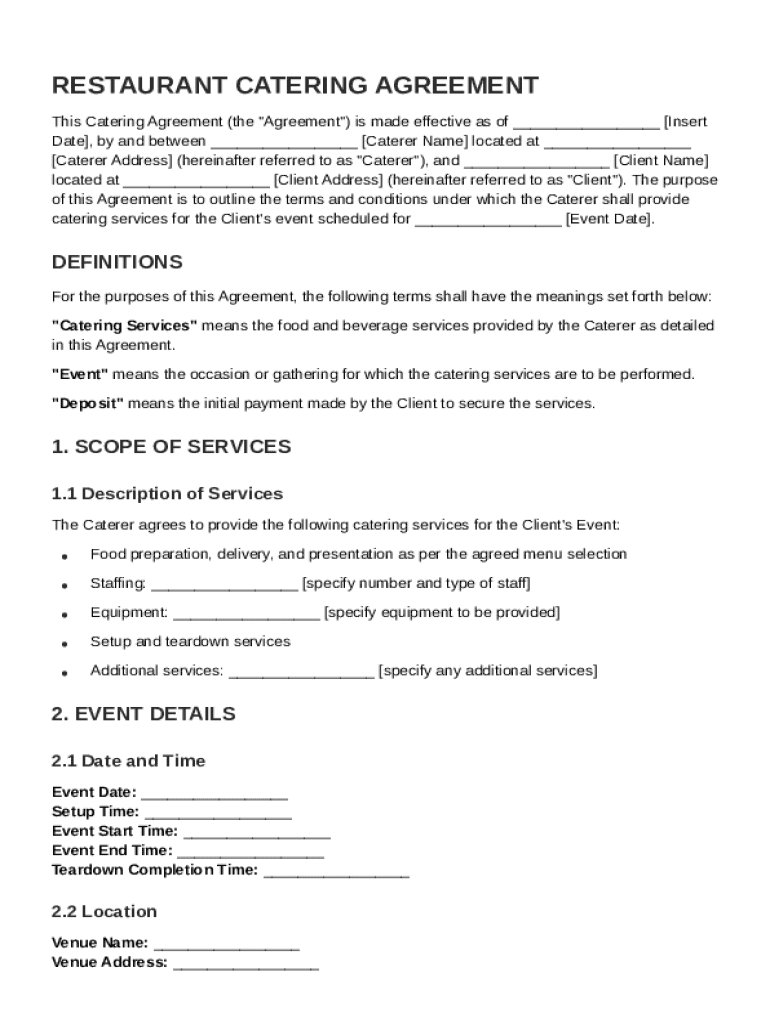







Definition & Meaning
The Restaurant Cater Contract Template is a formal document that outlines the terms and conditions for catering services provided by a caterer to a client for an event. It serves as a written agreement ensuring that both parties understand their obligations and expectations. The template typically includes critical components such as event details, payment terms, and liability provisions, providing a comprehensive framework for managing catering engagements.
Key Components
- Event Details: Specifies the date, time, location, and nature of the event for which catering services are required.
- Scope of Services: Details the specific services to be provided, including menu options, setup, and cleanup.
- Fees and Payment Terms: Outlines the cost of services and the agreed-upon payment schedule, including any deposit requirements.
Purpose
The purpose of using this template is to ensure clear communication and avoid misunderstandings between the caterer and the client. It helps to establish a legal understanding of what each party has agreed upon.
How to Use the Restaurant Cater Contract Template
Utilizing the Restaurant Cater Contract Template involves customizing it to fit the specific needs of the catering job. Begin by entering the basic information such as the names of the client and caterer, the event's location, and the date.
Customization Steps
- Fill Event Details: Specify the event's timing, expected number of guests, and any special requirements.
- Define Services: Clearly outline the catering services to be provided, including menu options and any additional services like waitstaff or equipment rentals.
- Specify Financial Terms: Update the template with agreed-upon pricing, payment schedules, and cancellation policies.
Finalization
Once filled, review the document with the client to ensure both parties agree on the terms before signing. Multiple parties can utilize platforms like DocHub to collaborate and finalize the contract.
Key Elements of the Restaurant Cater Contract Template
The Restaurant Cater Contract Template must include several essential elements to ensure its legal soundness and practicality. These elements provide clarity and protection for both the caterer and the client.
Essential Components
- Definitions: Clarifies key terms used within the contract to prevent any ambiguity.
- Insurance Requirements: Details the insurance obligations of the caterer to protect against damages or liabilities.
- Force Majeure Clauses: Covers unforeseeable events that might prevent either party from fulfilling their contractual obligations.
Additional Provisions
Other elements may include menu selection processes, responsibilities for licensing or permits, and specific points of contact for both parties. These components help in maintaining a structured agreement that is clear and enforceable.
Steps to Complete the Restaurant Cater Contract Template
Completing the Restaurant Cater Contract Template involves several detailed steps to ensure accuracy and mutual agreement.
Step-by-Step Process
- Gather Information: Collect all necessary details about the event and parties involved.
- Draft the Contract: Use the template to draft the document, ensuring all required fields are filled out.
- Customize Terms: Adjust the terms to fit the specific arrangement, including pricing and services.
- Review and Amend: Both parties should review the draft for accuracy and make necessary amendments.
- Sign and Finalize: Once agreed, both parties sign the document to signify mutual acceptance.
Common Challenges
Make sure to address any potential areas of dispute, such as cancellation policies and liability issues, during the drafting process to avoid conflicts later.
Legal Use of the Restaurant Cater Contract Template
The Restaurant Cater Contract Template must comply with applicable laws to be enforceable.
Compliance Requirements
- Governing Law: The contract should specify which state’s laws will govern the agreement.
- Legally Binding Elements: Ensure the contract includes an offer, acceptance, and consideration for it to be considered legally binding.
- Dispute Resolution: Define the methods for resolving any disputes that might arise, such as mediation or arbitration.
Legal Considerations
Both parties should have the opportunity to review the contract independently or consult legal counsel to ensure their rights and obligations are adequately addressed.
Who Typically Uses the Restaurant Cater Contract Template
This template is primarily utilized by caterers and event planners who regularly engage in catering services for various events.


Common Users
- Catering Companies: To formalize agreements with clients for events ranging from weddings to corporate gatherings.
- Event Planners: Use the template to coordinate with caterers on behalf of their clients.
- Private Clients: Individuals hosting events who require formalization of agreements for catering services.

Practical Scenarios
For instance, a corporate event planner might use this template to set the terms with a caterer for a company gathering, ensuring all services and expectations are explicitly documented.
Important Terms Related to Restaurant Cater Contract Template
When navigating the Restaurant Cater Contract Template, it's crucial to understand specific terms that may affect the agreement’s execution.
Key Terms
- Cancellation Policy: Describes the conditions under which the contract can be canceled and any associated penalties.
- Liability Clause: Defines the responsibilities and limitations of liability for both parties.
- Amendments: Specifies how changes to the agreement must be documented and agreed upon by both parties.
Nuances
Understanding these terms helps in mitigating risks associated with contract execution and ensures that both parties are aware of their rights and duties.
Digital vs. Paper Version
When it comes to completing and managing the Restaurant Cater Contract Template, both digital and paper formats offer distinct advantages.
Benefits of Digital Formats
- Accessibility: Easily share and edit in real-time using platforms like DocHub.
- Security: Digital contracts can be encrypted to protect sensitive information.
- Convenience: Stored and accessed from anywhere, facilitating easier management.
Advantages of Paper Formats
- Tactile Assurance: Some clients still prefer a physical copy as a tangible record.
- Simplicity: Without the need for tech tools, paper contracts are straightforward for those not comfortable with digital platforms.
Choosing the Right Format
Ultimately, the choice between digital and paper may depend on the specific needs of the parties involved and their comfort level with technology. Most modern practices favor digital contracts due to their efficiency and integration with electronic systems for seamless workflow management.




