
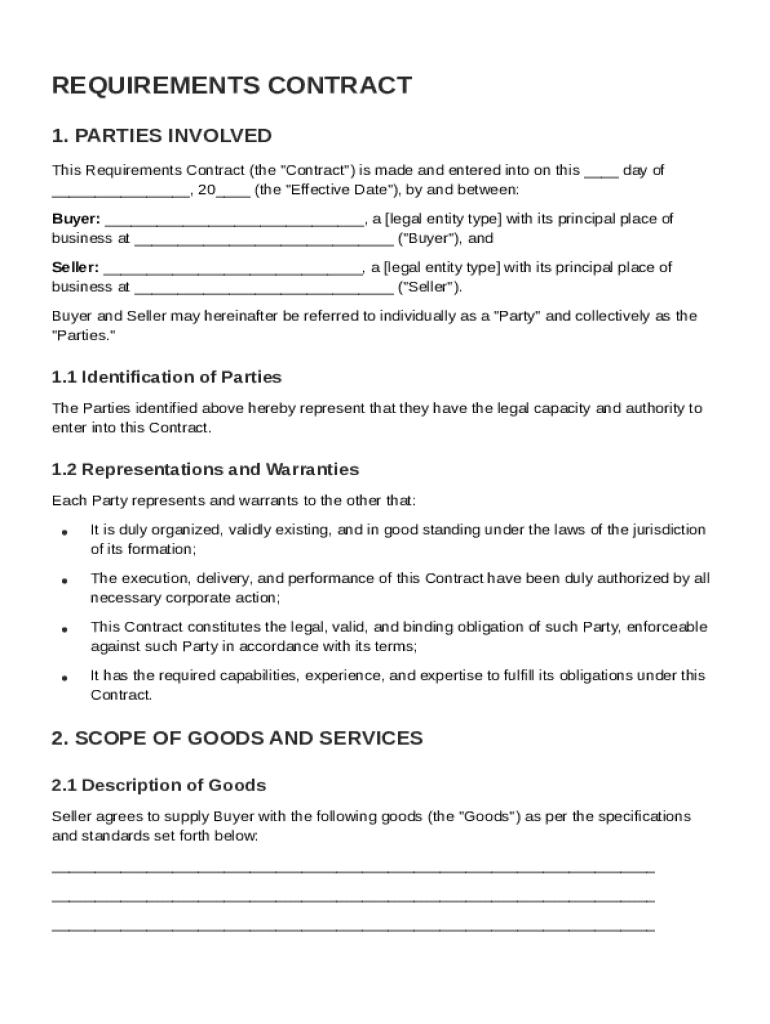







Definition & Meaning
A Requirements Contract Template is a legally binding document that outlines the terms and conditions between a buyer and a seller concerning the supply of goods or services. This template facilitates a structured agreement where the buyer commits to purchasing a certain level of requirements without specifying an exact quantity. It provides a clear framework to govern the buyer-seller relationship, ensuring that both parties understand their rights and obligations.
The primary objective of a requirements contract is to provide flexibility in procurement, allowing the buyer to purchase goods or services as needed, up to a specified limit. This setup is beneficial in environments where demand fluctuates, as it allows the buyer to adapt to changes without being locked into rigid purchase orders. Sellers, in turn, gain a potentially steady customer, with terms spelled out to safeguard against sudden or excessively large orders.
Key Elements of the Requirements Contract Template
A comprehensive Requirements Contract Template includes various critical elements:
- Identification of Parties: Clearly names the buyer and the seller, including their official business names and relevant contact details.
- Scope of Goods and Services: Outlines what goods or services the seller will provide. This section should detail the specifications or quality standards expected.
- Quantity and Delivery Requirements: While exact quantities may not be specified, this section describes how delivery requirements are to be fulfilled based on the buyer’s needs.
- Pricing and Payment Terms: Includes how the pricing is determined and structured. It also covers payment schedules, early payment discounts, or penalties for late payments.
- Contract Duration and Termination: States the length of the contract’s validity and conditions under which either party can terminate the agreement.
- Force Majeure Conditions: Recognizes unforeseeable events that might prevent contractual obligations, providing a framework for dealing with such situations.
- Governing Law and Dispute Resolution: Specifies the legal framework under which the contract is governed, including jurisdiction and methods for resolving disputes, such as mediation or arbitration.
- Confidentiality Obligations: Ensures that sensitive information exchanged between buyer and seller is safeguarded against unauthorized disclosure.
How to Use the Requirements Contract Template
Using a Requirements Contract Template involves several steps that ensure all bases are covered before finalization:
- Customizing the Template: Tailor the template to fit specific transaction types, ensuring all relevant parties’ information is correctly entered.
- Defining Requirements: Clearly specify the type and quality of goods or services, along with the expectations for delivery or performance.
- Establishing Financial Terms: Incorporate detailed pricing arrangements, including how payments will be managed.
- Risk Management: Examine clauses like force majeure, confidentiality, and termination, adapting them to reflect realistic assessments of risk.
- Legal Compliance: Ensure that the template aligns with relevant laws and regulations to avoid potential legal disputes.
- Review and Approval: Both parties should thoroughly review the contract details. It might be wise to have legal counsel check the finalized version for potential oversights.
Steps to Complete the Requirements Contract Template
Completing the Requirements Contract Template effectively requires careful attention to detail:
- Gather Necessary Information: Before you start, collect all the relevant information about the parties involved and the goods or services in question.
- Populate the Template Fields: Enter the information into the designated fields, ensuring that addresses, contact details, and company identifiers are accurately represented.
- Detail the Scope and Specifications: Clearly outline the goods or services in terms that are comprehensible and mutually agreed upon.
- Set Financial Terms: Include all aspects of pricing, specifying terms for payment, credit conditions, and any additional financial arrangements.
- Draft Compliance Clauses: Write or tailor existing clauses pertaining to confidentiality, dispute resolution, and legal recourse.
- Finalize and Approve: Review the document meticulously to confirm that all sections align with the intended business terms before obtaining signatures.
Legal Use of the Requirements Contract Template
In the United States, the legal use of a Requirements Contract Template must align with specific commercial and contract laws. This involves ensuring the document adheres to the Uniform Commercial Code (UCC), which governs commercial transactions:
- Consideration: The contract must include a mutual commitment or consideration from both parties, which is central to contract enforceability.
- Good Faith and Fair Dealing: Parties must engage in transactions with honesty, sincerity, and observance of reasonable commercial standards.
- Compliance with Statutes: The contract should meet all state and federal legal requirements, including tax obligations and regulatory compliance for specific industries.
Legal counsel can provide valuable insights to ensure that a requirements contract does not inadvertently contradict prevailing laws or regulatory guidelines, reducing the risk of future litigation.




