
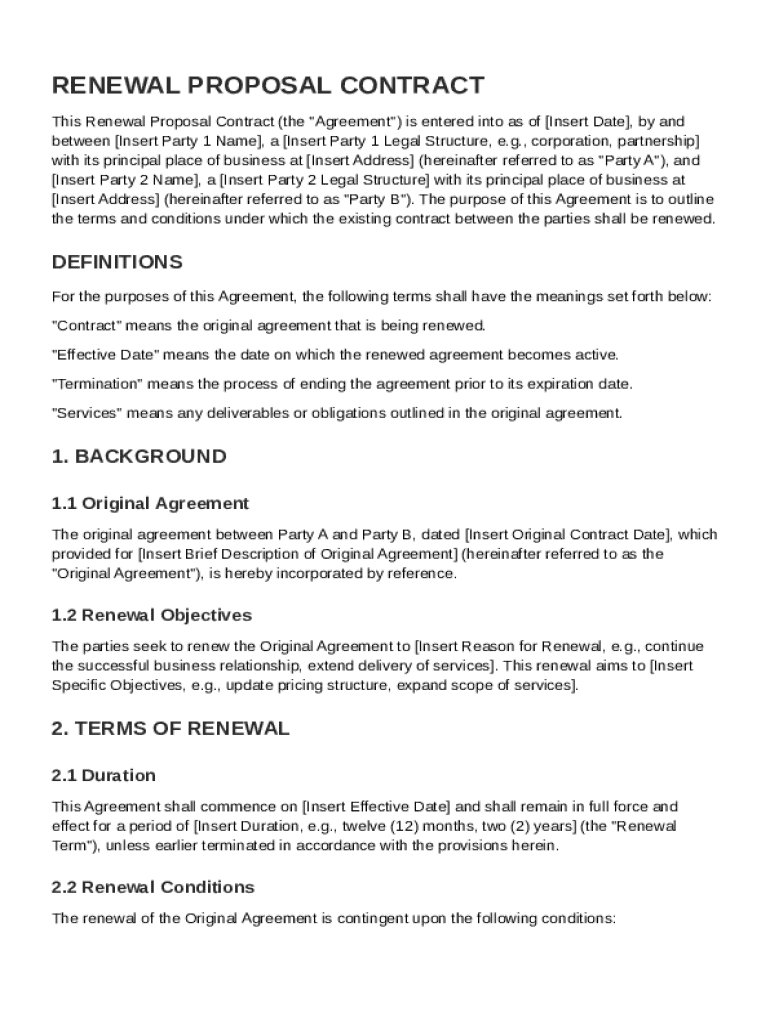







Definition and Purpose of a Renewal Proposal Contract Template
A Renewal Proposal Contract Template is a pre-designed document used to formalize the terms and conditions for renewing an existing agreement between two entities, often referred to as Party A and Party B. This template outlines critical components such as definitions, objectives, financial arrangements, responsibilities, performance measures, legal clauses, termination rights, and confidentiality provisions. The primary purpose of the template is to ensure a seamless transition in the continuation of business relationships, providing clarity on what amendments can be made to the existing contract and under what conditions the renewal will take place.
How to Use the Renewal Proposal Contract Template
When utilizing a Renewal Proposal Contract Template, start by reviewing the existing agreement to understand the initial terms and conditions. Identify the sections within the template that require modification in line with the new objectives of the renewal. Typically, you'll need to fill in specific details such as the duration of the renewed contract, updated financial terms, and any changes in responsibilities. Each section should be carefully evaluated to ensure that the new agreement aligns with both parties' current needs and goals. Finally, have both parties review and approve the document before it is signed, ensuring all mutual agreements are accurately captured.
Steps to Customize the Template
- Review the original contract and note any areas requiring change.
- Fill in the template's sections related to duration, financial agreements, and responsibilities.
- Ensure all legal obligations and performance metrics are updated.
- Validate the accuracy of the filled template with both parties.
- Obtain signatures from the respective parties for legal finalization.
Key Elements Included in a Renewal Proposal Contract Template
The template is structured to cover several essential elements fundamental to contract renewals:
- Definitions: Clarifies terms used throughout the contract to prevent ambiguity.
- Renewal Objectives: States the purpose and expected outcomes of the renewal.
- Duration and Terms: Specifies the length of the renewed contract and conditions for future renewals.
- Financial Terms: Outlines payment amounts, schedules, and any changes from the original agreement.
- Responsibilities: Details the obligations of each party under the renewed terms.
- Performance Metrics: Establishes criteria for evaluating the performance of both parties.
- Termination and Confidentiality: Specifies conditions under which the contract may be terminated prematurely and outlines confidentiality obligations.
Legal Use and Compliance
The utilization of a Renewal Proposal Contract Template must adhere to legal standards that govern contractual agreements in the United States. The document should comply with contractual laws, ensuring that it is enforceable in a court of law. Both parties should affirm that they have the authority to enter into the renewed agreement, and legal counsel may be consulted to validate compliance with applicable regulations. Confidentiality clauses should meet privacy laws, ensuring data protection throughout the term of the contract.
Who Typically Uses the Renewal Proposal Contract Template?
This template is primarily used by businesses and organizations looking to continue an existing professional relationship. Typical users include corporate entities, partnerships, and small businesses that have ongoing agreements requiring formal renewal. It is particularly useful for service providers or suppliers who need to renegotiate terms periodically. Legal teams may also utilize the template to draft formal agreements that comply with organizational policies and legal standards.


Important Terms Related to Renewal Proposal Contracts
Understanding the terminology associated with renewal proposals is crucial for clear comprehension:
- Party A/Party B: The entities involved in the contractual agreement.
- Amendment: Modifications to the original contract terms.
- Clause: A specific provision in a contract that dictates certain conditions.
- Breach: A failure by one or both parties to fulfill contract terms.
- Variance: Any deviation from the agreed-upon terms in the original contract.
Business Types that Benefit Most from the Template
Certain business sectors derive particular benefits from using a Renewal Proposal Contract Template. These include:
- Service Providers: Companies offering continuous services benefiting from clear renewals.
- Supply Chain Management: Ensures consistency in supply agreements.
- IT and Technology Firms: Need regular updates to service-level agreements.
- Manufacturing Entities: Benefit from stability in raw material sourcing contracts.
State-Specific Rules for Renewal Proposal Contracts
Contractual rules and requirements can vary significantly from one state to another across the U.S. It is crucial to ensure that the template complies with state-specific laws affecting contract renewals, such as validity requirements, enforceability of terms, and dispute resolution mechanisms. Legal advice should be sought to adapt the template according to the jurisdictional rules prevalent in the state where the contract is executed. Certain states may have unique mandates concerning electronic records and digital signatures.
Examples and Case Studies of Renewal Proposal Contracts
Real-world examples can provide valuable insights into how different organizations apply Renewal Proposal Contract Templates:
- Case Study 1: A telecommunications company used a renewal proposal contract to renegotiate service terms with a major client, allowing improved service packages at revised pricing.
- Case Study 2: A manufacturing firm utilized the template for extending supply agreements with a supplier, incorporating new quality standards and delivery timelines.
- Example 3: A law firm renewed a partnership agreement with an IT service provider, embedding updated cybersecurity requirements into the renewal contract.
Through these illustrative cases, organizations can gain a better understanding of effective application and potential outcomes using these templates.




