






Definition and Meaning
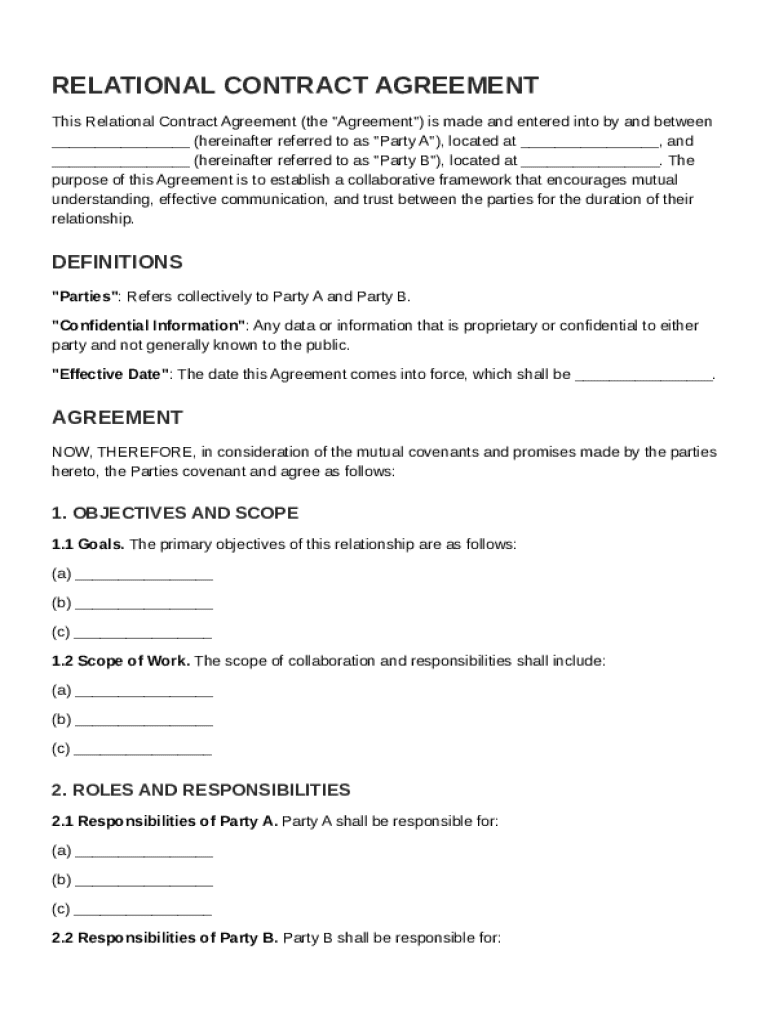
A Relational Contract Template is a structured document that outlines the collaborative agreement between two parties, emphasizing mutual understanding, trust, and effective communication. Unlike traditional contracts that are solely focused on legal obligations, relational contracts aim to build a long-term partnership based on shared goals and adaptability. These contracts are often used to establish frameworks for ongoing relationships, such as partnerships, collaborations, or joint ventures, where both parties contribute to the achievement of common objectives. Relational contracts discuss performance management, conflict resolution pathways, confidentiality safeguards, and amendment procedures that ensure the partnership remains productive and beneficial for both parties.
Key Elements of the Relational Contract Template
Understanding the essential components of a relational contract is crucial for creating a robust and effective agreement. The template typically includes several key elements:
- Objectives and Goals: Clarifies the shared objectives that both parties aim to achieve through the partnership.
- Roles and Responsibilities: Clearly defines the responsibilities and expectations for each party to minimize ambiguity.
- Performance Management: Establishes how the performance of each party will be measured and evaluated.
- Conflict Resolution: Provides a structured process for addressing disputes and disagreements.
- Confidentiality Obligations: Protects sensitive information shared between the parties.
- Amendment Procedures: Outlines how modifications to the contract can be made.
- Term and Termination: Details the duration of the contract and the conditions under which it can be terminated.
- Governing Law: Specifies the legal jurisdiction that will govern the contract.
These elements ensure that both parties understand their commitments, creating a balanced framework for the relationship.
How to Use the Relational Contract Template
Utilizing a relational contract template involves several critical steps to ensure that the resulting agreement is comprehensive and tailored to the specific needs of the parties involved. Here is a step-by-step guide:
- Identify the Parties Involved: Clearly state the names and roles of the parties entering into the contract.
- Define the Objectives: Outline and agree upon the common goals and expectations for the relationship.
- Allocate Responsibilities: Assign specific roles and responsibilities to each party to ensure clarity and accountability.
- Set Performance Metrics: Establish criteria for measuring the success of the partnership, which may include timelines, quality standards, and key performance indicators.
- Draft Conflict Resolution Protocols: Develop procedures for resolving potential disputes to avoid future misunderstandings.
- Ensure Confidentiality: Include clauses that protect confidential information exchanged during the partnership.
- Review and Amend: Provide a process for revising the contract to accommodate changes in circumstances or objectives.
- Finalize the Terms: Both parties should review the contract together, make necessary adjustments, and formally agree to the terms.
This process ensures that the template is adapted to fit the unique requirements of each relationship.
Steps to Complete the Relational Contract Template
Completing the relational contract template involves several stages to ensure thoroughness and clarity. Follow these steps for a successful completion:
- Gather Information: Collect all necessary information, including the objectives, roles, and responsibilities of each party.
- Consult Stakeholders: Engage with all relevant stakeholders to ensure alignment on the contract's purpose and terms.
- Fill out the Template: Using the gathered information, fill in each section of the template, ensuring that all relevant details are accurately captured.
- Incorporate Feedback: Allow each party to review the draft and provide feedback. Amend the template as necessary to address any concerns or suggestions.
- Legal Review: Have the draft reviewed by legal experts or consultants to ensure compliance with all applicable laws and regulations.
- Finalize and Sign: Upon approval from all parties and legal sign-off, both parties should sign the contract to formalize the agreement.
Following these steps ensures a comprehensive and legally sound relational contract.
Important Terms Related to the Relational Contract Template
To fully understand and utilize the relational contract template, familiarizing oneself with key terms is essential:
- Mutual Understanding: An agreement on shared goals and clear communication pathways.
- Trust: The reliance on the integrity and cooperation of parties involved.
- Adaptability: The ability of the contract to accommodate changes without needing complete overhauls.
- Joint Objectives: Shared goals that both parties strive to achieve through the partnership.
- Performance Metrics: Standards used to evaluate the effectiveness of each party's contributions.
- Dispute Resolution: Processes used to handle disagreements constructively.
- Confidentiality Clauses: Provisions that protect sensitive information from unauthorized disclosure.
Understanding these terms aids in both the drafting and execution of a relational contract.
Legal Use of the Relational Contract Template
The relational contract template is employed in various legal contexts to serve as a framework for partnerships that require flexibility and ongoing collaboration. Its legal use includes:
- Partnership Agreements: Establishing collaborative business ventures or projects.
- Joint Ventures: Creating alliances between entities to accomplish a specific goal.
- Long-Term Supplier Relationships: Structuring agreements with suppliers that go beyond transactional exchanges.
- Collaborative Research Projects: Formulating partnerships in research and development environments.
The template is versatile and can be adapted for different sectors where legal structure and ongoing relationship management are critical.
Examples of Using the Relational Contract Template
Practical applications of the relational contract template include:
- Technology Partnerships: Technology firms often use relational contracts to establish joint projects that require ongoing collaboration and development.
- Construction Projects: Construction companies utilize these contracts to manage long-term projects with multiple phases and contributors.
- Healthcare Collaborations: Hospitals and healthcare providers leverage relational contracts to coordinate complex care delivery systems.
- Academic Consortia: Universities and research institutions adopt these templates to formalize cooperation in large-scale research endeavors.
These examples demonstrate the template's flexibility across various industries requiring ongoing collaboration and mutual governance.
State-Specific Rules for the Relational Contract Template
State-specific regulations can impact the implementation and enforcement of relational contracts. Here are a few considerations:
- Governing Law Clauses: Relational contracts should include a governing law clause specifying which state's law will apply to the agreement.
- Disclosure Requirements: Some states may require additional disclosures to be included in contracts to uphold transparency.
- Enforcement Provisions: Varying state laws may affect how terms are enforced, making local legal advice crucial when drafting for specific jurisdictions.
- Confidentiality Regulations: Privacy laws differ by state and may dictate specific requirements for confidentiality clauses.
Understanding these state-specific nuances ensures compliance and enhances the enforceability of the contract, minimizing legal risks.