
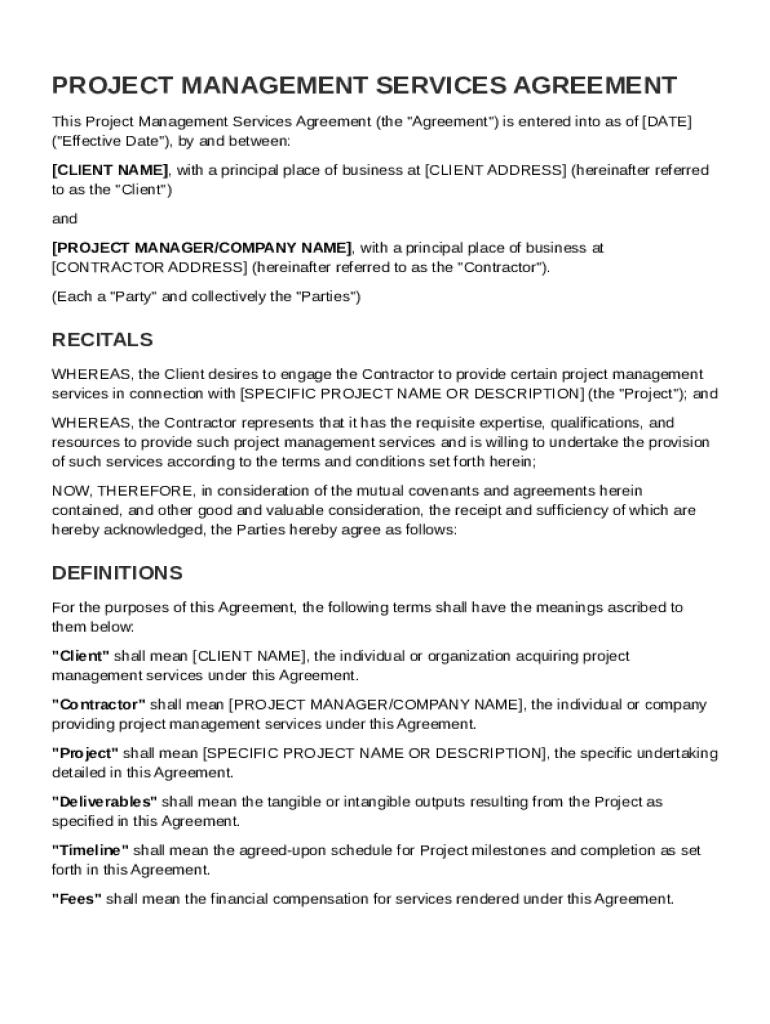







Definition & Meaning
A Project Management Contract Template serves as a blueprint for defining the relationship between a client and a contractor or project manager concerning the administration of a specific project. This document lays out the terms and expectations in clear language, aiming to prevent miscommunications and disputes. By standardizing components like project scope, deliverables, timelines, and compensation, this template ensures that both parties have a mutual understanding of the project dynamics. It establishes a foundation for responsibilities, performance criteria, and the legal implications tied to the agreement. Examples of key sections include outlining project milestones to assess progress and specific criteria for accepting deliverables. These detailed provisions help maintain project alignment with client objectives and compliance with industry standards.
Key Elements of the Project Management Contract Template
The Project Management Contract Template encompasses several critical components to define project expectations. Key elements include:
- Scope of Services: Specifies the specific tasks that the project manager or contractor will undertake. This section should be detailed to avoid ambiguity and ensure alignment with client goals.
- Project Timeline: Outlines the project's start and end dates, along with any significant milestones or deadlines that need to be met.
- Compensation Structure: Details the payment terms, including rates, payment schedules, and any bonuses or penalties related to project performance.
- Client Responsibilities: Clarifies the client's obligations, such as providing necessary resources, data, or approvals in a timely manner.
- Confidentiality Provisions: Protects sensitive information by setting guidelines on data privacy and confidentiality undertakings for both parties.
- Intellectual Property Rights: Establishes who retains ownership of the intellectual property created throughout the project, protecting proprietary developments.
Each element is crafted to provide legal and operational consensus, supporting smooth project execution.
Steps to Complete the Project Management Contract Template
Completing the Project Management Contract Template requires a detailed step-by-step approach:
- Identify Project Participants: Clearly document the names and contact information for the client and contractor, ensuring precision in identifying both parties.
- Define Project Scope: Articulate the specific services to be delivered, making sure they align with the client’s objectives and expectations.
- Set Timelines and Milestones: Establish achievable deadlines for major project phases, including intermediate milestones to help track progress.
- Detail Payment Terms: Specify the agreed compensation structure, including hourly rates or fixed fees, and outline the payment schedule relative to milestones or project phases.
- Include Legal Provisions: Incorporate clauses on confidentiality, intellectual property, and potential indemnifications to guard against legal risks.
- Review and Revise: Both parties should carefully review the template to ensure it accurately reflects their agreement. This step may involve legal consultation for validation.
- Final Approval: Obtain signatures from both the client and contractor, finalizing the agreement. Ensure all copies are distributed to relevant stakeholders for reference and compliance.
These steps help formalize the project agreement, building a framework for accountability and performance evaluation.
How to Use the Project Management Contract Template
When deploying a Project Management Contract Template, adhere to the following practices to maximize its effectiveness:
- Customization to Specific Needs: Adjust the template based on the project’s unique requirements, incorporating any industry-specific clauses or considerations.
- Clear Communication: Prioritize clarity in every section to avoid misunderstandings. Use straightforward language and well-defined terms.
- Continuous Updates: As the project progresses, revisit the contract to make necessary adjustments reflecting scope changes or timeline shifts.
- Coordination and Alignment: Work collaboratively with all involved parties to ensure that the contract serves as a true reflection of mutual expectations and objectives.
- Leverage Technology Tools: Utilize document management software to streamline updates, negotiations, and finalization processes, ensuring all changes are properly documented.
The contract serves as a living document and should evolve alongside the project dynamics, ensuring continuous relevance and adherence.
Legal Use of the Project Management Contract Template
Legal considerations are paramount when employing a Project Management Contract Template:
- Compliance with Laws: Contracts must comply with applicable federal, state, and local laws, including consumer protection standards and employment regulations.
- Binding Agreement: Since the template formalizes a legally binding agreement, ensure all clauses are enforceable under the jurisdiction's legal framework.
- Indemnity and Liability: Clearly outline the indemnification and liability limitations to protect both parties from unforeseen legal claims or disputes.
- Dispute Resolution Mechanisms: Include mechanisms for resolving disputes, such as arbitration or mediation, to offer a pre-defined path for legal recourse.
- Understanding Terms: Both parties should thoroughly understand legal terminology and implications, potentially involving legal counsel to mitigate risks.
Lawfully executed contracts provide security, minimizing potential disputes and liabilities.
Examples of Using the Project Management Contract Template
Real-world scenarios illustrate the utility of the Project Management Contract Template:
- Construction Projects: Often used in construction to manage timelines, deliverables, and payments, ensuring projects adhere to regulatory compliance and safety standards.
- IT and Software Development: Facilitates agile development processes by defining sprint deliverables and timelines while protecting intellectual property rights.
- Consulting Services: Guides consultancy engagements by documenting deliverables, project phases, and payment terms for professional services.
- Marketing Campaigns: Used in marketing to align on campaign objectives, creative deliverables, and budget management, improving strategic focus and ROI.
- Non-Profit Initiatives: Assists in organizing volunteer projects or charitable events by outlining goals, resources, and responsibilities for maximum impact.
These examples demonstrate the template's versatility in different industries, enhancing operational clarity and project success.
Who Typically Uses the Project Management Contract Template
A diverse range of professionals and industries benefit from using the Project Management Contract Template:
- Project Managers: Utilize the template to document and align project objectives, delivering projects on time and within budget.
- Contractors and Freelancers: Rely on the template to solidify working arrangements, ensuring clear terms of service and payment expectations.
- Organizations and Corporations: Implement the template to oversee internal projects, upholding consistent management standards.
- Legal Teams: Adopt the template to ensure compliance and alignment with corporate governance policies.
- Consultants and Service Providers: Use it to establish service expectations with clients, safeguarding service standards and client relations.
Understanding who uses the template helps in tailoring specific sections to fit various professional needs and contexts.


Important Terms Related to Project Management Contract Template
Several critical terms are integral to the Project Management Contract Template:
- Scope Creep: Refers to uncontrolled changes or continuous growth in a project's scope, often resulting in project delay and budget overrun.
- Milestone: A specific point in time within a project lifecycle that signifies the completion of a major phase or deliverable.
- Change Order: A formal document used to request or outline changes to the project's scope or execution.
- Force Majeure: A clause that frees both parties from liability or obligation when unforeseeable events prevent one or both parties from fulfilling their contractual duties.
- Indemnity Clause: Provisions that aim to protect against losses or damages as a result of the project's execution.
Each term plays a pivotal role in shaping project parameters, enabling precise management and risk mitigation.




