
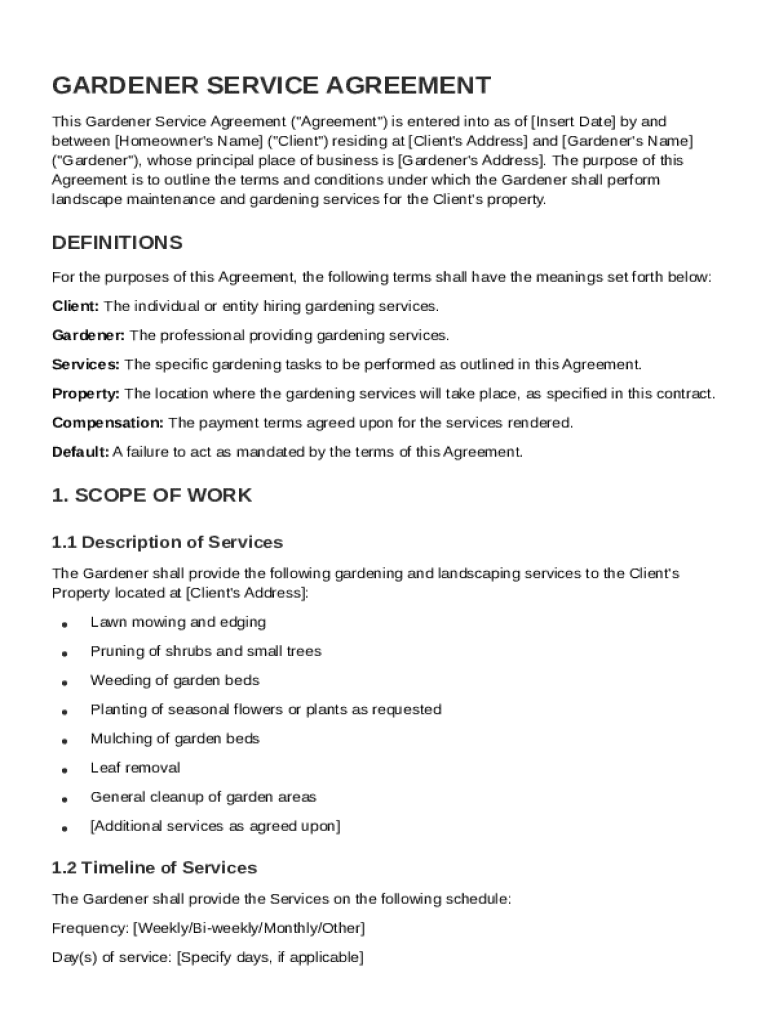







Definition and Meaning
A Gardener Contract Template serves as a formal agreement between a gardener and a client, detailing the terms of service. This template outlines obligations, services to be performed, compensation, and other critical elements necessary for a transparent working relationship. By providing a structured framework, the contract helps mitigate misunderstandings and ensures that both parties have a shared understanding of expectations. It clarifies the specific gardening tasks—such as lawn care, pruning, or planting—and establishes timelines for completion. The contract is legally binding, offering protection for both parties should disagreements arise.
Key Elements of the Gardener Contract Template
The Gardener Contract Template encompasses several crucial components that define the working relationship between the gardener and the client:
- Scope of Work: Clearly delineates the specific gardening services to be performed, including maintenance duties, planting schedules, and any special instructions.
- Compensation and Payment Terms: Specifies payment structure, rates per service, and due dates for payments, ensuring financial transparency.
- Duration of Contract: States the contract’s effective dates and termination conditions. This often includes how either party can end the service agreement.
- Responsibilities and Obligations: Outlines each party's roles, such as the gardener's provision of necessary tools and materials, and the client ensuring access to the property.
- Termination Clauses: Details conditions under which the contract can be terminated, including breach of agreement or failure to meet obligations.
- Governing Law: Identifies the legal framework under which the contract was made, which can affect dispute resolutions.
How to Use the Gardener Contract Template
Utilizing a Gardener Contract Template involves several steps designed to customize and finalize the agreement effectively:
- Customize the Template: Input specific details about the gardening services to be provided, such as frequency and specific tasks like weeding or hedge trimming.
- Negotiate Terms: Engage with the other party to agree on compensation, frequency of work, and any additional responsibilities or stipulations.
- Review Legal Terms: Ensure the contract includes necessary clauses pertaining to liability, termination, and legal compliance under local laws.
- Confirm Both Parties' Details: Double-check names, contact information, and addresses for accuracy.
- Finalize and Sign: Once both parties agree on the terms, electronic signatures can be applied to secure the agreement as legally binding.
Important Terms Related to the Gardener Contract Template
Understanding key terms related to gardener contracts aids in better comprehending the agreement:
- Liability: Often includes indemnity clauses that protect both parties from damages that might occur during gardening activities.
- Force Majeure: These are clauses that excuse performance obligations due to unforeseen events like natural disasters.
- Breach of Contract: Refers to the failure to fulfill any agreed-upon terms within the contract, which can result in legal consequences or termination.
- Confidentiality: May involve clauses preventing the sharing of sensitive client information or methods used by the gardener.
Steps to Complete the Gardener Contract Template
Completing the Gardener Contract Template requires attention to detail to ensure all components are accurate and agreed upon:
- Gather Required Information: Collect all necessary details from both parties, including names, addresses, and specific gardening requirements.
- Fill in the Template: Carefully input all gathered information into the template’s respective sections, customizing it to fit the agreed scope of work.
- Review and Revise: Conduct a thorough review to confirm accuracy and make revisions if needed, especially in language that pertains to legal obligations and responsibilities.
- Seek Legal Advice: Depending on the complexity, it might be beneficial to consult a legal professional to review the contract for compliance issues or ambiguous wording.
- Sign and Distribute: Once all parties are satisfied, apply electronic signatures and share copies for records.
State-Specific Rules for the Gardener Contract Template
Gardener contracts in the United States may be subject to state-specific rules impacting their execution and enforcement. Each state might have unique requirements concerning labor laws, contractor obligations, and dispute resolution:
- California: Requires the inclusion of specific consumer rights and disclosures for residential service contracts.
- New York: Emphasizes clarity in compensation terms and mandates written agreements for services over a certain monetary threshold.
- Texas: May necessitate additional disclosures related to state-mandated warranty protections.
Understanding these state-specific nuances ensures compliance and minimizes the risk of legal challenges.
Business Types That Benefit Most from the Gardener Contract Template
The Gardener Contract Template is particularly advantageous for certain business types within the landscaping and horticultural sectors:
- Small Gardening Firms: Professional gardeners and small landscaping companies can use the template to formalize relations with residential clients.
- Freelance Gardeners: Independent contractors will find the template helpful in setting clear boundaries and expectations with their clientele.
- Property Management Companies: Organizations managing multiple properties often require such contracts to standardize service terms across various locations.
- Residential Landscaping Services: Those specializing in backyard redesign or seasonal planting schedules would benefit greatly from formalized agreements.
Examples of Using the Gardener Contract Template
Practical applications of the Gardener Contract Template span various scenarios in both residential and commercial settings:
- Seasonal Contracts: A gardener working with clients on a per-season basis can use the template to outline specific goals for spring planting or autumn cleanup.
- Long-Term Agreements: Landscapers engaged in year-long upkeep contracts can define the frequency of visits, such as weekly lawn mowing, using the template.
- One-Time Projects: For singular landscape design projects, such as installing a new flower bed, the template can be adapted to specify tasks and completion timelines.
- Community/Municipal Grounds: Gardens serving public spaces or institutions might employ the contract to ensure sustained maintenance and accountability.
These examples highlight the versatile use of the Gardener Contract Template across different gardening activities and customer types.




