
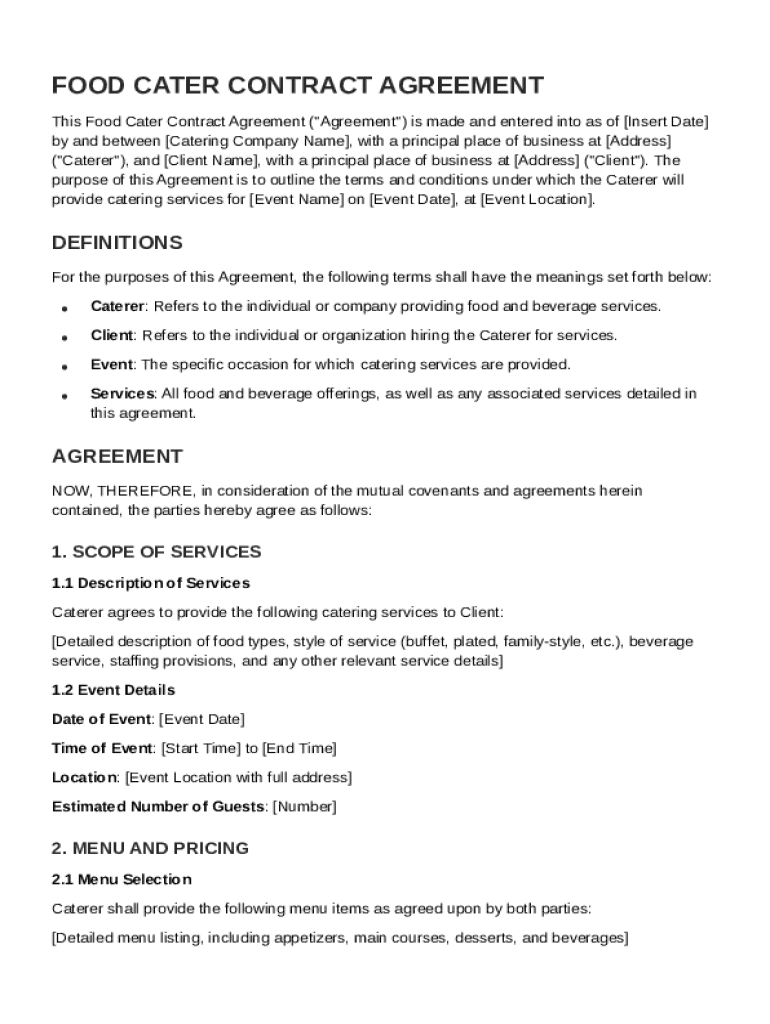







Definition & Meaning
The Food Cater Contract Template is a legal document that defines the terms and conditions agreed upon between a catering service provider and a client. It details the services to be rendered for a specific event, ensuring both parties are aligned on expectations. The template is crafted to include key aspects such as menu selections, pricing, service scope, cancellation terms, liability clauses, and confidentiality agreements. This ensures clarity and helps avoid potential disputes.
Contract templates like this are essential in the catering industry, as they lay a foundation for professional engagement and service delivery. By using a well-structured template, both the caterer and the client can ensure that their interests are protected, roles are clearly defined, and mutual obligations are understood. This framework not only helps safeguard against misunderstandings but also enhances trust and professionalism.
How to Use the Food Cater Contract Template
To use the Food Cater Contract Template effectively, both parties should begin by discussing and agreeing on the event's specific details. This includes the type of event, the number of guests, and any special requirements or themes. Once these details are clear, they should be input into the template fields designated for scope of service and menu selections.
When filling out the template, ensure all details are correct, specifically the service dates and times, venue location, and any unique client requests. Both parties should also review and populate fields related to payment terms, such as deposit amounts and final payment schedules.
After completion, the contract should be reviewed by both parties, potentially alongside legal advisors, to ensure all stipulations are legally sound. Once both parties agree, the contract can be signed either electronically or on paper, making it legally binding.
Key Elements of the Food Cater Contract Template
The Food Cater Contract Template includes several critical components to ensure comprehensive coverage of the catering engagement. Key elements include:
- Scope of Services: Defines what the catering company is expected to provide, including menu items, beverages, and additional services like waitstaff or equipment rental.
- Menu Selection: Details specific food items and any dietary restrictions or special menu requests, which ensures that client expectations are met.
- Pricing Structure: Outlines the fees for services, payment terms, and any additional costs that may incur, such as gratuity or service charges.
- Cancellation Policy: Specifies under what conditions a party can cancel the contract and any associated penalties or fees.
- Liability and Insurance: Coverage details that protect both parties in events of unforeseen incidents like accidents or food safety issues.
Understanding these elements allows users to tailor the template to their specific event needs effectively.
Important Terms Related to Food Cater Contract Template
Certain legal and industry-specific terms are commonly associated with the Food Cater Contract Template, which should be understood for accurate execution:
- Indemnification: A clause ensuring one party will cover losses incurred by the other, typically in scenarios involving negligence or breach of contract.
- Force Majeure: A provision that releases parties from liability or obligations due to unforeseeable and uncontrollable events, such as natural disasters.
- Retention of Title: This term refers to the caterer's right to retain ownership of any equipment they provide until services are rendered and payment is complete.
- Waiver: In legal terms, this is the voluntary relinquishment of a known right, which may be used to show that a party does not hold the other to certain contract terms.
Familiarity with these terms aids in navigating and negotiating the contract efficiently.
Legal Use of the Food Cater Contract Template
The Food Cater Contract Template’s legal application ensures protection for both clients and caterers. It mitigates risks such as client non-payment and service disputes, using clear terms that outline each party’s responsibilities. Adhering to legal norms such as the inclusion of indemnity clauses and ensuring compliance with local health regulations are vital during contract execution.
Legal counsel can provide additional guidance to tweak templates in line with state-specific laws or unique service conditions, ensuring these contracts are enforceable within the U.S. context. Non-compliance or vague terms could render portions of the contract unenforceable, hence the importance of precise language.
Steps to Complete the Food Cater Contract Template
- Initial Discussion: Begin with a detailed conversation between the client and catering service to align on expectations and event details.
- Draft the Contract: Use the template to draft an initial version, filling in all relevant details such as scope, pricing, and dates.
- Review by Parties: Ensure both parties review the drafted contract and consult legal advisors if needed for any clauses that require clarification.
- Negotiate Terms: Discuss any areas of concern or disagreement; negotiate adjustments until both parties are satisfied.
- Finalize & Execute: Once agreed upon, both parties should sign the contract to make it legally binding. Maintain copies for records.
This step-by-step process ensures clarity and consensus, which is crucial for a seamless service experience.
Examples of Using the Food Cater Contract Template
The Food Cater Contract Template can be customized for various event types, such as weddings, corporate functions, or private parties.
- Weddings: Adjust the template to account for large guest counts, multi-course meals, and additional services such as cake cutting and champagne toasts.
- Corporate Events: Tailor the content to include specific branding elements, prompt invoice payment terms, and adjust for potential changes in attendee numbers.
- Private Parties: Adapt for smaller gatherings, adjusting terms for buffet style setups versus seated dinners, depending on client preferences.
Each example highlights how the template’s flexibility accommodates event-specific nuances.
State-by-State Differences
Laws governing catering contracts can vary by state, affecting elements like liability limitations, indemnity clauses, and permissible cancellation terms. States like California have specific regulations regarding food safety and catering licenses that may need to be included, whereas New York might have more relaxed food handling requirements but stricter noise ordinances impacting service delivery times.
Understanding these differences ensures compliance and helps avoid invalidating parts of the contract due to legal oversight. Consulting with a local attorney familiar with state-specific laws can provide additional guidance for tailoring the contract to meet regional legal standards.




