Definition and Meaning of the Event Service Contract Template
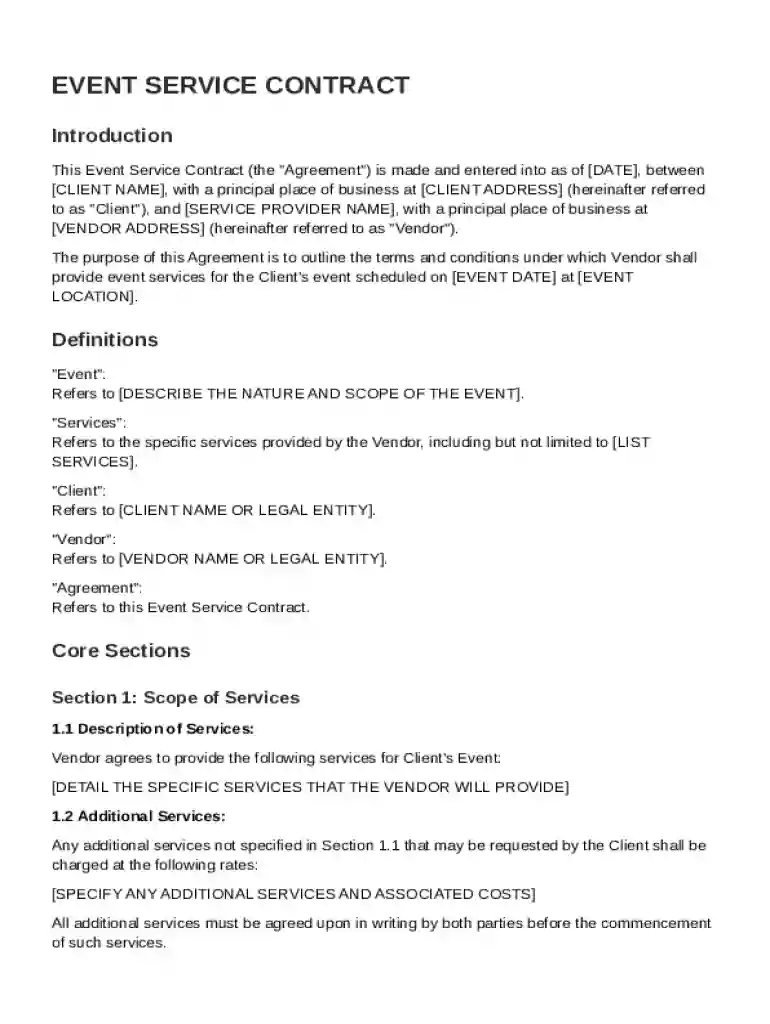
The Event Service Contract Template is a formal agreement between a Client and a Vendor for providing event-related services on a specific date at a designated location. This comprehensive document is designed to clearly outline the scope of services, payment terms, mutual responsibilities, performance standards, cancellation policies, liability provisions, and other legal considerations necessary for ensuring a successful event. The contract aims to establish a shared understanding between both parties about the expectations and requirements for the event's execution, helping to mitigate potential disputes and ensure smooth proceedings.
Key Elements of the Event Service Contract Template
A well-structured Event Service Contract Template includes several critical elements to protect the interests of both the Client and Vendor. These elements include:
- Scope of Services: Details the exact services to be provided, including any equipment, setup requirements, and personnel involved.
- Payment Terms: Specifies the total cost, deposit requirements, payment schedule, and accepted payment methods.
- Responsibilities of Both Parties: Outlines obligations such as providing timely access to the venue or adhering to safety regulations.
- Performance Standards: Any specific quality and performance criteria that must be met by the Vendor.
- Cancellation and Refund Policies: Conditions under which either party can cancel the contract and the applicable refund terms.
- Liability and Insurance: States the liability limits and any insurance requirements for covering potential damages or accidents.
- Governing Law: Identifies the jurisdiction under which the contract will be interpreted in case of a legal dispute.
Steps to Complete the Event Service Contract Template
Completing the Event Service Contract Template involves a series of specific steps to ensure accuracy and comprehensiveness:
- Review Template Structure: Familiarize yourself with the sections and headings.
- Input Basic Information: Enter the names and contact details of both the Client and Vendor.
- Detail Services and Schedules: Clearly define the scope of services and schedule of events.
- Agree on Payment Terms: Discuss and fill out the agreed-upon payment terms, including deposit and final payment details.
- Outline Responsibilities: Specify duties and responsibilities for both parties involved.
- Define Cancellation Terms: Clearly state the conditions for cancellation and associated fees.
- Finalize and Sign: Both parties should thoroughly review the contract and sign upon agreement to the terms.
Legal Use of the Event Service Contract Template
To ensure that the Event Service Contract is legally binding and enforceable, several considerations should be kept in mind:
- Clear Terms and Conditions: Keep language precise and avoid ambiguity to prevent potential legal conflicts.
- Compliance with Local Laws: Customize the template to comply with state or jurisdiction-specific regulations.
- Signatures and Dates: Ensure all parties sign and date the contract for it to become effective.
- Amendment Procedures: Outline steps for making any future amendments to the contract.
State-Specific Rules for the Event Service Contract Template
Event service contracts may vary between states due to differing regulations, making it important for users to consider:
- Jurisdictional Requirements: Certain states may have specific clauses that must be included in the contract.
- Financial Regulations: Differences in how deposits and payments are handled legally.
- Insurance Requirements: Variability in liability and insurance obligations.
Users are encouraged to consult legal experts familiar with local regulations to tailor the document accordingly.
Important Terms Related to the Event Service Contract Template
Understanding key terminology used within the Event Service Contract is crucial for clarity and effectiveness:
- Force Majeure: Conditions under which parties are not liable for nonperformance due to unforeseen events.
- Indemnification: Agreements on how damages and losses are handled.
- Non-Disclosure Agreement (NDA): Confidentiality terms concerning sensitive information shared between parties.
- Retention of Title: Ownership rights related to services or goods provided.
Examples of Using the Event Service Contract Template
Consider a few real-world scenarios where the Event Service Contract Template proves beneficial:
- Wedding Planning: Planners use the template to set clear expectations with clients regarding venue decor, catering, and photography services.
- Corporate Events: Companies hiring vendors for large product launches rely on the contract for clarity on schedules, logistics, and responsibilities.
- Concerts and Performances: Artists and event coordinators use it to define terms for performance timing, technical support, and payment structures.
These examples showcase the template's adaptability to various event types and the importance of a well-drafted contract in successful event execution.
Digital vs. Paper Version
The choice between a digital and paper version of the Event Service Contract Template involves several considerations:
- Accessibility: Digital templates are easily editable and shareable online, enhancing convenience and efficiency.
- Security: Digital contracts can be encrypted and password-protected, ensuring greater data security.
- Environment: Digital versions reduce paper waste, supporting eco-friendly practices.
Many prefer digital contracts for ease of use, though paper contracts are still used when digital infrastructure is unavailable.