
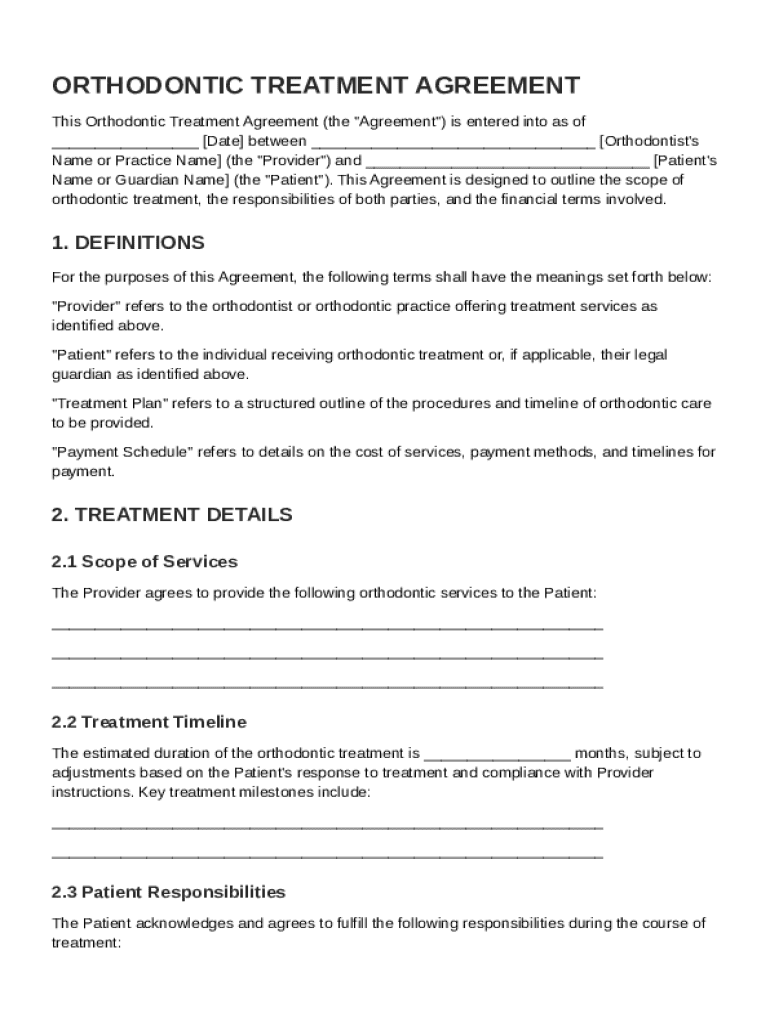







Definition & Meaning
The Orthodontic Contract Template is a standardized document designed to formalize the agreement between an orthodontist (the provider) and a patient or their guardian. This contract outlines the responsibilities, terms, and conditions of the orthodontic treatment process. It serves as a legal framework ensuring that both parties are clear on what is expected concerning treatment procedures, payment plans, and patient obligations. By using a template, the orthodontist ensures consistency in the way agreements are presented, simplifying the administrative process and protecting both parties' interests by documenting the mutual understanding and consent.
Key Components
- Scope of Services: Defines the orthodontic procedures to be provided, including an overview of the treatments and anticipated outcomes.
- Patient Responsibilities: Details what is expected from the patient in terms of compliance, appointment attendance, and oral hygiene.
- Financial Obligations: Specifies payment amounts, due dates, and acceptable payment methods.
- Termination and Dispute Resolution: Outlines the procedures for ending the agreement or resolving any conflicts that may arise.
How to Use the Orthodontic Contract Template
The Orthodontic Contract Template is designed to be user-friendly, allowing orthodontists to quickly create a binding agreement tailored to the specific needs of each patient. Here's a step-by-step guide on how to use it:
- Select a Template: Begin by choosing a template that best suits the type of orthodontic services you provide.
- Customize the Content: Modify the sections to reflect your specific terms, including details like treatment types, costs, and scheduling policies.
- Review Legal Provisions: Ensure that all legal terms comply with regional regulations and professional standards.
- Seek Legal Review: It may be beneficial to have a legal expert review the finalized contract to ensure completeness and legality.
- Present to Patient: Upon completion, present the contract to the patient or guardian for review and discussion.
- Gather Signatures: Once all parties agree on the terms, collect signatures to render the contract legally binding.
Practical Tips
- Consistency: Utilize the same template for all patients to ensure uniformity in your practice’s legal agreements.
- Clarity: Avoid legal jargon where possible, using plain language to facilitate patient understanding.
Why You Should Use the Orthodontic Contract Template
Orthodontic Contract Templates provide several advantages for both practitioners and patients:
- Legal Protection: Establishes a clear legal foundation that protects both the provider and the patient.
- Clarity and Understanding: Reduces misunderstandings by clearly outlining the terms and responsibilities of each party.
- Professionalism: Demonstrates a structured and organized approach to patient relationships, enhancing the practice's credibility.
- Efficiency in Administration: Streamlines the contract creation process, saving time and resources.
Real-World Scenario
Consider a scenario where an orthodontist offers a variety of payment plans. Using a standardized contract template, they can easily customize payment terms, ensuring that each patient understands their financial obligations while minimizing the risk of payment disputes.
Key Elements of the Orthodontic Contract Template
Scope of Services
This section specifies the range of orthodontic treatments provided under the contract, such as braces, aligners, or specialized surgery. It is important to list any specific procedures and retain the flexibility to update treatment plans as required.
Patient Responsibilities
Outlines necessary patient actions to ensure successful treatment outcomes. This could include attending appointments regularly, maintaining oral hygiene, and following provider instructions diligently.
Financial Obligations
This part elaborates on the cost structure, including initial fees, follow-up visit costs, and overall treatment price. It may also outline payment schedules and methods accepted by the practice.
Termination and Dispute Resolution
Details under what conditions the contract may be terminated and how disputes will be managed, which might include third-party arbitration or mediation clauses.
Important Terms Related to Orthodontic Contract Template
Understanding industry-specific terminology is crucial for any participant in an orthodontic contract:
- Informed Consent: Assurance that the patient understands and agrees to the proposed treatments after all possible risks and benefits have been explained.
- Compliance: The extent to which the patient follows prescribed treatment regimes.
- Default: Reference to the failure to meet financial or other agreed obligations within the contract.
Variations and Considerations
- Modifications: Changes to the contract that must be agreed to by both parties.
- Enforceability: Conditions under which the contract remains legally binding.
Steps to Complete the Orthodontic Contract Template
- Information Collection: Gather all necessary details about the patient and proposed treatments.
- Draft Initial Terms: Write the first draft of terms specific to the patient’s treatment plan.
- Patient Review and Feedback: Share the draft with the patient for review and address any concerns or requested changes.
- Finalization: Amend the contract accordingly, making sure it reflects mutually agreed-upon terms.
- Signature Collection: Obtain signed acknowledgments from the patient or their guardian.
Legal Use of the Orthodontic Contract Template
The Orthodontic Contract Template, when completed correctly, serves as a legally binding document governed by state and federal laws. It is crucial to ensure that it includes:
- Compliance with State Laws: Provisions that align with specific state requirements concerning healthcare services.
- Confidentiality Agreement: Terms that protect patient information in compliance with privacy laws such as HIPAA.
State-Specific Considerations
Consider variations in state laws that might impact contract terms, particularly in areas like consumer protection and healthcare regulations.
Who Typically Uses the Orthodontic Contract Template
This template is generally utilized by:
- Orthodontic Practices: To standardize agreements across various treatment plans.
- Dental Clinics: Incorporating orthodontic services into their broader suite of offerings.
- Patients and Guardians: To clarify the treatment journey and enforce understanding of their roles.


Example Scenarios
- New Patient Registration: An orthodontist might use the template when onboarding a new patient to ensure all legal stipulations are covered from the outset.
- Change in Treatment Plan: Amendments to existing contracts may be needed when adapting treatment plans due to a patient’s changing needs or compliance levels.




