




Definition and Meaning of a Distribution Contract Template
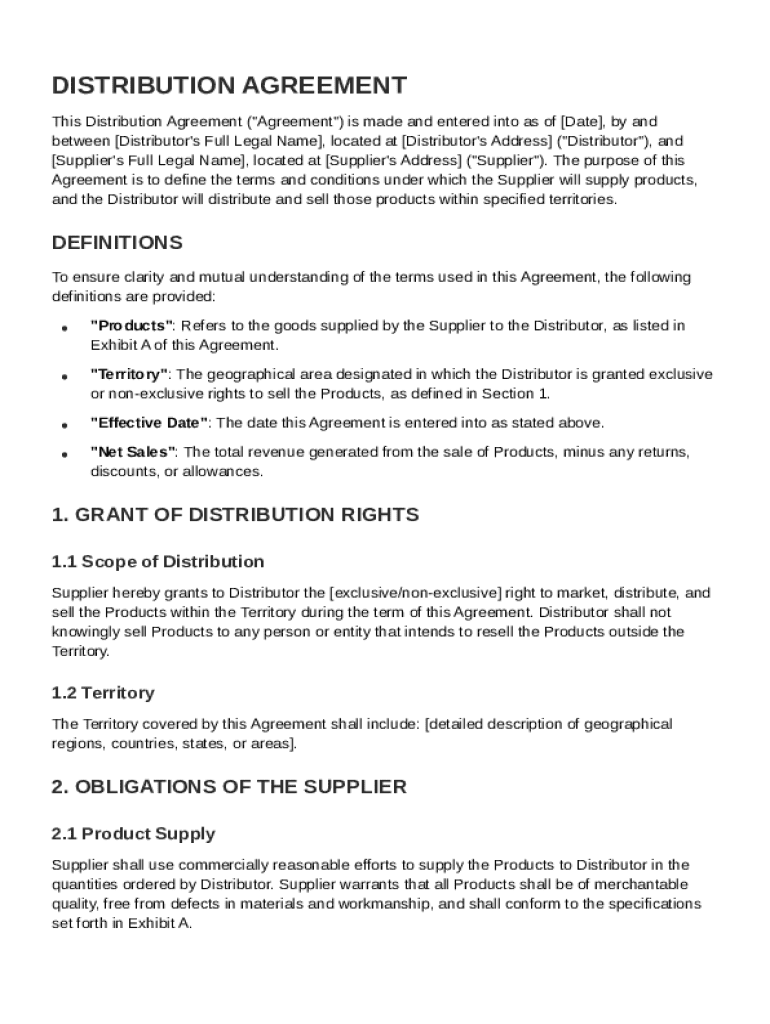
A Distribution Contract Template serves as a pre-configured document designed to streamline the creation of a distribution agreement between a supplier and a distributor. This template sets out the fundamental terms and conditions necessary for governing the distribution process of various products within designated territories. It typically includes crucial elements such as definitions, rights and obligations of the parties involved, and clauses related to confidentiality and intellectual property. By providing a standard structure, the template assists both parties in efficiently drafting a comprehensive agreement tailored to their specific needs without sacrificing legal robustness or clarity.
Key Elements of the Distribution Contract Template
The Distribution Contract Template comprises multiple critical components that ensure a clear and enforceable agreement:
- Grant of Distribution Rights: Specifies the territories and channels where the distributor is authorized to sell the supplier's products.
- Obligations of the Parties: Outlines the responsibilities of both suppliers and distributors, including supply terms, marketing efforts, and performance metrics.
- Confidentiality and Intellectual Property: Protects proprietary information and intellectual property rights related to the products and related business processes.
- Indemnification: Details the conditions under which one party will indemnify the other for certain liabilities or losses, ensuring risk management.
- Governing Law: Identifies the jurisdiction whose laws will govern the agreement, providing legal clarity.
- Miscellaneous Provisions: Includes additional terms such as amendment procedures, termination conditions, and dispute resolution methods.
Steps to Complete the Distribution Contract Template
Finalizing a distribution agreement using the template involves several key steps:
- Review the Template: Carefully examine the template to understand each section and ensure all necessary terms are included.
- Customize Terms: Modify specific sections to reflect the unique business relationship and the operational logistics of both parties.
- Input Essential Details: Fill in the blanks with accurate information, such as the names of the supplier and distributor, specific products, and targeted territories.
- Add Additional Clauses: If applicable, consider inserting bespoke clauses that address unique aspects of your arrangement, such as exclusivity or non-compete agreements.
- Legal Review: Have a legal professional review the completed document to ensure compliance with relevant regulations and that it adequately protects your interests.
- Sign the Agreement: Once both parties are satisfied with the terms, execute the document by signing electronically or in person.
Important Terms Related to Distribution Contract Template
Understanding the terminology within a Distribution Contract Template is vital for drafting an effective agreement:
- Exclusive Distribution: A scenario where the distributor is the sole entity authorized to sell the products within a specified region.
- Non-Exclusive Distribution: Permits multiple distributors to sell products in the same territory, fostering competition.
- Minimum Order Requirement: An obligation for the distributor to purchase a minimum quantity of products within a certain timeframe.
- Territorial Restrictions: Defines geographic boundaries in which the distributor may sell products.
- Performance Goals: Specific sales targets that the distributor must meet, often linked to incentives or penalties.
Legal Use of the Distribution Contract Template
The Distribution Contract Template ensures compliance with legal standards and serves various lawful purposes:
- Creating a Binding Agreement: By using the template, parties draft a legally binding contract that solidifies their business relationship.
- Adhering to Commercial Laws: Ensures adherence to relevant laws and regulations that govern distribution practices and contractual relationships.
- Mitigating Risks: By clearly defining roles and responsibilities, the template helps to prevent disputes and manage potential liabilities effectively.
- Documenting Modification Processes: Outlines procedures for amending the agreement, ensuring that any future changes are legally recognized and agreed upon by both parties.
State-Specific Rules for the Distribution Contract Template
Distribution agreements may be subject to specific statutory requirements depending on the state:
- Governing Jurisdictions: Some states may have unique laws that affect the enforceability of specific clauses, like those related to non-compete agreements.
- Franchise Laws: Certain distribution arrangements might be classified as franchises, requiring compliance with additional registration and disclosure obligations.
- Consumer Protection Regulations: States might enforce consumer protection laws that influence warranty terms or the handling of returns.
Commonly Required Documents for a Distribution Contract
To effectively draft and finalise a distribution agreement, parties may need to gather various supporting documents:
- Product Description Sheets: Detailed descriptions of the products to be distributed, including specifications and features.
- Price Lists: Current pricing information and any applicable discount structures.
- Marketing Plans: Outlines distributor responsibilities regarding product promotion and advertising.
- Historical Sales Data: Previous sales records to predict future performance and set realistic targets.
- Financial Statements: Distributor’s financial reports that might be requested to assess capability and creditworthiness.
Examples of Using the Distribution Contract Template
Utilizing the Distribution Contract Template in practical scenarios can illustrate its versatility:
- Tech Industry: A software company might use the template to authorize a third-party vendor to distribute proprietary software solutions across North America.
- Food and Beverage Sector: A beverage manufacturer may draft a distribution contract to appoint a local distributor for retail store delivery.
- Personal Care Products: A cosmetics brand can establish a distribution agreement for an exclusive distributor in urban areas, focusing on beauty salons and specialty stores.
These examples showcase how diverse industries can customize the template according to their operational and legal requirements, enabling structured and effective distribution relationships.