




Definition and Meaning
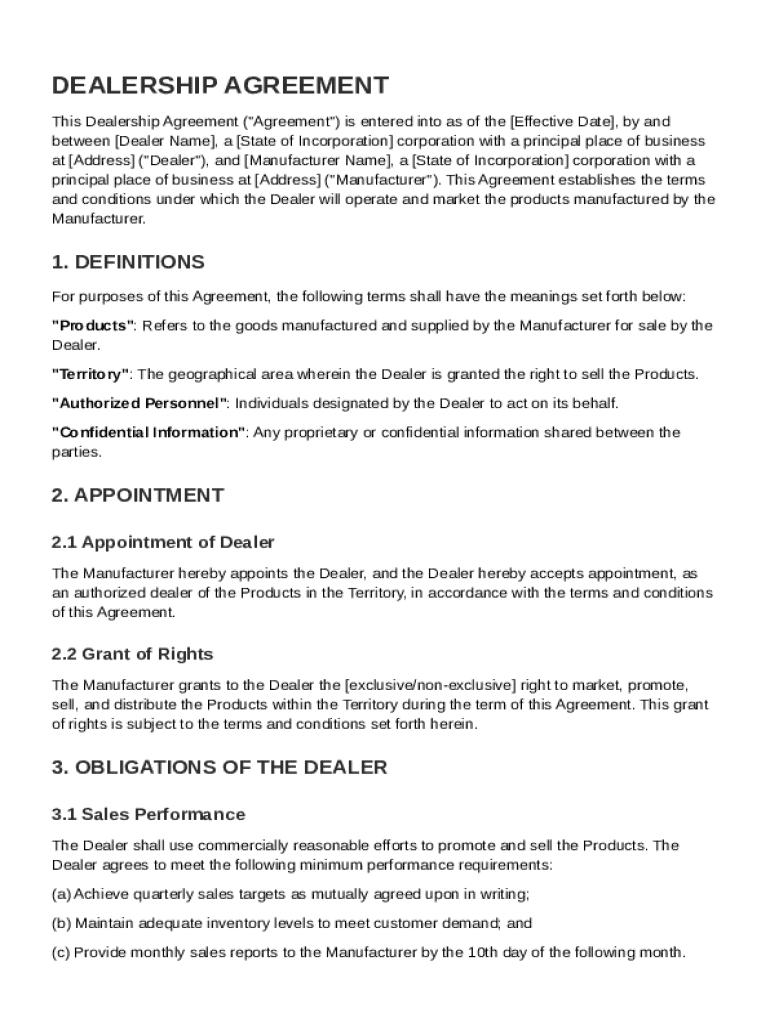
The Dealership Contract Template is a legal document used to formalize an agreement between a manufacturer and a dealer for the marketing, sale, and distribution of the manufacturer's products within a specified territory. It typically outlines the responsibilities and obligations of both parties, including terms related to product supply, promotional activities, sales targets, and legal compliance. The agreement also contains clauses regarding confidentiality, financial arrangements, dispute resolution, and termination. By setting clear terms, the template helps ensure that both the dealer and manufacturer understand and agree to their roles and responsibilities.
Practical Examples in Use
- Automotive Industry: A car manufacturer might use the Dealership Contract Template to set terms with various auto dealers, specifying how many cars must be sold each month or quarter.
- Electronics Retail: An electronics brand could apply this contract for dealer relationships, providing exclusivity in select regions to maintain product prestige.
- Food and Beverage Distribution: A beverage manufacturer can outline distribution rights with dealers to ensure product availability in specific retail environments.
Key Elements of the Dealership Contract Template
The contract includes several critical components to be addressed by both parties involved:
- Obligations of the Manufacturer: These outline what the manufacturer commits to, such as supplying products, providing marketing materials, and offering training or support.
- Obligations of the Dealer: This section specifies the dealer's duties, including maintenance of quality standards, adhering to pricing guidelines, and achieving sales targets.
- Financial Terms: Includes payment structures, discounts, and incentives for reaching sales milestones.
- Confidentiality Provisions: Ensures that sensitive information shared between both parties remains secure and is not disclosed without permission.
Example Clauses
- Supply Obligations: The manufacturer agrees to provide a defined volume of products within specified timelines.
- Marketing Commitments: The dealer must participate in promotional efforts organized by the manufacturer.
Steps to Complete the Dealership Contract Template
Completing a Dealership Contract Template involves several steps to ensure all necessary details are captured:
- Review the Template: Start by thoroughly reading the template to understand each section and what is required.
- Input Specific Details: Enter specifics such as the names of both parties, contact information, and territory or product line details.
- Define Obligations and Rights: Clearly articulate the responsibilities of both the dealer and manufacturer.
- Set Financial Terms: Outline payment terms, and any commissions or bonuses for performance metrics.
- Include Legal Provisions: Ensure clauses for confidentiality, dispute resolution, and termination are fully detailed.
Considerations
- Customization: Tailor the template as needed to fit the specific industry and relationship dynamics.
- Legal Review: Have an attorney review the contract to ensure compliance with applicable laws and to safeguard both parties' interests.
Legal Use of the Dealership Contract Template
Using the Dealership Contract Template correctly is crucial to ensure its enforceability:
- Compliance with Laws: The contract must adhere to federal, state, and local laws governing commercial agreements and distribution rights.
- Enforcement Measures: The inclusion of dispute resolution methods and termination clauses allows for effective management of contract breaches.
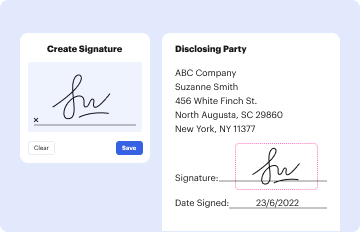
- Legal Signatures: Ensure signatures from authorized representatives of both the dealer and manufacturer are included to validate the agreement’s legality.
Software Compatibility for the Dealership Contract Template
The Dealership Contract Template can be utilized across several digital platforms, making it adaptable to various business environments:
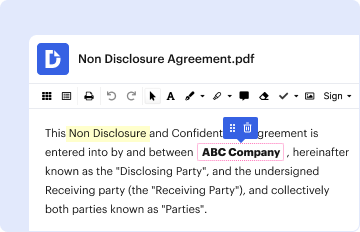
- DocHub Integration: Import the template using DocHub for easy editing, digital signing, and sharing.
- Google Workspace: Utilize Google Docs for collaborative editing and real-time updates with stakeholders.
- PDF Software: Adobe Acrobat Reader or similar applications can be used to complete and store finalized contracts securely.
State-Specific Rules for the Dealership Contract Template
Different states may have unique requirements for dealership agreements:
- Variations in Franchise Laws: States like California have specific statutes affecting automobile dealership agreements, mandating certain disclosures and rights for dealers.
- Territorial Regulations: States may impose geographical limitations or market area stipulations that affect how products are distributed within their borders.
Notable Examples
- California: Stricter regulations around warranty terms and dealer rights.
- New York: Detailed requirements for disclosure of financial incentives and rebates.
Important Terms Related to the Dealership Contract Template
Understanding specific terminology is vital for interpreting the template effectively:
- Territory: Defined geographic area in which the dealer is authorized to promote and sell the manufacturer's products.
- Performance Targets: Specific sales or distribution metrics that the dealer is expected to achieve.
- Exclusivity: Whether the dealer is the sole representative for the manufacturer's products in a specific region.
Contextual Applications
- Exclusivity Clauses: May grant the dealer the right to be the only seller of a product in certain territories to prevent competition.
- Non-Compete Provisions: Ensure dealers do not simultaneously promote competing brands.
Business Types That Benefit Most from the Dealership Contract Template
Certain business sectors find this template especially beneficial due to their reliance on dealer networks:
- Automotive Dealerships: Facilitate structured relationships between manufacturers and car dealerships.
- Consumer Electronics: Manage distribution through regional dealers who handle various tech and appliance brands.
- Farm Equipment Suppliers: Large machinery manufacturers often utilize dealership contracts to ensure their products reach rural and agricultural markets reliably.
Industry-Specific Benefits
- Automobile Sector: Ensures cars are marketed and sold in compliance with emission standards and state laws.
- Electronics Retailers: Helps maintain consistency in product knowledge and service across different dealer locations.