
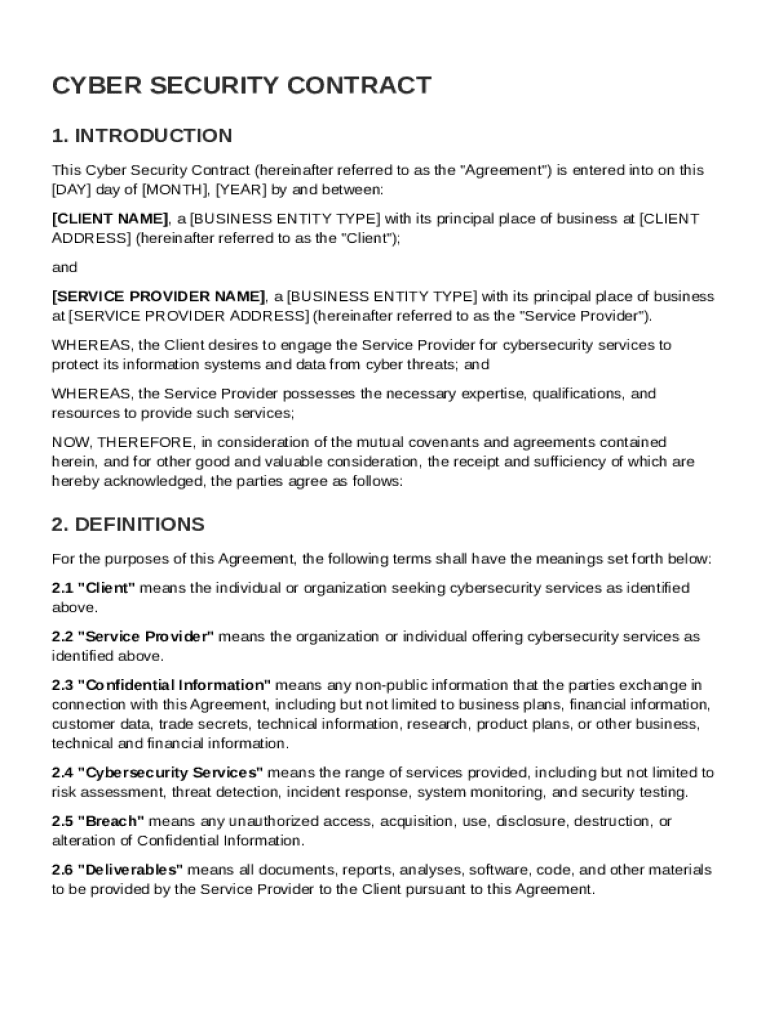







Definition & Meaning
A Cyber Security Contract Template is a structured document that outlines the terms and conditions agreed upon by a Client and a Service Provider for cybersecurity services. The main aim is to protect the Client's information systems from cyber threats. It typically delineates the scope of services, responsibilities of both parties, confidentiality clauses, payment terms, liability provisions, and procedures for resolving disputes.
- Scope of Services: Details the specific cybersecurity services being provided, such as threat detection, data protection measures, risk assessments, and incident response strategies.
- Responsibilities: Specifies the obligations of both parties to ensure the contract's objectives are met. This often includes expectations for maintaining system security and handling breaches.
- Confidentiality: Defines what constitutes confidential information and how it should be protected to prevent unauthorized disclosure.
How to Use the Cyber Security Contract Template
Using the Cyber Security Contract Template requires careful customization to fit specific needs and situations. Here’s a process to consider:
- Identify Parties: Clearly state the Client and Service Provider's details.
- Customize the Scope: Adapt the services section to reflect the specific cybersecurity services required.
- Define Responsibilities: Tailor this section based on the roles and duties of both parties.
- Specify Legalities: Include applicable laws and confidentiality stipulations relevant to the jurisdiction.
- Review and Edit: Ensure all sections reflect the intended agreement accurately before signing.
Example Scenario
A software company hiring a cybersecurity firm can use a tailored template to specify threat monitoring and incident response services, protecting their sensitive data effectively.
Steps to Complete the Cyber Security Contract Template
Completing a Cyber Security Contract Template involves several meticulous steps:
- Gather Information: Collect all necessary details about the Client and Service Provider.
- Fill in the Basics: Input names, addresses, and contact details.
- Define Terms: Specify the timeline, payment terms, and service level agreements.
- Include Additional Clauses: Add any legal provisions, such as governing law and jurisdiction.
- Review and Sign: Verify the document’s accuracy before both parties sign and date it.
- Review tips:
- Ensure clarity and avoid ambiguous terms.
- Cross-check all contractual obligations and deadlines.
Key Elements of the Cyber Security Contract Template
The Cyber Security Contract Template includes essential sections that ensure comprehensiveness and enforceability:
- Definitions Section: Clarifies key terms used throughout the contract to avoid misinterpretations.
- Confidentiality Provisions: Elaborates on the type of data considered confidential and measures for its protection.
- Liability Clause: Outlines the extent of liability each party holds in the event of a breach or data loss.
- Dispute Resolution: Describes methods for resolving disagreements, such as mediation or arbitration, before litigation.
- Miscellaneous Provisions: Covers other necessary legal terms, including amendments and severability.
Who Typically Uses the Cyber Security Contract Template
The template is primarily utilized by:
- IT and Security Firms: To establish clear guidelines with clients for cybersecurity service engagements.
- Businesses of All Sizes: Who require third-party services to safeguard their information systems against cyber risks.
- Legal Departments: That need to standardize service agreements involving cybersecurity components.


Example Users
A mid-sized financial institution may employ the template while outsourcing cybersecurity services to protect against data breaches.
Legal Use of the Cyber Security Contract Template
Ensuring the legality of the Cyber Security Contract Template involves:
- Compliance with Relevant Laws: Alignment with industry standards, such as the ESIGN Act for electronic signatures.
- State Jurisdiction Requirements: Including specific legal provisions that are binding in the working states of the involved parties.
- Enforceability: Ensuring all clauses are clear, mutual, and executable under U.S. law.
State-Specific Rules for the Cyber Security Contract Template
Different states may have varying requirements, which need integration into the template:
- Data Protection Laws: Some states have stricter data protection regulations that must be observed.
- Governing Law Clauses: Specify which state's laws govern the contract in case of disputes, typically where the service is provided or headquartered.
Example Adjustments
For a company operating in California, the template may require the inclusion of California Consumer Privacy Act (CCPA) provisions to comply with state data protection laws.
Advantages of the Cyber Security Contract Template
Utilizing a dedicated Cyber Security Contract Template offers several benefits:
- Clarity: Provides a clear understanding of the roles and obligations of all parties involved.
- Protection: Safeguards both parties by clearly defining the limits of responsibility and liability.
- Standardization: Facilitates consistent contracts across multiple agreements and partnerships.
Practical Benefits
A startup or small business can leverage the template to formalize partnerships with cybersecurity providers efficiently, ensuring they meet industry standards without needing extensive legal resources.




