




Definition & Meaning
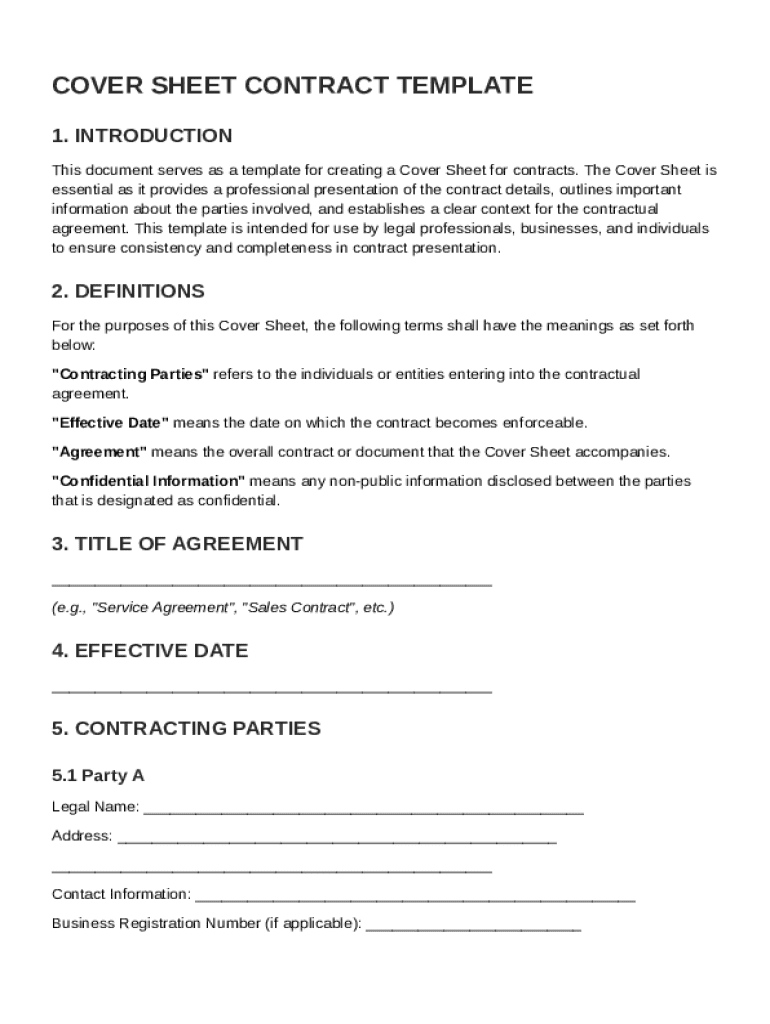
A "Cover Sheet Contract Template" is a formal document used to present essential contract details in a standardized manner. It acts as an introductory page to the contract, summarizing key elements such as the involved parties, the purpose of the contract, and relevant dates and terms. This template serves a dual purpose: providing a professional appearance and ensuring critical contract information is readily accessible. Legal professionals, businesses, and individuals utilize this template to maintain consistency and completeness in their contract presentations.
Key Elements of the Cover Sheet Contract Template
The template encompasses several vital sections:
- Title of Agreement: Clearly states the name of the contract for easy identification.
- Contracting Parties: Identifies all involved parties with their legal names and roles in the agreement.
- Effective Date: Specifies when the contract will commence and become legally binding.
- Purpose of the Agreement: Briefly outlines the contract’s intent, giving context to the reader and highlighting contractual goals.
- Key Dates and Milestones: Lists important deadlines and deliverables within the contract.
- Payment Terms: Details how and when payments will be made, including any penalties for late payments.
- Contact Information: Provides details for each party, ensuring efficient communication.
- Miscellaneous Provisions: Includes additional terms that may impact the agreement or its execution.
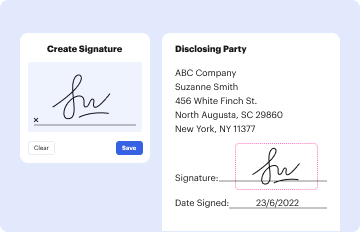
- Signature Section: Designates spaces for the involved parties to sign, solidifying their commitment to the terms.
Steps to Complete the Cover Sheet Contract Template
- Gather Necessary Information: Compile all relevant details about the contract, including party names, contract title, and effective dates.
- Fill in Contract Details: Enter the information into the corresponding sections of the template, ensuring accuracy and completeness.
- Review Key Dates and Milestones: Ensure all important dates and deadlines are recorded, providing clarity on contract timelines.
- Specify Payment Terms: Clearly outline payment schedules and conditions to avoid future disputes.
- Insert Contact Information: Add the contact details for all parties, facilitating easy and quick communication.
- Add Additional Provisions: Include any specific terms or clauses that are unique to your contract.
- Get Signatures: Once all information is filled out, seek signatures from all parties to formalize the agreement.
Why Use the Cover Sheet Contract Template
The cover sheet contract template is beneficial for a variety of reasons:
- Enhances Professionalism: It creates a polished and organized presentation, reflecting positively on the involved parties.
- Facilitates Quick Access to Information: Essential contract details are readily available, making it easier for stakeholders to reference key points.
- Consistency Across Contracts: Utilizing a standardized format ensures uniformity in contract presentation, which is especially valuable for organizations handling multiple contracts.
- Prevents Miscommunication: By clearly outlining terms, conditions, and responsibilities, the template reduces the risk of misunderstandings between parties.
Who Typically Uses the Cover Sheet Contract Template
Various professionals and entities find this template useful, including:
- Legal Professionals: Lawyers and paralegals use it to draft and present contracts in a structured format.
- Business Entities: Companies and entrepreneurs utilize it to formalize agreements with partners, suppliers, and clients.
- Freelancers and Independent Contractors: Individuals benefit from the template for client agreements, ensuring expectations are clear.
- Government and Nonprofit Organizations: These bodies often rely on the template to manage arrangements with external entities or contractors.

Legal Use of the Cover Sheet Contract Template
The cover sheet contract template ensures compliance with legal standards by clearly articulating contractual terms. The template acknowledges legal obligations, safeguarding all parties by including provisions for dispute resolution, governing law, and confidentiality. A well-drafted cover sheet aids in legal enforcement, providing a clear record of the parties' agreement.
State-Specific Rules for the Cover Sheet Contract Template
While this template serves a broad purpose, variations may arise based on state regulations:
- State Governing Law: Specify the state laws under which the contract is governed, which can affect interpretation and enforcement.
- Specific Clauses: Some states may require additional provisions like arbitration agreements or specific consumer protection terms.
- Notarization and Witnessing: Certain states might have stricter requirements for contract witnessing, necessitating notarization to validate agreements.
Important Terms Related to the Cover Sheet Contract Template
Understanding specific terminology within the template is crucial:
- Indemnity Clause: Provides a safeguard, requiring a party to compensate for losses under specific conditions.
- Force Majeure: Excuses one or both parties from fulfilling obligations due to extraordinary events beyond their control, like natural disasters.
- Confidentiality Agreement: Ensures sensitive information remains private, not shared with unauthorized parties.
- Termination Clause: Outlines the conditions under which a contract can be terminated before its expiration.
Examples of Using the Cover Sheet Contract Template
To illustrate its application, consider the following scenarios:
- Business Partnership: Two companies enter into a joint venture; the cover sheet highlights the main agreement, partner details, and collaborative goals.
- Freelance Agreement: A graphic designer and a client use the template to establish project terms, deadlines, and payment structures.
- Vendor Contract: A retail store contracts a supplier for inventory; the cover sheet delineates delivery schedules, payment terms, and contact points.
The comprehensive and flexible nature of the cover sheet contract template makes it an indispensable tool for organizing and managing a variety of contractual relationships across different sectors.