Definition & Meaning
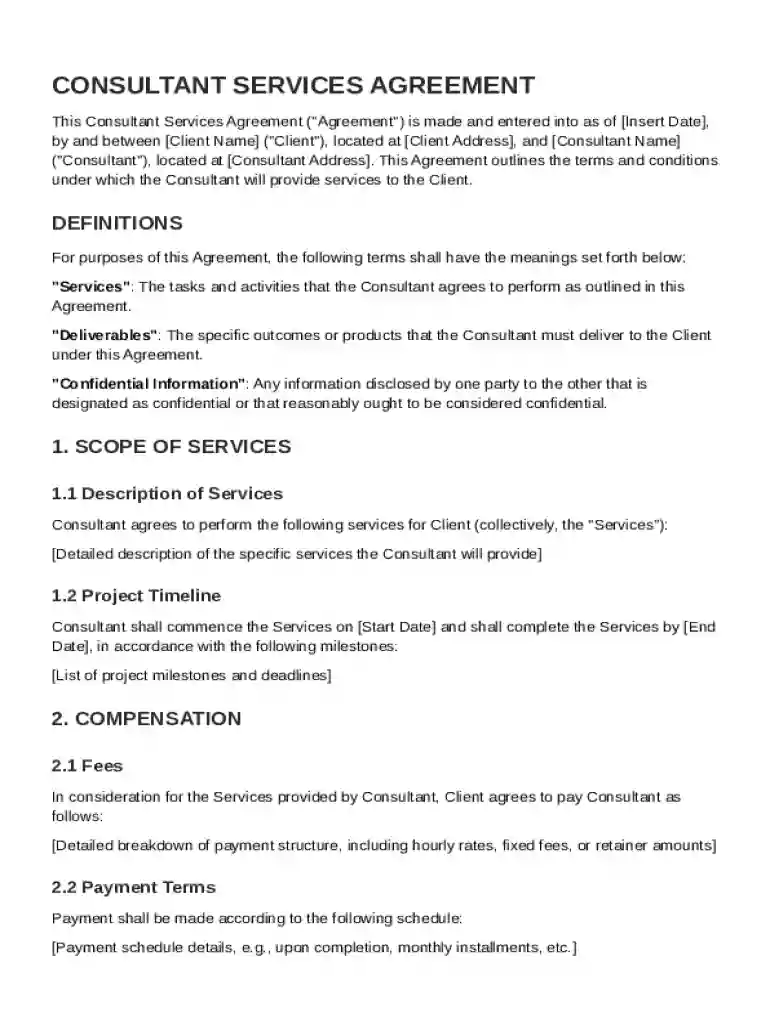
A Consultant Contract Template serves as a comprehensive framework that outlines the agreement between a consultant and their client. This template is instrumental in defining the terms and conditions under which consulting services will be provided. Key elements include the scope of services, compensation, confidentiality clauses, intellectual property rights, and termination conditions. The document ensures both parties have a clear understanding of their rights and obligations, facilitating a professional and organized business relationship.
Key Elements of the Consultant Contract Template
Understanding the essential components of a Consultant Contract Template is crucial for both consultants and clients. The contract typically encompasses:
- Scope of Services: A detailed description of the services to be provided, including deliverables and performance timelines.
- Compensation Structure: Clear terms on how the consultant will be compensated, whether through a fixed fee, hourly rate, or milestone-based payments.
- Confidentiality Obligations: Clauses that protect sensitive information shared between parties during and after the project.
- Intellectual Property Rights: Specifications on who owns the work produced under the agreement and how it can be used.
- Termination Conditions: The conditions under which the contract can be terminated by either party, including notice periods and circumstances leading to termination.
- Liability Limitations: Provisions that limit the legal liability of the parties involved, ensuring protection against unforeseen issues.
How to Use the Consultant Contract Template
Utilizing the Consultant Contract Template effectively involves a series of structured steps:
- Review the Template: Carefully examine the entire document to familiarize yourself with its structure and purpose.
- Customize the Content: Modify sections to accurately reflect the specifics of your consulting arrangement, such as project scope and compensation terms.
- Seek Legal Advice: Consider consulting a legal expert to validate that the contract meets all legal requirements and adequately protects your interests.
- Review with Client: Share the modified draft with your client for their input and confirmation that all terms are mutually agreeable.
- Finalize the Document: Once both parties agree on the terms, ensure all sections are completed and error-free.
- Obtain Signatures: Have both parties sign the document to formalize the agreement, making it legally binding.
Steps to Complete the Consultant Contract Template
Completing a Consultant Contract Template requires attention to detail and clarity in communication. Follow these steps to fill out the form correctly:
- Identify Parties Involved: Clearly identify the consultant and client, including names, addresses, and contact information.
- Detail the Project Scope: Expand on what the consulting services will entail, listing specific tasks and objectives.
- Set Payment Terms: Define payment conditions, including due dates, methods of payment, and any penalties for late payment.
- Include Confidentiality Terms: Incorporate conditions detailing the handling and protection of confidential information.
- Add Signatures: Ensure all parties sign and date the contract, confirming their understanding and agreement.
Who Typically Uses the Consultant Contract Template
The Consultant Contract Template is commonly used by various professionals and organizations, including:

- Independent Consultants: Individuals offering specialized expertise in fields such as IT, finance, or management.
- Consulting Agencies: Firms that provide a range of consulting services and require consistent documentation for client engagements.
- Corporate Clients: Companies hiring external consultants to enhance their operations, strategy, or projects.
- Nonprofits and Government Entities: Organizations seeking expert guidance on initiatives or policy implementations.
Legal Use of the Consultant Contract Template
For a Consultant Contract Template to be legally enforceable, it must adhere to applicable laws and regulations. In the United States, contracts should:
- Comply with federal and state laws governing contracts and consulting arrangements.
- Be crafted to reflect mutual consent, lawful objectives, and consideration between parties.
- Avoid clauses that contravene public policy or statutory requirements.
- Clearly define dispute resolution mechanisms, such as arbitration or mediation, to address potential conflicts.
State-Specific Rules for the Consultant Contract Template
While the Consultant Contract Template is generally applicable across the United States, state-specific rules may affect its components:
- Governing Law Clauses: Specify the state laws that will govern the interpretation and enforcement of the contract.
- Employment Classification: Adhere to state guidelines distinguishing between independent contractors and employees to ensure compliance with labor laws.
- Non-Compete Restrictions: Recognize varying state laws on the enforceability of non-compete agreements, which may affect post-contractual obligations.
Examples of Using the Consultant Contract Template
Practical examples illustrate the versatile use of the Consultant Contract Template across different scenarios:
- Technology Consultant: Engaged to implement a new IT infrastructure, with specific deliverables and project timelines outlined within the contract.
- Financial Advisor: Offers strategic financial planning services to a corporate client, detailing compensation via a monthly retainer.
- Marketing Specialist: Hired to develop a comprehensive branding strategy, with intellectual property rights clauses covering the produced materials.
- Human Resources Consultant: Assists a company in restructuring its organizational hierarchy, with confidentiality clauses protecting sensitive personnel data.