Definition and Purpose of a Homeschool Contract Template
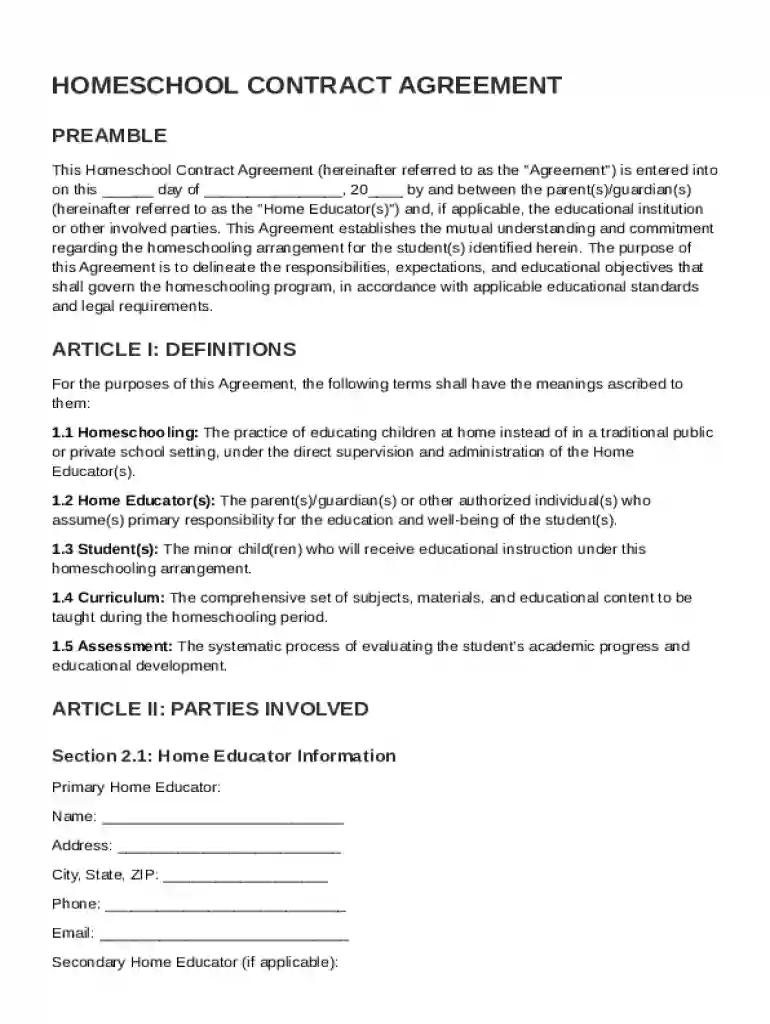
A Homeschool Contract Template is a formal document that outlines the responsibilities, expectations, and educational objectives for student homeschooling. This template is designed to ensure clarity and mutual understanding between home educators and involved educational institutions. It defines key terms such as roles of the educator and student, curriculum guidelines, instructional hours, and assessment methods. By providing structure and legal compliance references, the contract acts as a guide for maintaining an effective homeschooling plan that aligns with applicable education laws and standards.
Components of the Homeschool Contract
- Roles and Responsibilities: Specifies the duties of parents, students, and any involved educators or facilitators, including daily educational tasks and long-term goals.
- Curriculum Overview: Lists subject areas and educational materials to be covered within the academic year. It might include plans for extracurricular activities and special projects.
- Instructional Hours: Outlines the daily or weekly schedule, ensuring compliance with state laws on minimum instructional time.
- Assessment Techniques: Describes methods for evaluating student progress, which may include tests, projects, and periodic reviews.
Steps to Complete the Homeschool Contract Template
Completing the Homeschool Contract Template involves a series of steps to ensure that it accurately reflects the educational setup and complies with legal standards.
- Review State Regulations: Begin by understanding your state's homeschooling laws and requirements to ensure the contract complies with legal mandates.
- Define Educational Philosophy: Clearly articulate the educational philosophy or approach that will guide homeschooling, such as Montessori, classical education, or another method.
- Detail the Curriculum: Specify the educational materials, textbooks, online resources, and assessment tools that will be utilized.
- Assign Roles and Responsibilities: Clearly outline the roles for each participant in the education process, detailing who will teach specific subjects and who will oversee administrative tasks.
- Determine Assessment Methods: Decide on the evaluation strategies and metrics to be used to track educational progress throughout the academic year.
- Set a Schedule: Create a flexible or fixed daily learning schedule, ensuring it adheres to your state’s requirements for instructional time.
- Draft the Agreement: Use the template to fill in all the necessary details, ensuring accuracy and completeness.
- Review and Sign: Have all parties involved review the completed contract, suggest amendments if necessary, and sign it to finalize the agreement.
Key Elements of the Homeschool Contract Template
Each Homeschool Contract Template includes essential components that ensure a comprehensive approach to home education.
- Parties Involved: Clearly delineates who will be responsible for educational instruction and who will be learning, including any third-party educators or tutors.
- Educational Goals: Outlines both short-term and long-term goals for the student to achieve throughout the school year.
- Amendment Conditions: Provides the terms under which the contract can be modified to reflect changes in educational methods, needs, or legal requirements.
- Legal Compliance: Ensures the contract aligns with state educational laws, covering registration requirements, record-keeping, and submissions.
- Termination Clause: Defines the circumstances under which the homeschooling arrangement may be prematurely terminated or concluded at the end of the school year.
State-Specific Considerations for Homeschool Contracts
Different states in the U.S. have varying regulations and requirements for homeschooling.
Examples of State-Specific Variations
- California: Requires an annual private school affidavit outlining basic educational details for homeschoolers.
- Texas: Allows homeschooling as long as the curriculum covers reading, spelling, grammar, mathematics, and good citizenship.
- New York: Mandates quarterly reports and an annual assessment, whether standardized testing or evaluation by a certified teacher.
Homeschool contracts should reflect these local requirements to ensure legal adherence and facilitate smooth operation of the homeschool arrangement.
Legal Considerations and Compliance
Ensuring legal compliance when crafting a Homeschool Contract is crucial to avoid potential issues with state education departments.
- Registration Requirements: Most states require notification to local education authorities about the decision to homeschool for tracking and reporting purposes.
- Documentation: Proper record-keeping of attendance, instructional materials, and progress is often legally mandated.
- Assessment Records: Full documentation of assessments and student progress reports should be maintained and made available if requested by authorities.
Legal Terminologies
Understanding and correctly using legal terms within the contract enhances clarity and compliance.
- Educational Institution: Refers to any entity legally recognized to provide educational services, which in homeschooling, is typically the home-school.
- Legal Guardian: A parent or appointed individual responsible for the oversight of the student’s education and well-being.
- Consortium Agreements: Applicable if the homeschooling is conducted through a cooperative group where multiple families or facilitators manage the curriculum collectively.
Software and Tools for Creating Homeschool Contracts
Utilizing digital platforms like DocHub for developing Homeschool Contracts enhances efficiency.
Advantages of Digital Contract Creation
- Ease of Access: Digital contracts can be easily edited and shared online among educators and parents.
- Enhanced Security: Platforms like DocHub offer encryption and authentication options, safeguarding sensitive data.
- Real-Time Collaboration: Facilitates multiple contributors’ input across geographical locations through cloud services such as Google Drive or Dropbox.
Utilizing software such as DocHub not only streamlines the creation process but also ensures that all stakeholders have convenient access to the most current version of a contract.
Software Compatibility and Integration
Homeschool Contracts managed via DocHub integrate seamlessly with other productivity tools, which can be especially beneficial for homeschooled groups coordinated by diverse stakeholders.
- Google Workspace Integration: Import and export files directly to and from Google Drive, ensuring seamless updates to connected cloud services.
- Compatibility with Standard Formats: DocHub supports multiple document formats beyond PDF, like DOC, PPT, XLS, and TXT, promoting flexibility.
- Digital Signature Capabilities: Legally binding electronic signatures on all documents are supported, creating a streamlined electronic transaction process.
Overall, digital contracts and the use of platforms like DocHub allow for a paperless and efficient way of managing homeschool agreements that are practical for dynamic homeschooling environments.