




01. Edit your form online
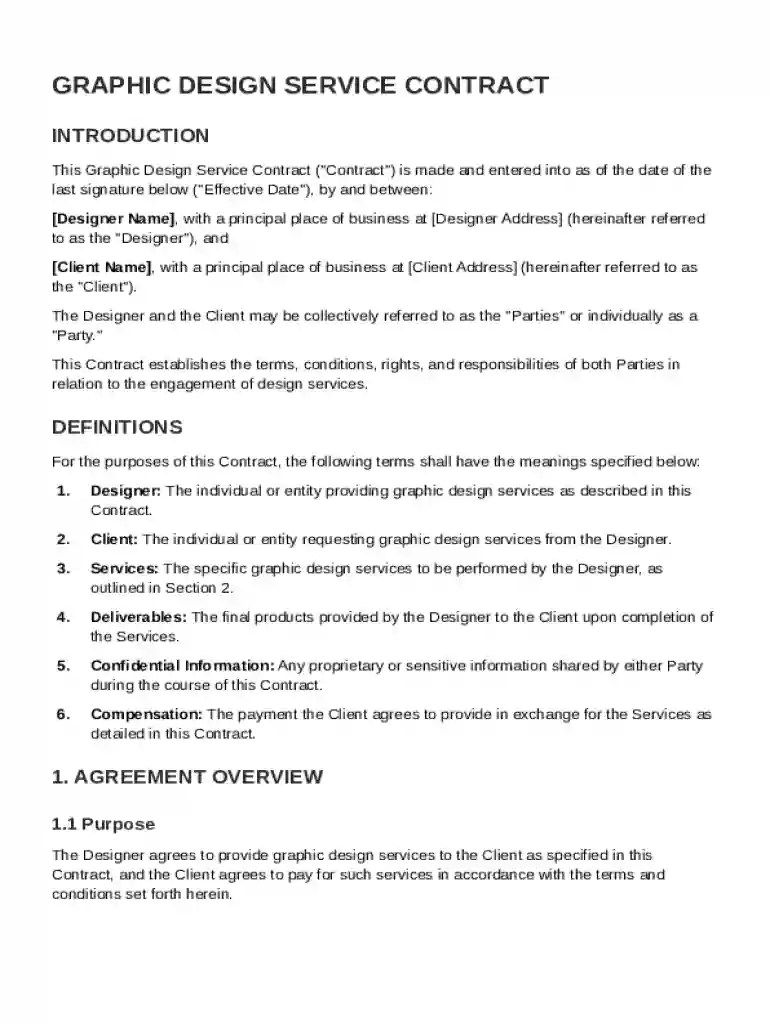
Type text, add images, blackout confidential details, add comments, highlights and more.

Type text, add images, blackout confidential details, add comments, highlights and more.

Draw your signature, type it, upload its image, or use your mobile device as a signature pad.

Send it via email, link, or fax. You can also download it, export it or print it out.
A Graphic Design Service Contract Template is a formal document outlining the terms and conditions agreed upon by a graphic designer and their client. It serves as a legal framework that defines the scope of work, deliverables, responsibilities, and payment details to ensure a mutual understanding and clear expectations between both parties. This contract helps mitigate potential disputes by providing a comprehensive reference for rights and obligations associated with the graphic design services being offered.
Utilizing a Graphic Design Service Contract Template is straightforward, offering a structured approach to creating a comprehensive agreement. Start by identifying the basic information of the parties involved, including names and contact details.
Consider a graphic designer tasked with creating a new corporate logo. The contract would specify the number of initial concepts, revision rounds, and final deliverable formats.
The Graphic Design Service Contract Template encompasses several critical components designed to ensure a clear, enforceable agreement.
This contract template is predominantly used by freelance graphic designers, design agencies, and their clients to formalize their working relationship.


A Graphic Design Service Contract Template is indispensable for establishing professional relationships in the design industry. It protects both parties by clarifying expectations and legal rights.
Imagine a scenario where a client disputes the number of revisions included in a project. A contract that specifies this detail avoids conflicts by providing a clear reference point.
At DocHub, your data security is our priority. We follow HIPAA, SOC2, GDPR, and other standards, so you can work on your documents with confidence.




The NS-Designer enables using a graphic Windows interface and Windows operating environment so that screens can be created simply and easily by practically
Design Professional represents to the Owner that the amount of Site Visits are adequate to perform all the obligations required of him by this Contract,
No information is available for this page.


