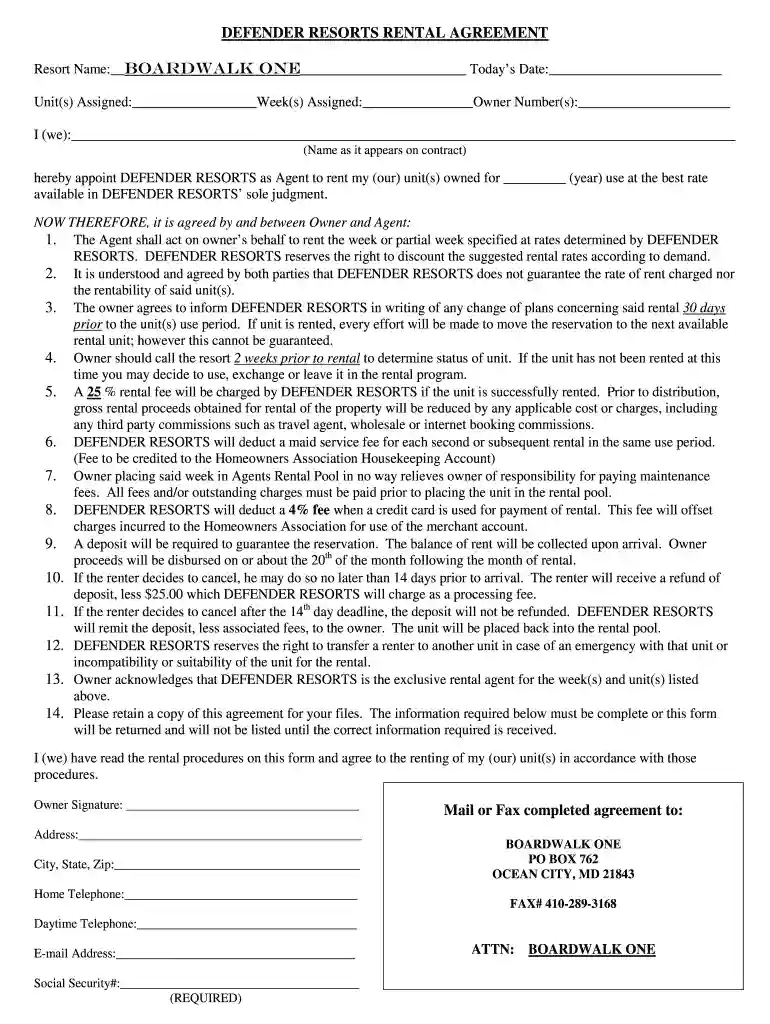
Understanding the Resorts Agreement
A resorts agreement is a formal contract between a property owner and a resort management company, delineating the exclusive rights of the latter to rent the owner's unit. This document outlines key operational terms, such as fee structures, party responsibilities, cancellation policies, and detailed management procedures for rental activities.
Important components of a resorts agreement typically include:
- Terms of Rental: Specifies the duration of the agreement and the conditions under which rentals may occur.
- Fee Structures: Outlines the commission or fees owed to the resort management for their services in managing rentals.
- Cancellations and Modifications: Details the required notice period and penalties, if any, for cancellations or changes in rental plans.
- Responsibilities of Both Parties: Defines what is expected from both the owner and the management company, covering maintenance, marketing, and customer service aspects.
How to Use the Resorts Agreement
Using a resorts agreement effectively requires understanding and interpreting its clauses correctly. Here are the steps to ensure proper use:
- Review the Agreement: Carefully read through all sections, noting specific terms that may affect your rights or obligations.
- Negotiate Terms: If necessary, engage with the management company to clarify terms or negotiate changes that suit your preferences.
- Documentation: Keep a signed copy for your records while also storing any correspondence with the management team related to the contract.
- Compliance: Ensure compliance with all stipulations of the contract to avoid penalties or disputes.
Some common considerations include ensuring that communication lines remain open between the owner and the resort management for smooth operations.
Key Elements of the Resorts Agreement
The primary elements of a resorts agreement cover critical areas that govern the relationship between the owner and the management company. These elements include:
- Property Description: Clearly describes the property being managed and rented.
- Compensation Terms: Establishes how and when the management company will be compensated for their services, including details on expenses the owner may incur.
- Termination Clauses: Outlines conditions under which either party can terminate the agreement, ensuring both sides are aware of their rights if they choose to end the relationship.
- Dispute Resolution: Specifies methods for resolving conflicts that might arise during the duration of the agreement, potentially including mediation or arbitration processes.
Having these elements clearly defined prevents misunderstandings and legal disputes.
Steps to Complete the Resorts Agreement
Completing a resorts agreement involves several standard but critical steps to create a legally binding document. Follow these outlined steps:
- Draft the Agreement: Write down the terms clearly, ensuring all necessary elements are included.
- Review with Legal Counsel: It's beneficial to have a lawyer specializing in real estate or contract law review the document to ensure compliance with state laws.
- Signatures: Ensure that both parties sign the agreement, along with setting a date. Signatures indicate acceptance of all terms stated in the document.
- Distribution: Provide copies to all involved parties and store the original in a secure location to safeguard against disputes.
This structured process helps mitigate risks associated with ownership and management disputes.
Who Typically Uses the Resorts Agreement
Resorts agreements are utilized by various stakeholders in the hospitality and real estate sectors, including:
- Property Owners: Individuals or entities owning vacation homes or condos in tourist areas looking to monetize their properties.
- Resort Management Companies: Businesses specializing in managing rentals for property owners, ensuring compliance with local regulations and optimizing occupancy rates.
- Travel Agencies: Organizations that may partner with resorts or property management companies to provide customers with vacation rental options.
- Investors: Individuals investing in real estate for rental income who seek to outsource property management.
By understanding who utilizes these agreements, stakeholders can more effectively tailor communications and negotiations.

Important Terms Related to the Resorts Agreement
Familiarity with specific terminology related to resorts agreements aids in understanding the contractual landscape. Some terms include:
- Exclusive Use: Refers to the owner's granting the management company the sole rights to rent the property.
- Gross Revenue: The total income from rental before any deductions, crucial for defining fee structures.
- Occupancy Rate: A metric that illustrates the percentage of available rental units that are occupied over a specified time period.
- Force Majeure: A clause that allows for contract modification or termination under extraordinary circumstances beyond control, such as natural disasters.
Understanding these terms is pivotal for ensuring that both parties are aligned in their expectations and responsibilities.
Examples of Using the Resorts Agreement
Practical scenarios illustrate how resorts agreements operate within the hospitality industry. Here are a few examples:
- Vacation Home Rentals: An owner in Florida enters a resorts agreement with a management company to list their beachfront property on various rental platforms, relying on the management team to handle bookings, cleanings, and guest communications.
- Long-term Rental Developments: A developer may utilize resorts agreements for multiple units within a resort complex, relying on a management company to oversee rental operations for several properties under one agreement.
- Seasonal Rentals: An owner might enter into a seasonal resorts agreement to rent their property during peak tourist seasons, specifying higher rates and a limited rental window to maximize income.
These examples highlight the versatility of resorts agreements in various rental contexts within the vacation and hospitality industries.