Definition & Meaning
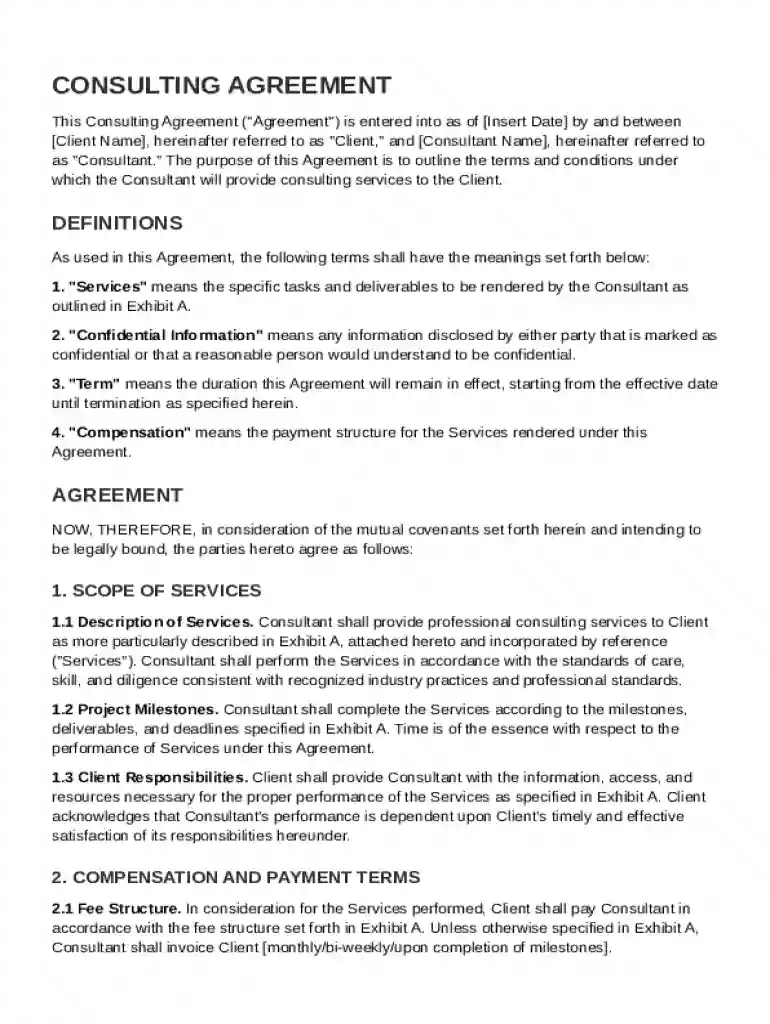
The "Generic Consult Contract Template" is a standardized document designed to outline the agreement between a consultant and a client. This template serves as a basis for formalizing consulting arrangements, ensuring both parties understand their roles and obligations. Key components within this template often include the scope of services, compensation details, confidentiality clauses, and liability limitations. By using a generic template, both small and large businesses can streamline the creation of consulting agreements, maintaining consistency while customizing certain terms to suit specific project requirements.
Key Elements of the Generic Consult Contract Template
Understanding the key elements of a generic consult contract template is essential for ensuring a comprehensive and effective agreement. These elements include:
- Scope of Services: Outlines the specific tasks and responsibilities the consultant is to perform. It’s a critical section to avoid any misunderstandings.
- Compensation Terms: Details regarding payment structure, including hourly rates, fixed fees, or milestone payments, as well as payment schedules.
- Confidentiality Obligations: Ensures that sensitive information shared during the consultancy is protected. This section may also cover the duration of confidentiality.
- Ownership of Work Product: Specifies who retains the rights to the work created during the consultancy. It's crucial in industries where intellectual property is involved.
- Indemnification and Liability Clauses: Defines the extent of liability for each party and any indemnification provisions to protect against potential legal claims.
How to Use the Generic Consult Contract Template
Using a generic consult contract template effectively involves several strategic steps:
- Download the Template: Access the template from a reliable source, ensuring it’s suitable for your industry and state-specific requirements.
- Customize the Content: Tailor the language and sections to reflect specific details of your consultancy agreement, such as the project timeline and deliverables.
- Review Legal Requirements: Consult with a legal professional to ensure all clauses meet legal standards and protect your interests.
- Discuss with the Client: Review the contract with the client to negotiate any terms and ensure mutual understanding of expectations.
- Finalize and Sign: Once both parties agree on the terms, the document should be signed electronically or physically, depending on preference.
Steps to Complete the Generic Consult Contract Template
Completing the template involves systematic steps to ensure all necessary information is accurately captured:
- Input Basic Information: Enter the names and contact details of both the consultant and client at the top of the document.
- Define the Scope: Clearly articulate the consultancy tasks, deliverables, and any specific project goals.
- Specify Compensation: Detail the compensation structure, including payment terms, methods, and conditions for additional fees or expenses.
- Outline Confidentiality Terms: Customize confidentiality clauses to specify what information is considered confidential and any exceptions.
- Detail Legal Provisions: Review and adjust indemnification and liability clauses as necessary to align with both parties' risk appetite.
- Signature Section: Include a section for signatures and dates to officially bind the agreement.
Legal Use of the Generic Consult Contract Template
Adhering to legal standards is paramount when employing a generic consult contract template:
- Compliance with State Laws: Ensure the contract meets the legal requirements specific to the state in which the consultancy is provided.
- ESIGN Act Compliance: For electronic signatures, confirm that the signature process adheres to the ESIGN Act, making them legally binding.
- Legal Review: It is advisable to have a legal professional review the template, particularly when dealing with complex or high-value contracts.
State-Specific Rules for the Generic Consult Contract Template
While the template serves as a baseline, state-specific regulations may necessitate modifications:
- Worker Classification Rules: Some states have stringent guidelines regarding the classification of consultants versus employees.
- Tax Regulations: State-specific tax implications might impact payment terms and require additional clauses.
- Industry Regulations: Certain industries, such as healthcare or finance, may have additional compliance requirements regarding data protection or ethical considerations.
Examples of Using the Generic Consult Contract Template
Real-world scenarios where the template is effectively utilized include:
- Tech Consultation: A software developer uses the template for a six-month project to upgrade a client's IT infrastructure.
- Marketing Strategy Consulting: A marketing consultant employs the template to outline a comprehensive campaign strategy for a new product launch.
- Financial Advising: An independent financial advisor utilizes the template when providing strategic financial planning for a family-owned business.
These examples illustrate the versatility and necessity of a structured approach when establishing consulting agreements across different sectors and project scopes.