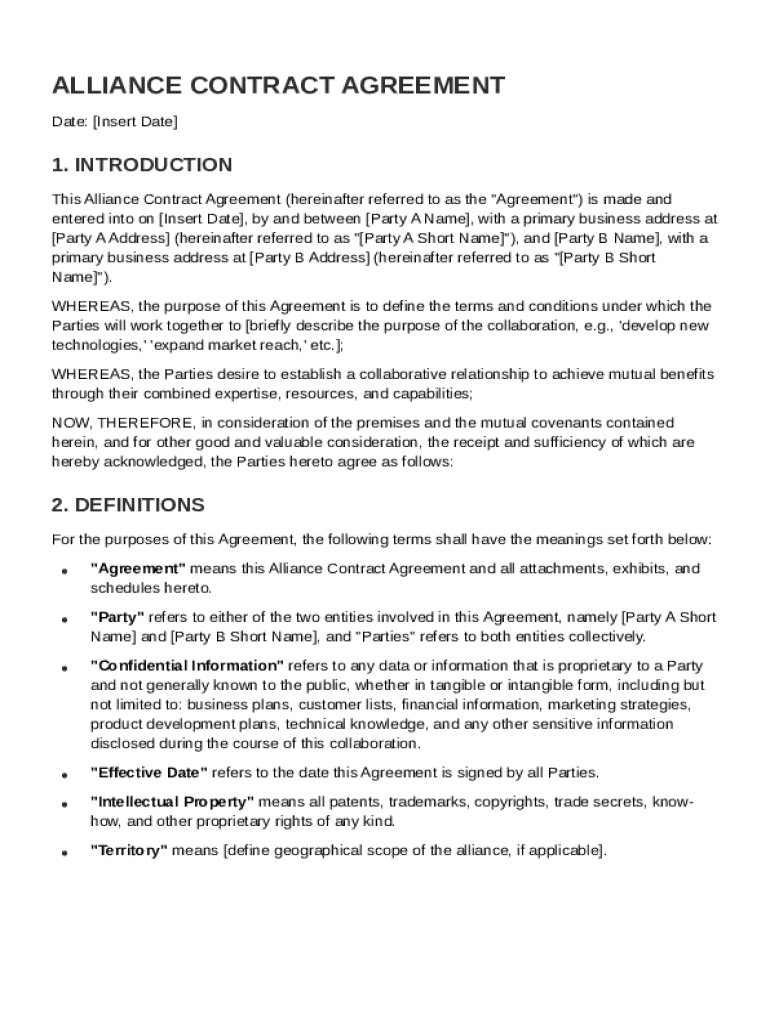







Definition and Meaning
An Alliance Contract Template is a formal document designed to define the collaborative terms between two or more parties, typically businesses or organizations. This template establishes the framework for the alliance by detailing the roles, responsibilities, and expectations of each party involved. It aims to foster successful partnerships by laying out mutual goals, use of shared resources, and protocols for communication. The contract usually includes detailed sections on intellectual property rights, financial arrangements, confidentiality agreements, and dispute resolution methods to ensure clarity and prevent conflicts.
Components of an Alliance Contract Template
- Roles and Responsibilities: Clearly defines what each party is responsible for within the alliance.
- Scope of Collaboration: Outlines the specific areas and goals of the collaboration.
- Intellectual Property: Specifies ownership and usage rights over any intellectual property created during the collaboration.
- Confidentiality Agreement: Establishes guidelines for handling sensitive information.
- Dispute Resolution: Details the agreed-upon methods for resolving conflicts, such as mediation or arbitration.
- Termination Clauses: Sets the conditions under which the alliance can be dissolved.
Key Elements of the Alliance Contract Template
The Alliance Contract Template is constructed with several fundamental elements that ensure a comprehensive and clear agreement for all parties.
Fundamental Sections
- Introduction and Purpose: Provides an overview of the intent and goals of the alliance.
- Definitions: Lists and explains key terms used throughout the document.
- Financial Arrangements: Describes the payment structure, revenue sharing, and budget allocations.
- Management and Governance: Outlines how the alliance will be managed and governed, including any committees or boards.
- Legal Compliance: Ensures all activities within the alliance comply with applicable laws and regulations.
Practical Examples
- Tech Partnerships: A tech startup and a larger corporation may use an alliance contract to co-develop a new software product.
- Research Collaborations: Universities might enter into an alliance to share research findings and resources for a specific project.
How to Use the Alliance Contract Template
Using an Alliance Contract Template effectively requires a methodical approach to ensure all necessary details are included and agreed upon by all parties.
Step-by-Step Guide
- Review the Template: Carefully read through the entire template to understand all sections.
- Customize for Specific Needs: Tailor the template to fit the specific needs and conditions of the partnership.
- Consult Legal Experts: Involve legal advisors to ensure all terms comply with relevant laws and accurately reflect the intentions of the alliance.
- Negotiate Terms: Collaborate with the other party to refine and finalize the terms.
- Draft and Review: Prepare a draft version and have all parties review it for accuracy and completeness.
- Formalize the Agreement: Once reviewed, all parties should sign the document to formalize the alliance.
Important Considerations
- Clear Communication: Maintain open lines of communication throughout the process to ensure all parties are aligned.
- Document Iterations: Keep track of all versions of the document during negotiations to avoid discrepancies.
Legal Use of the Alliance Contract Template
The Alliance Contract Template must be used in accordance with legal standards set forth by local and federal laws. This not only legitimizes the collaboration but also protects all parties involved.
Compliance and Legal Framework
- ESIGN Act Compliance: Ensure electronic signatures used in finalizing the template adhere to legal standards.
- State Regulations: Verify any state-specific regulations regarding business collaborations and ensure compliance.
- Confidentiality and Non-Disclosure: Properly implement confidentiality clauses to protect sensitive information.
Legal Risk Management
- Legal Counsel Review: Engage legal experts to evaluate contract terms and mitigate potential legal risks.
- Periodic Audits: Regular audits and reviews of the contract and its execution can prevent legal issues and ensure continued compliance.
Who Typically Uses the Alliance Contract Template
The Alliance Contract Template is versatile and can be utilized by various types of organizations and individuals seeking to create formal partnerships.


Common Users
- Businesses: Companies seeking joint ventures or partnerships for product development, marketing, or sales.
- Non-Profits: Organizations collaborating on charitable projects or events.
- Educational Institutions: Universities partnering for academic research or exchange programs.
- Government Agencies: Entities forming public-private partnerships (PPPs) for infrastructure or community projects.

Benefits for Participants
- Shared Expertise: The template facilitates effective utilization of each party’s strengths and expertise.
- Risk Distribution: Partners can share risks, reducing individual exposure.
- Resource Optimization: Efficient use of pooled resources can lead to enhanced outcomes.
Important Terms Related to Alliance Contract Template
Understanding the key terminology is vital for effectively using the Alliance Contract Template.
Commonly Used Terms
- Parties: The entities entering into the alliance.
- Confidential Information: Any information deemed confidential under the terms of the contract.
- Force Majeure: A clause that frees both parties from liability or obligation when an extraordinary event or circumstance beyond their control occurs.
- Amendments: Changes or additions to the original contract agreed upon by all parties.
Contextual Examples
- Confidential Information: Details about a proprietary technology shared between tech companies.
- Force Majeure: Natural disasters that affect the ability of parties to fulfill contract obligations.
State-Specific Rules for the Alliance Contract Template
Alliance Contract Templates may be subject to differing rules and regulations based on the state in which they are executed.
State Regulations
- Contract Law Variations: Some states have unique regulations regarding contract enforcement and interpretation.
- Governing Law Clauses: These clauses indicate which state's laws will apply in interpreting the contract terms.
Examples of State Specifics
- California: Certain tech-related collaborations may require additional data privacy considerations.
- New York: May have specific guidelines on dispute resolution processes included in the contract.
Examples of Using the Alliance Contract Template
Real-world applications of an Alliance Contract Template can illustrate its effectiveness and versatility.
Case Study Examples
- Healthcare: A hospital and a research institution collaborating on a new treatment protocol would use the template to delineate responsibilities and share findings.
- Automotive Industry: Two automotive companies might form an alliance to co-develop a new fuel-efficient vehicle, addressing intellectual property and shared resources in the contract.
- Retail Partnerships: A large retailer and a logistics company partnering to streamline supply chain processes using this template to define roles, deliverables, and timelines.
Lessons Learned
- Clear Goal Definition: Successful alliances clearly define shared goals and measurable outcomes.
- Effective Communication: Continuous and clear communication is crucial for adapting to changes and resolving conflicts.