Definition & Meaning
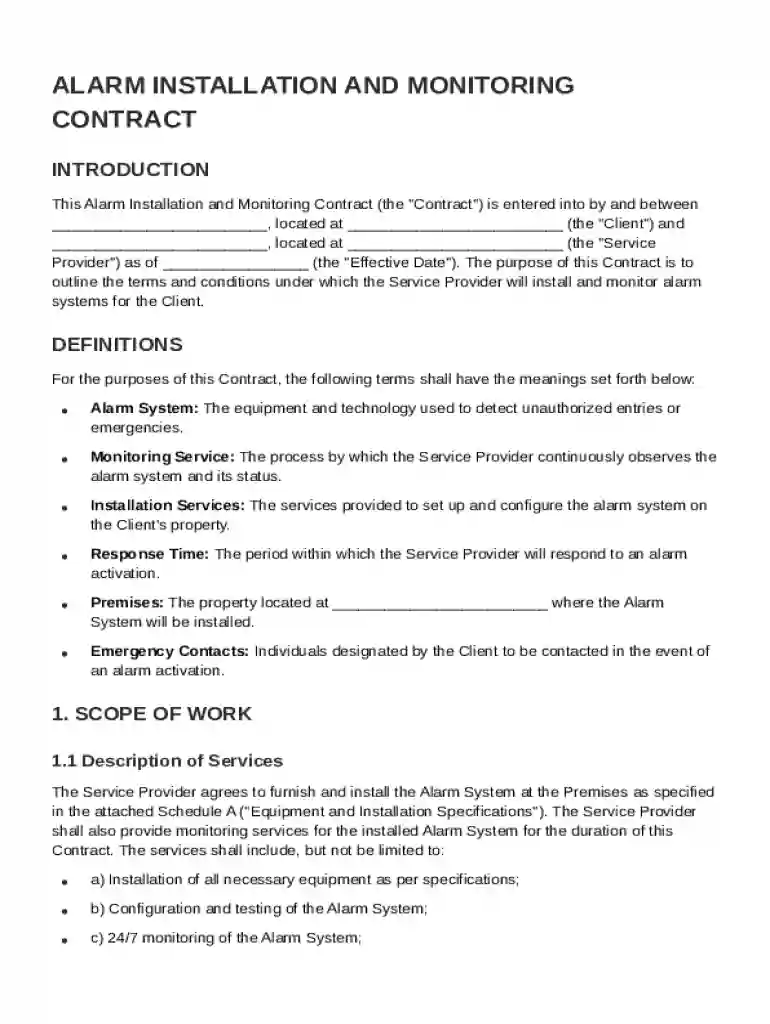
An Alarm Installation and Monitoring Contract Template is a legally binding document outlining the agreement between a service provider and a client regarding the installation and ongoing monitoring of alarm systems. This template serves as a comprehensive framework for defining responsibilities, services provided, payment terms, and other critical elements to ensure clarity and mutual understanding between all parties involved. By using a contract template, both the service provider and client have a structured guide for conducting business, minimizing misunderstandings, and safeguarding their interests.
Key Components
- Scope of Work: Defines the specifics of the alarm installation and monitoring tasks, including the types of alarm systems to be installed, their locations, and any additional features or services included.
- Responsibilities: Outlines the duties of both the service provider and the client, specifying what each party is expected to contribute during the contract period.
- Payment Terms: Details the financial obligations, including the cost of installation, monitoring fees, payment schedule, and any penalties for late payments.
- Contract Duration: States the term of the contract and provisions for renewal or extension.
- Termination Conditions: Describes the circumstances under which the contract can be terminated by either party and any associated penalties or notices required.
Key Elements of the Alarm Installation and Monitoring Contract Template
Understanding the key elements included in the Alarm Installation and Monitoring Contract Template is crucial for effectively using the document. Each component serves a unique purpose and contributes to the overall functionality of the contract.
Important Sections
- Liabilities: Specifies the liabilities of each party in the event that the alarm system fails or other issues arise. This section helps define who is responsible for damages or losses.
- Confidentiality Clauses: Protects sensitive information shared between the service provider and client, enforcing restrictions on disclosure and use of confidential data.
- Governing Law: Establishes which jurisdiction’s laws will govern the interpretation and enforcement of the contract. It's important for ensuring that legal protections are appropriately applied.
Additional Clauses
- Dispute Resolution: Provides methods for resolving conflicts that may arise during the contract term, including mediation, arbitration, or litigation.
- Miscellaneous Provisions: Covers all other legal and procedural requirements not specifically addressed in other sections, such as amendments to the contract and notices.
Legal Use of the Alarm Installation and Monitoring Contract Template
This contract template is designed to be a legally binding agreement, so it's crucial to understand how to use it within legal constraints. Adhering to local laws and regulations and ensuring both parties comprehend their rights and obligations is essential.
Legal Considerations
- Compliance: Ensure the contract complies with federal, state, and local regulations governing alarm systems and contracts.
- Acknowledgment: Both parties should thoroughly review and acknowledge understanding of all contract terms before signing.
- Signatures: Require signatures from authorized representatives of both the service provider and the client, validating the contract's enforceability.
Steps to Complete the Alarm Installation and Monitoring Contract Template
Completing the Alarm Installation and Monitoring Contract Template efficiently requires careful attention to detail and a clear understanding of each section.
- Review the Template: Begin by thoroughly reading the entire contract template to understand all sections and requirements.
- Customize Terms: Tailor the document to reflect the specific terms agreed upon with the client, including payment schedules and service scopes.
- Assign Responsibilities: Clearly delineate the roles and duties of each party to prevent future disputes.
- Ensure Compliance: Check that all legal sections meet current law requirements and reflect them accurately within the agreement.
- Consult Legal Advice: If uncertain about any legal aspects, consider consulting a legal professional to review the contract before finalizing.
- Execute Signing: Both parties should sign the document using legally recognized electronic signatures or traditional ink signatures to formalize the contract.
Important Terms Related to the Alarm Installation and Monitoring Contract Template
Understanding the terminologies used within the contract is crucial. This grasp aids in comprehending the obligations and rights of both parties.
Common Terminologies
- Indemnification: This clause protects one party from potential losses or damages that may arise from the other party’s actions.
- Service Level Agreement (SLA): Defines specific service standards to ensure clear expectations, such as response times for alarm activation.
- Force Majeure: Refers to unforeseen external events that might prevent a party from fulfilling the contract, like natural disasters.
Digital vs. Paper Version
When dealing with contracts, choosing the format—digital or paper—depends on preference, convenience, and compliance requirements.
Comparison
- Digital Version: Offers flexibility with easy modifications and quick sharing. Electronic signatures are legally recognized in many jurisdictions, easing the process of completion.
- Paper Version: Traditional and preferred by some parties for archiving. It can be challenging to amend but offers a physical copy that can be less prone to digital vulnerabilities.
State-Specific Rules for the Alarm Installation and Monitoring Contract Template
Alarm installation and monitoring contracts can be subject to state-specific regulations that impact how the agreements are structured.
State Variations
- Licensing Requirements: Each state may have different requirements for service providers, including specific licensing for installing and monitoring alarm systems.
- Consumer Protection Laws: States may enforce additional rules protecting clients, particularly concerning contract terminations and disclosures.
- Notification Procedures: Regulations may dictate how service providers must inform clients of alarm activations or service outages.
Examples of Using the Alarm Installation and Monitoring Contract Template
Examining real-world scenarios where this contract template is used helps illustrate its practicality and comprehensiveness.
Practical Applications
- Residential: Homeowners use these contracts to ensure reliable home security services and clear terms for installation and monitoring fees.
- Commercial: Businesses engage with security firms using similar contracts to specify monitoring services for office spaces and compliance with insurance mandates.
- Government Contracts: Public sector contracts often require thorough security arrangements to comply with strict regulatory requirements.
By understanding and applying these sections within the Alarm Installation and Monitoring Contract Template, stakeholders ensure that all necessary protections and terms are in place, enhancing security and legal clarity for all parties involved.