Definition and Purpose of the Key Holder Contract Template
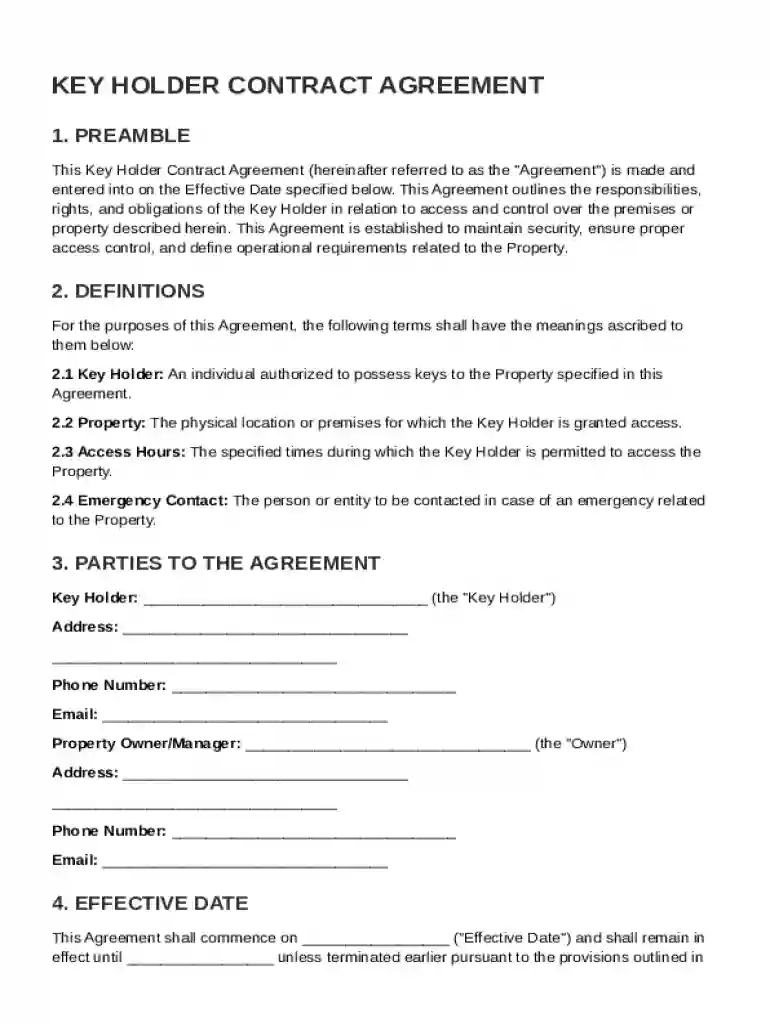
The Key Holder Contract Template is a legal document that outlines the responsibilities, rights, and obligations of an individual (referred to as the Key Holder) who is granted access to a specified property. This contract is essential for ensuring proper access control and maintaining the security of the property. By clearly defining the guidelines and expectations for the Key Holder, the contract helps to prevent unauthorized access and ensure the smooth operation of property management.
Key Elements of the Contract
A well-crafted Key Holder Contract Template includes several important components:
- Definitions: Clearly defines terms used throughout the document to avoid ambiguity.
- Access Control Measures: Lists the specific procedures the Key Holder must follow to access the property.
- Security Procedures: Details measures to ensure the security and integrity of the property.
- Notification Obligations: Specifies how the Key Holder should communicate any issues or incidents.
- Liability Coverage: Outlines liability in case of a breach or security incident.
Steps to Complete the Key Holder Contract Template
Completing the Key Holder Contract Template involves several critical steps. Here’s a breakdown of the process to ensure the document is filled out accurately and comprehensively.
- Review the Template: Familiarize yourself with the content and structure of the template.
- Fill in the Details: Include the necessary details, such as names, addresses, and specific property information.
- Clarify Responsibilities: Clearly define the responsibilities of the Key Holder in accessing and managing the property.
- Set Access Terms: Determine the conditions and limitations under which the Key Holder can access the property.
- Secure Signatures: Both the property owner and the Key Holder should sign the document to make it legally binding.
Important Considerations
- Double-check that all sections of the document are completed and clearly understood by both parties.
- Ensure that any additional clauses or amendments are agreed upon by both parties before finalizing the contract.
Legal Use of the Key Holder Contract Template
The legal enforceability of the Key Holder Contract Template is crucial. It acts as a safeguard for both the property owner and the Key Holder by formalizing expectations and responsibilities.
Legal Requirements
- Adherence to Local Laws: The contract must comply with state-specific laws to be enforceable.
- Inclusion of Key Elements: The contract should cover all necessary areas such as confidentiality, liability, and termination conditions.
- Signature Validity: Ensure all parties have signed using legally recognized electronic signatures if conducted digitally.
Common Legal Challenges
- Disputes Over Responsibilities: Clearly outline each party's duties to minimize legal disputes.
- Compliance with Privacy Laws: Ensure all measures comply with relevant privacy regulations to protect individual rights.
Important Terms Related to the Key Holder Contract Template
Understanding the terminology used in the Key Holder Contract Template is vital for both parties involved.
Common Terms
- Key Holder: The person authorized to access the property.
- Property Owner: The individual or entity that owns the property being accessed.
- Confidentiality Agreement: A clause that obligates the Key Holder to maintain the secrecy of sensitive information.
- Termination Clause: Conditions under which the contract can be ended by either party.
Examples of Using the Key Holder Contract Template
Real-world applications of a Key Holder Contract Template highlight its importance in various scenarios.
Common Scenarios
- Retail Settings: Often used by store managers granting access to employees for opening and closing premises.
- Residential Complexes: Property managers might use it to grant access to maintenance workers.
- Corporate Offices: Security personnel might access office spaces under such agreements.
Case Studies
- Retail Case Study: A large retail chain used key holder contracts to reduce unauthorized access, which significantly decreased inventory loss.
- Property Management Case Study: A residential community management company implemented contracts to streamline maintenance access, improving tenant satisfaction.
State-Specific Rules for the Key Holder Contract Template
State laws can influence how Key Holder Contracts are written and enforced. Understanding these regulations is crucial for compliance and legal enforceability.
Variations by State
- California: Higher standards for privacy and access control procedures may be required.
- New York: Contracts must clearly state all terms concerning access hours and reasons.
- Texas: Emphasis on liability clauses due to stringent property laws.
Digital vs. Paper Version of the Key Holder Contract
Considering the format of the contract can affect the ease of use and management.
Digital Version
- Benefits: Offers ease of access, real-time updates, and digital signatures. Ideal for paperless workflows and easy storage.
- Challenges: Requires robust security measures to protect digital data.
Paper Version
- Benefits: May be preferred in environments where digital access is limited or for individuals favoring traditional documentation methods.
- Challenges: Storage and physical handling can be cumbersome.
Versions or Alternatives to the Key Holder Contract Template
Besides the standard Key Holder Contract Template, there are alternatives and variations that cater to specific needs.
Alternative Forms
- Temporary Access Agreement: For short-term key access needs without the commitment of a full contract.
- Master Key Agreement: Used when a key grants access to multiple properties or sections.
Updates and Revisions
- Keeping up-to-date with revisions ensures compliance with the latest legal standards and operational needs. Regular reviews are suggested to integrate any new legal requirements or changes in property management strategies.