Definition & Meaning
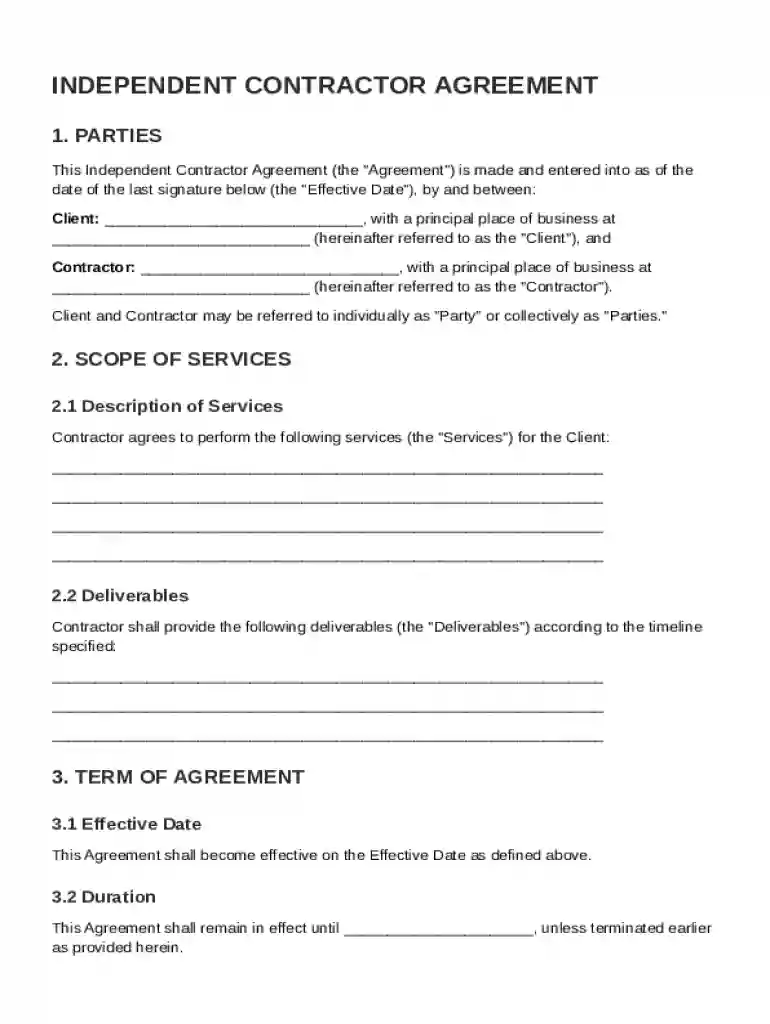
The Independent Contract Template is a legal document setting out the terms of engagement between a Client and an Independent Contractor. This document is crucial for delineating responsibilities, scope of work, compensation, and the relationship status of the parties involved. The template operates under the premise that the Contractor maintains autonomy over the work while ensuring the Client's interests and confidential information remain protected.
Key Elements of the Template
- Scope of Services: Clearly defined responsibilities of the Contractor.
- Compensation Details: Structured payment terms and any applicable fees.
- Confidentiality Obligations: Provisions protecting the Client’s sensitive information.
How to Use the Independent Contract Template
Understanding how to fill out each section of the Independent Contract Template is essential for its proper execution. Typically, the process involves a careful review of each section to ensure all details are accurately stated.
- Review Specific Sections: Begin with reading through each section to understand the terms being addressed.
- Input Accurate Data: Clearly state the scope, timeline, and payment terms.
- Negotiate Terms if Necessary: Before signing, both parties should mutually agree on the terms.
- Sign the Document Electronically: Utilize platforms that support electronic signature compliance, such as DocHub.
Practical Tips
- Use consistent language that both parties understand.
- Ensure that compensation terms align with industry standards or previous discussions with the Contractor.
Key Elements of the Independant Contract Template
The Independent Contract Template contains various components designed to cover all aspects of the Contractor-client relationship, providing protection and clarity for both parties.
Major Components
- Defining the Relationship: Outlines the non-employee status of the Contractor.
- Ownership of Work Product: Specifies that the Contractor retains rights to their work unless otherwise agreed.
- Indemnification Responsibilities: Details each party's liabilities.
Legal Considerations
- Ensure compliance with the ESIGN Act for electronic signatures.
- Verify the governing law section reflects the applicable jurisdiction, typically the Client's or Contractor's place of business.
Important Terms Related to Independent Contract Template
Understanding the terminology used within the Independent Contract Template is critical for both parties.
- Independent Contractor: An individual or entity contracted to perform work or services but maintains control over how the tasks are carried out.
- Scope of Work: The specific tasks and responsibilities that the Contractor is expected to perform.
- Confidentiality: The obligation to keep certain information private and not disclose it without prior permission.
Examples of Typical Terms
- Term and Termination: Details the duration of the agreement and conditions for termination.
- Payment Details: The agreed-upon rate and payment schedule.
- Dispute Resolution: Strategies outlined for resolving any conflicts that may arise.
Legal Use of the Independent Contract Template
The Independent Contract Template is a legally binding document designed to formalize the relationship between a Client and a Contractor while ensuring legal compliance in an accessible and structured manner.
Legal Necessities
- Governing Law: The document should specify which state’s laws will govern it, aligning with the U.S. legal framework.
- Signature Requirement: Ensure all parties sign the document, either physically or digitally, to validate the agreement.
Compliance Tips
- Both parties should retain a copy of the signed agreement for their records.
- Consult legal professionals if unsure about specific contractual terms.
Examples of Using the Independent Contract Template
Real-world scenarios demonstrate the utility and necessity of a thoroughly completed Independent Contract Template.
Business Use Cases
- Freelance Graphic Designer: A graphic designer contracted to design marketing materials for a company would use this template to outline responsibilities, deliverables, and intellectual property rights.
- Software Developer: A developer hired to build a custom application will utilize the document to specify deliverables, timelines, and confidentiality clauses.
Case Studies
- A marketing consultant using the agreement achieved clear communication of expectations and milestones, reducing misunderstandings over project scope and compensation.
Who Typically Uses the Independent Contract Template
The Independent Contract Template is particularly beneficial for individuals and businesses engaging in temporary and project-based work agreements.

Common Users
- Freelancers and Contractors: Individuals offering specialized services without long-term commitment.
- Businesses: Companies seeking temporary expertise for specific projects without hiring full-time employees.
Benefits for Specific Industries
- Tech Sector: Commonly used for entering agreements with software developers and data analysts.
- Creative Industries: Utilized by designers, writers, and photographers working on various assignments.
Who Issues the Form
The Independent Contract Template is typically created and issued by the party seeking services, often the Client or business entity.
Issuance Process
- Customized Forms: Clients might adapt one from a standard template available online or through document management platforms.
- Professional Drafting: Often, the initial draft is prepared by legal advisors to ensure every required component is present and accurate.
By following a structured approach, the Independent Contract Template can prevent potential disputes and clarify expectations, creating a transparent working relationship between all parties involved.