
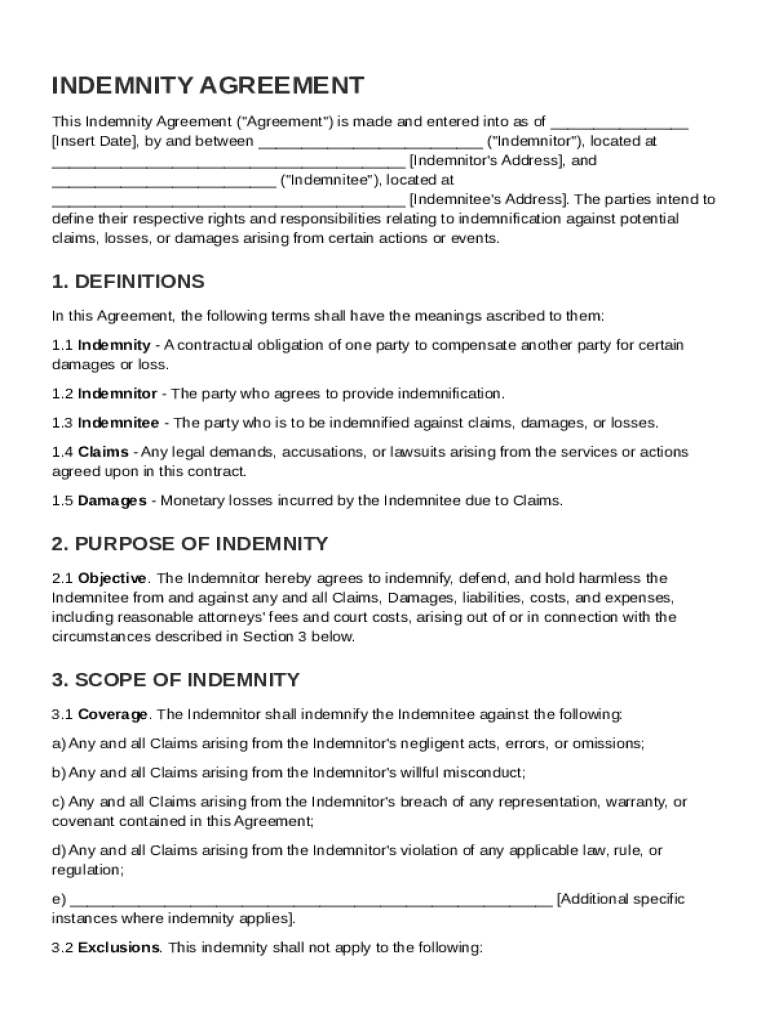







Definition and Meaning
An Indemnity Contract Template is a formal agreement in which one party, known as the indemnitor, agrees to compensate another party, the indemnitee, for any specified losses, damages, or claims related to particular events or actions. This document outlines the responsibilities of each party, providing clear guidance on how potential liabilities will be handled. It ensures that the indemnitee is protected against unforeseen financial burdens resulting from specified scenarios.
Key Components of an Indemnity Contract
- Indemnitor and Indemnitee: The contract defines the roles of the parties involved, clarifying who bears the responsibility for covering losses.
- Scope of Indemnity: The template specifies the circumstances under which indemnity applies, including any exceptions or limitations.
- Payment Terms: It details how compensation will be provided, including timelines and methods of payment.
- Notification Procedures: The contract sets forth how and when notifications regarding claims should be made.
Practical Example
Consider a construction project where a subcontractor agrees to indemnify the main contractor against claims arising from workplace injuries. The template will highlight the scope—covering only incidents on the construction site due to subcontractor negligence.
How to Use the Indemnity Contract Template
Using the Indemnity Contract Template requires planning and an understanding of its provisions to ensure it fits your needs.
Step-by-Step Instructions
- Identify the Parties: Clearly outline who the indemnitor and indemnitee are.
- Define Scope: Specify the events or actions that trigger indemnity.
- Customize Details: Adjust payment terms and notification procedures to suit the nature of the agreement.
- Review Legal Terms: Ensure all clauses are legally compliant and enforceable.
- Finalize Signatures: Have both parties sign to affirm the agreement.
Case Study
In a professional service agreement, a consultant might use this template to indemnify a client against claims resulting from third-party intellectual property disputes.
Steps to Complete the Indemnity Contract Template
Completing this template effectively involves several critical steps to ensure accurate reflection of the agreement between parties.
Detailed Procedure
- Gather Information: Collect all necessary details about parties and terms.
- Fill Out Sections: Utilize the template to document each aspect of the indemnity agreement.
- Perform Legal Review: Have the document reviewed by legal counsel to ensure compliance.
- Sign and Date: Ensure both parties sign the document and keep records of the signed version.
Tips for Accuracy
- Double-check all financial figures and timelines.
- Confirm that the scope of indemnity is comprehensive and clear.
- Verify that all contact information is up-to-date.
Key Elements of the Indemnity Contract Template
The template consists of several critical elements that define the roles and responsibilities of the parties involved.
Essential Components
- Definitions: Clarifies all terms used throughout the document for precision.
- Scope Clause: Outlines specific scenarios that trigger indemnity.
- Notification Requirements: Details how and when claims should be reported.
- Defense Obligations: Explains who is responsible for defending against claims.
Example Scenario
A tech company seeks indemnity from a software developer against data breaches. The scope clause specifies breaches due to flaws in the provided software.
Legal Use of the Indemnity Contract Template
Understanding the legal aspects of using an indemnity contract is crucial for compliance and enforceability.
Legal Considerations
- Jurisdiction: Ensure the template adheres to state laws where the agreement applies.
- Validity: Terms must be specific and reasonable to be enforceable.
- Liability Caps: Consider incorporating caps on liability to limit exposure.
Potential Pitfalls
- Misinterpreting scope clauses leading to disputes.
- Failing to include consideration, an essential element in contracts.
State-Specific Rules for the Indemnity Contract Template
Laws governing indemnity contracts can vary, making it essential to account for state-specific rules.
Key Variations
- Restriction on Indemnity: Some states, like California, impose restrictions on indemnity clauses for certain industries.
- Governing Law: Determine which state's laws govern the agreement.
Importance of Local Compliance
Aligning the contract with local laws avoids enforceability issues and circumvents legal disputes.
Who Typically Uses the Indemnity Contract Template
Various individuals and business entities utilize this template to protect against potential liabilities.


Common Users
- Businesses: Seeking protection against supplier or contractor claims.
- Lease Agreements: Property owners shielding against tenant actions.
- Freelancers: Providing services that involve risk of third-party claims.

Real-World Example
A graphic designer includes an indemnity clause to protect against claims of copyright infringement related to client-provided content.
Examples of Using the Indemnity Contract Template
The template can be employed across multiple scenarios and industries.
Diverse Applications
- Construction: Main contractor and subcontractor agreements.
- Technology Services: Indemnity against software malfunctions.
- Event Planning: Venues indemnified against damages during events.
Hypothetical Scenario
A DJ uses an indemnity contract to hold harmless the event organizer from claims relating to equipment failure causing disruption.




