
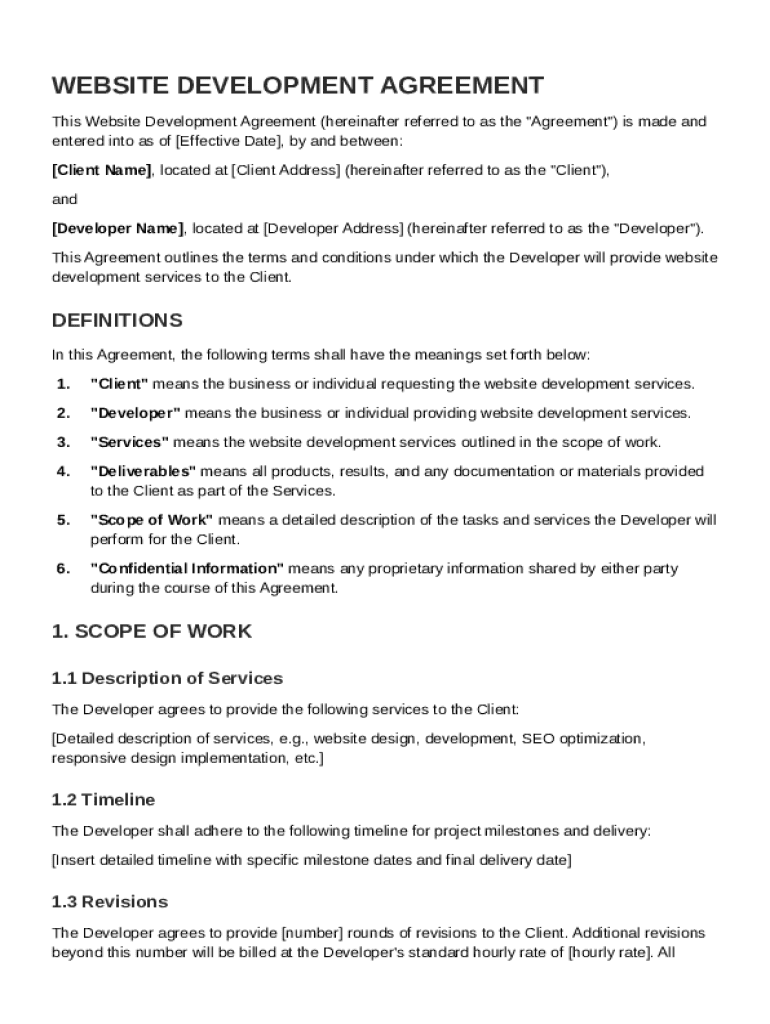







Definition & Meaning
The "Website Development Contract Template" is a standardized legal document used to outline the terms and conditions between a client and a developer engaged in website development services. This form provides a framework to define the roles, responsibilities, and expectations of both parties, ensuring clarity and reducing the risk of disputes. By including elements such as payment terms, intellectual property rights, and scope of work, the contract helps streamline the project management process.
Key Components
- Scope of Work: Specifies the tasks and deliverables the developer is responsible for completing.
- Payment Terms: Details the compensation structure, including fees, payment schedule, and any associated costs.
- Confidentiality Obligations: Requires both parties to protect sensitive information and not disclose it to unauthorized individuals.
Understanding the core components of the template ensures both parties can agree upon and execute their obligations effectively.
Key Elements of the Website Development Contract Template
Deliverables & Milestones
The contract provides a detailed list of deliverables expected from the developer, which can include website design, functionality, and testing phases. Milestones help track progress towards completion, offering checkpoints that align with the payment schedule.
Intellectual Property Rights
This section defines ownership of any intellectual property, typically assigning it to the client upon completion. It may also include clauses about using pre-existing proprietary tools or software within the development process.
Termination Clauses
Outlines conditions under which either party can terminate the agreement. Reasons may include breach of contract, delays, or unforeseen circumstances, providing a clear exit strategy.
Steps to Complete the Website Development Contract Template
- Identify Parties Involved: Clearly list the names and contact information of both the client and the developer.
- Outline Scope of Work: Define the services and deliverables expected, ensuring precision to avoid misunderstandings.
- Specify Payment Details: Include fees, payment schedule, and acceptable payment methods.
- Set Timelines: Incorporate start and end dates, along with key milestones and deadlines.
- Define Intellectual Property Terms: Specify who retains ownership of work produced, including any tools or pre-existing content used.
- Privacy and Confidentiality Terms: Ensure sensitive information is protected under the agreement.
- Review Termination Conditions: Outline acceptable reasons for contract termination and any associated penalties.
Completing these steps ensures a comprehensive agreement that safeguards both parties' interests.
Who Typically Uses the Website Development Contract Template


Individual Freelancers
Independent developers often use this template to formalize agreements with clients, providing a professional framework that clarifies expectations and reduces the chance of disputes.
Web Development Agencies
Agencies, offering services to multiple clients, rely on such contracts to maintain consistency across projects, manage multiple teams, and ensure client satisfaction through clearly defined obligations.
Enterprises and Businesses
Larger organizations engage developers to build or maintain their website infrastructure. Using this template helps streamline the process, ensuring all legal bases are covered.
Important Terms Related to Website Development Contract Template
Developer
An individual or entity responsible for creating and delivering the website as outlined in the contract.
Client
The party commissioning the web development services, usually retaining ownership of the final product.
Confidentiality
Obligations to protect sensitive information disclosed during the project, preventing unauthorized access or sharing.
Understanding these terms is crucial for effectively utilizing the contract template and ensuring both parties are aligned in their expectations.
Legal Use of the Website Development Contract Template
Compliance with Contract Law
The template helps ensure both parties adhere to U.S. contract law requirements, including mutual consent, a lawful object, and adequate consideration for the services provided.
Enforceability
Proper use of the contract makes it legally binding, ensuring both parties must adhere to its terms or face legal consequences. It establishes a foundation for legal recourse in case of disputes.
Customization for State Laws
While the template provides a general framework, it should be reviewed and customized to align with specific state laws, which may dictate unique requirements for enforceability.
Examples of Using the Website Development Contract Template
Startup Hiring a Developer
A startup looking to establish an online presence may use this contract to hire a developer for a new website, ensuring scope, timelines, and payments are documented.
Agency Contracting Services
A development agency entering into a partnership with a client for ongoing website support would utilize this template to outline the terms of service, milestones, and deliverables.
Freelance Contractual Agreement
A freelance developer collaborating with a company on a specific project would benefit from using this contract to define responsibilities, deliverable schedules, and payment expectations.
Providing practical examples underscores the template's versatility across various development endeavors.
Business Types that Benefit Most from the Website Development Contract Template
E-commerce Platforms
Online retail businesses seeking to develop interactive and secure shopping sites use this contract to manage complex projects effectively.
SaaS Providers
Software-as-a-Service providers frequently need custom development work and utilize the template to ensure clear development goals and compensation terms are established.
Content-Based Websites
Media companies or blogs that depend on unique designs or special functionalities use this template to detail design specifications and intellectual property rights.
These business types find particular value in using the template to address their unique development needs comprehensively.
State-by-State Differences
Contract Enforcement
Different states may have variations in contract enforceability standards, requiring modifications in the contract language to align with local legislative nuances.
Intellectual Property Laws
State laws on intellectual property rights may vary, necessitating adjustments to ensure proper compliance in terms of ownership and usage rights.
Tax Considerations
Consideration of any state-specific business taxes or fees associated with the contract must be included to ensure comprehensive coverage of all financial obligations.
Being mindful of state-specific differences enhances the contract's effectiveness and enforceability.




