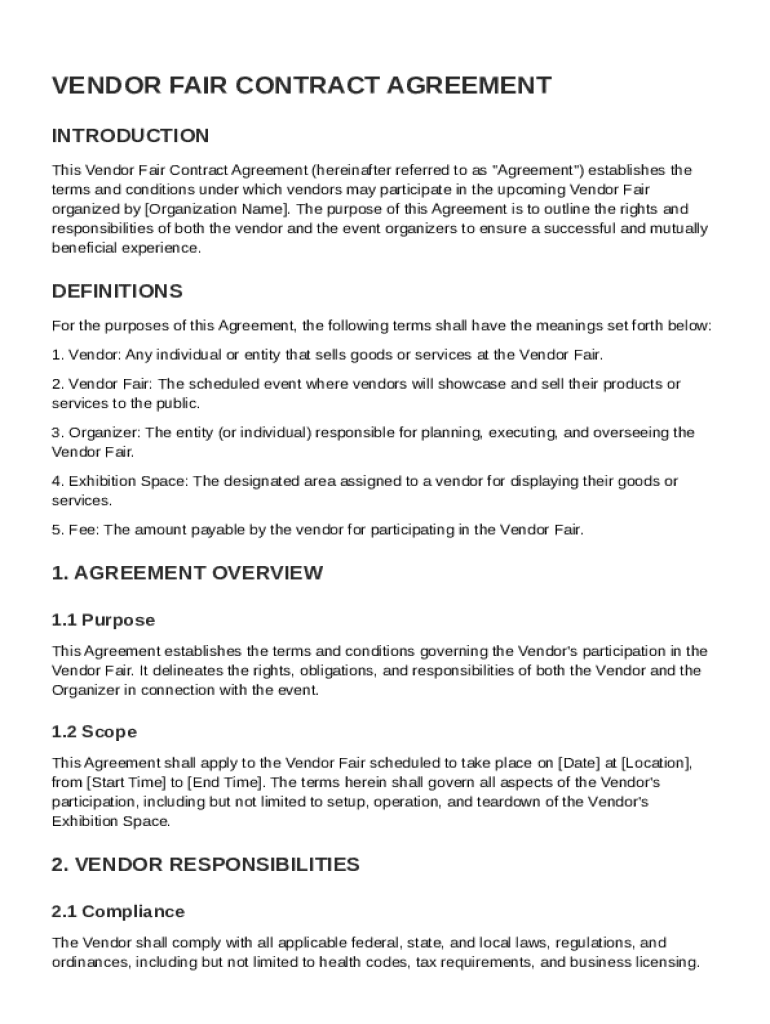







Definition & Meaning
The Vendor Fair Contract Template is a legally structured document outlining the terms and conditions for vendors participating in a vendor fair organized by an entity. It serves as a foundational agreement ensuring both parties—the vendor and the organizer—understand their roles, responsibilities, and the expectations for the event. This template typically includes key clauses on financial obligations, vendor booth specifications, setup timelines, and insurance requirements. The document acts as a formal acknowledgment of the rules governing the vendor's participation and the organizer's commitments.
Key Elements of the Vendor Fair Contract Template
The Vendor Fair Contract Template incorporates several critical elements that define its structure and enforceability:
-
Participant Information: Details regarding the vendor and the organizing party, including names, addresses, and contact information.
-
Event Details: Specifics about the fair, such as the date, location, and duration of the event.
-
Vendor Responsibilities: The roles and duties expected of vendors, like setup and teardown times, staffing requirements, and compliance with safety regulations.
-
Financial Obligations: Includes fees for participation, payment schedules, and refund policies, ensuring clarity on financial commitments.
-
Liability and Insurance: Details the insurance coverage required from the vendor and the limitations of liability for both parties.
-
Termination Clause: Conditions under which the agreement may be terminated, protecting parties against unforeseen cancellations or breaches.
-
Governing Law: Specifies the jurisdiction whose laws will govern any disputes arising from the contract.
How to Use the Vendor Fair Contract Template
To effectively utilize the Vendor Fair Contract Template, follow these guided steps:
-
Review the Template: Begin by thoroughly reading the entire contract to understand its terms and conditions.
-
Customize to Suit the Event: Modify editable sections, inserting specific details about the event, such as date and location, ensuring the document reflects the unique circumstances of your fair.
-
Detail Financial Aspects: Clearly articulate fees, payment methods, and refund procedures tailored to your fair's pricing strategy.
-
Ensure Legal Compliance: Verify that insurance and liability clauses meet local legal standards and any industry-specific requirements.
-
Seek Professional Advice: For complex events, consult with a legal professional to ensure all aspects are covered and enforceable.
-
Finalize and Distribute: Once customized, distribute the finalized contract to vendors for their review and signature well in advance of the event date.
State-Specific Rules for the Vendor Fair Contract Template
Vendor fair agreements may be influenced by state-specific regulations that can affect their enforceability and content:
-
California: Requires consideration of specific labor laws that pertain to independent vendor contracts and insurance stipulations.
-
New York: Often mandates detailed disclosure about the fair's insurance policy and the extent of coverage for third parties.
-
Texas: May have unique tax implications for vendor participation fees that must be outlined in the agreement.
Ensure you verify and incorporate any relevant state laws or requirements specific to where the vendor fair is being held to enhance the template's compliance and efficacy.
Steps to Complete the Vendor Fair Contract Template
Completing the Vendor Fair Contract Template involves several clear steps:
-
Gather Essential Information: Collect all necessary details from both the vendor and the organizer, including legal names and business addresses.
-
Fill Out Event Details: Accurately insert information specific to the vendor fair, such as the date, venue, and expected duration.
-
Specify Financial Terms: Outline participation fees, due dates, and refund policies to set clear financial expectations.
-
Detail Logistics and Vendor Duties: Include instructions for booth setup, display requirements, and allowed promotional activities.
-
Review Liability Clauses: Ensure both parties agree on insurance requirements and liability limitations.
-
Finalize Signatures: Obtain authorized signatures from both parties, ensuring the document is completed legally and validly.
Why Use the Vendor Fair Contract Template
Utilizing a Vendor Fair Contract Template offers several compelling benefits:
-
Clarity and Transparency: Clearly outlines expectations and responsibilities, reducing misunderstandings and disputes.
-
Legal Protection: Provides legal safeguards by documenting agreed terms, protecting both vendor and organizer interests in case of non-compliance.
-
Streamlined Communication: Acts as a single reference point for all parties involved, improving communication and coordination.
-
Operational Consistency: Ensures every vendor receives the same information and agrees to the same conditions, promoting fairness and consistency.
-
Professionalism: Enhances the professional image of the fair, demonstrating organized and efficient management.
Legal Use of the Vendor Fair Contract Template
The legal enforceability of the Vendor Fair Contract Template depends on several factors:
-
Completeness and Accuracy: Ensure all fields are accurately completed with no missing information and that terms are clear and enforceable.
-
Compliance with Local Law: Align the contract's terms with applicable local, state, and federal laws to avoid legal challenges.
-
Signature Requirements: Obtain authorized signatures from the designated representatives of both parties and consider digital signature options for convenience.
-
Amendment Procedures: Include a clause detailing how amendments can be made to the contract post-signature to accommodate any changes in circumstances.
Consult a legal professional to review the final contract for compliance and completeness to maximize its legal reliability.
Examples of Using the Vendor Fair Contract Template
Practical applications of the Vendor Fair Contract Template demonstrate its adaptability:
-
Artisan Markets: Tailoring the template for craft fairs, where setup specifics and artistic display guidelines are crucial.
-
Food Vendor Events: Incorporate specific health regulations and food safety compliance measures.
-
Trade Shows: Adapts the template to accommodate technical requirements specific to industry-specific vendor participants.
-
Charity Fairs: Utilize the template to structure volunteer-run vendor stalls, focusing on charitable obligations and logistics.
These applications illustrate the template's flexibility in addressing diverse scenarios across varying vendor fair formats.