







Definition and Meaning
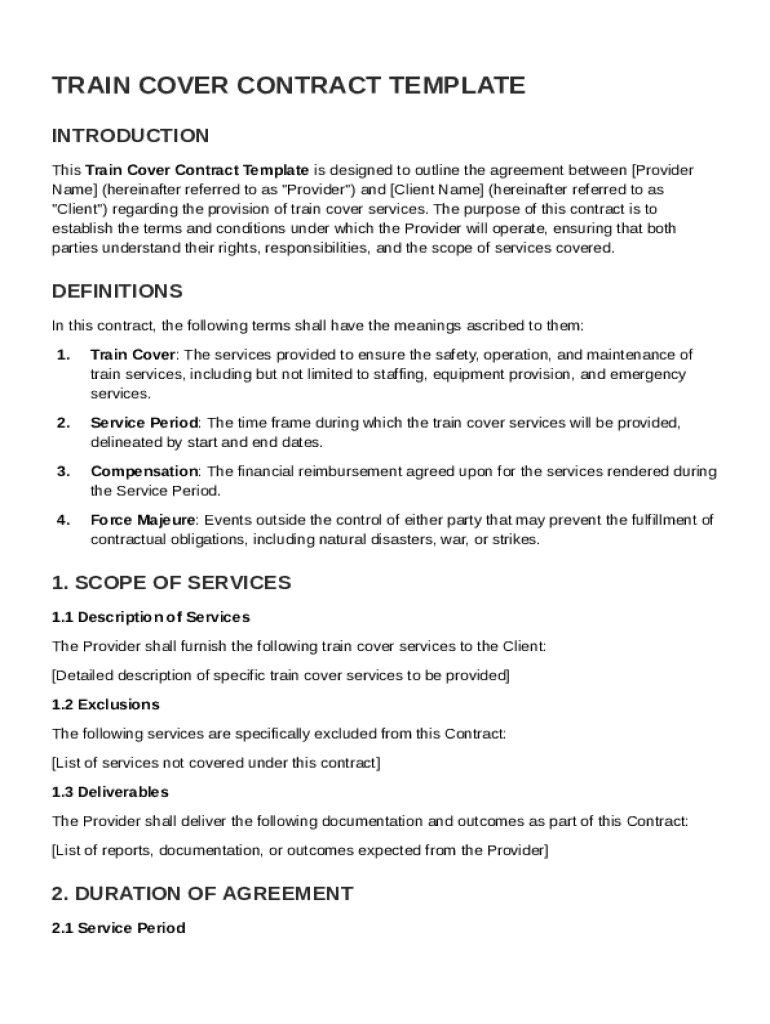
The Train Cover Contract Template is a legal document that outlines the agreement between a service provider and a client for train cover services. This template details various crucial elements such as the terms, conditions, the scope of services offered, and the compensation structure. It ensures that both parties are clear on their responsibilities, sets provisions for termination, and includes clauses on liability limitations, dispute resolution, and confidentiality. By having this structured agreement, both parties can understand their roles in train safety and operational services, which promotes a smooth and professional interaction.
How to Use the Train Cover Contract Template
Using the Train Cover Contract Template effectively involves several steps to ensure a comprehensive agreement is reached between all involved parties. Here are some key steps:
-
Review the Template: Begin by thoroughly reading the entire contract to comprehend all stipulations and clauses. This initial review is crucial for identifying any sections that may require customization to fit specific needs.
-
Customize the Template: Modify sections to reflect the specific terms of your agreement, including the scope of services, payment terms, and any unique conditions relevant to the train cover services being provided.
-
Consult with Legal Professionals: It's advisable to have a legal advisor review the template's clauses. Legal expertise can ensure all elements comply with state and federal laws and align with industry standards.
-
Discuss with the Other Party: Engage in discussions with the other party to clarify expectations and negotiate any changes to the template. This ensures mutual understanding and consent on all contractual elements.
-
Finalize and Sign: Once all parties agree on the terms, finalize the document by securing signatures from authorized representatives of both parties to make it legally binding.
Key Elements of the Train Cover Contract Template
The Train Cover Contract Template comprises several key elements that must be clearly articulated to avoid misunderstandings:
-
Scope of Services: Clearly define the services to be provided, including specific tasks, timelines, and deliverables associated with train cover services.
-
Compensation Structure: Outline the payment terms, including the total cost, due dates, and any conditions surrounding late payments or additional charges.
-
Responsibilities: Detail the obligations of each party, ensuring both service provider and client understand their roles in the agreement.
-
Termination Clauses: Specify conditions under which the contract can be terminated by either party, including notice periods and any fees associated with early termination.
-
Liability and Indemnification: Include limitations of liability and indemnification clauses to protect both parties from potential legal claims arising from the contract's execution.
Legal Use of the Train Cover Contract Template
The Train Cover Contract Template is designed to comply with U.S. legal standards, making it suitable for use within various jurisdictions across the country. The document aims to protect the legal rights of both parties involved, whether they are individuals or organizations providing or receiving train cover services. Essential legal aspects include:
-
Compliance with Federal and State Laws: Ensure the template aligns with both federal guidelines and specific state laws where the services are rendered.
-
Binding Nature: The signed contract is legally binding, which means that all written terms are enforceable in a court of law.
-
Confidentiality Provisions: Specify how proprietary information will be handled to protect sensitive data from unauthorized access or disclosure.
Important Terms Related to the Train Cover Contract Template
Understanding the terminology within the Train Cover Contract Template is paramount for ensuring clarity:
-
Service Provider: The entity responsible for delivering the train cover services detailed in the contract.
-
Client: The individual or organization that purchases and receives the train cover services.
-
Indemnification: A legal provision in which one party agrees to compensate the other for certain damages or losses.
-
Force Majeure: A clause that releases parties from liability due to unforeseeable events that prevent them from fulfilling their contractual obligations.
Examples of Using the Train Cover Contract Template
The Train Cover Contract Template can be utilized in various scenarios, such as:
-
Railroad Companies: Using the template to formalize agreements with contractors providing maintenance and safety services for trains.
-
Government Contracts: For public transportation agencies hiring external firms to oversee safety measures and operational efficiency of train systems.
-
Corporate Partnerships: Where businesses enter into contracts for customized train cover services tailored to meet specific logistical needs.
Steps to Complete the Train Cover Contract Template
Completing the Train Cover Contract Template involves several critical steps:
-
Gather Information: Assemble all relevant details required to fill out the template accurately, including personal and organizational details.
-
Input Data Accurately: Enter the necessary information into the template, ensuring all fields are completed according to the specific agreement.
-
Review for Completeness: Double-check all entries for accuracy and completeness to avoid errors that could complicate the agreement later.
-
Seek Mutual Agreement: Ensure both parties understand and agree to all terms and conditions within the template.
-
Document Execution: Obtain signatures from all parties involved; this step formalizes the agreement.
Versions or Alternatives to the Train Cover Contract Template
Depending on specific needs, there are several alternatives and versions to consider:
-
Custom Contracts: For unique requirements not addressed by a standard template, customized contracts can be drafted with legal counsel assistance.
-
Industry-Specific Templates: Alternative templates tailored for different sectors may provide a better fit if the default template does not entirely suit the specific context or industry requirements.
-
Digital Variants: Consider utilizing digital versions of the contract template for enhanced ease of use and integration with document management systems.




