
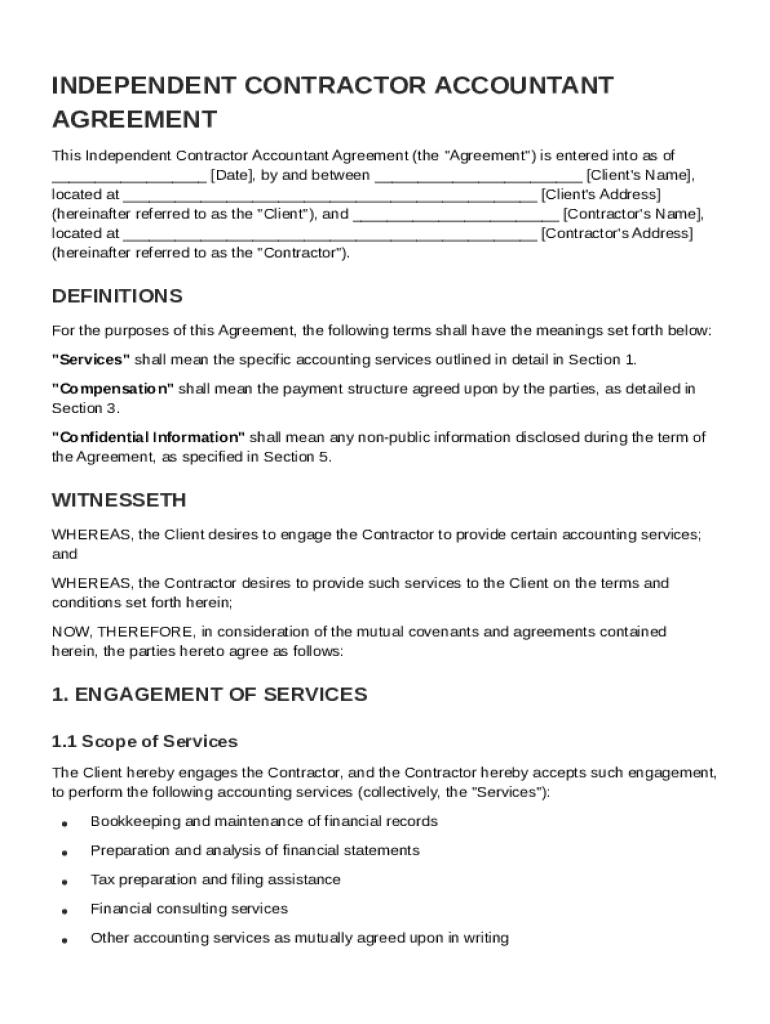







Definition and Meaning
The Independent Contractor Accountant Agreement Template serves as a formal contract between a client and a contractor, outlining the terms of engagement for accounting services. This document is essential for clarifying roles, responsibilities, and expectations. It specifies the nature of the independent contractor relationship, ensuring that both parties understand their obligations and rights. The agreement typically includes details on the scope of services, payment terms, and duration of the contract.
Key Components
- Scope of Services: Describes the accounting tasks the contractor will perform.
- Compensation: Specifies the payment structure, including rates and schedule.
- Independent Status: Affirms the contractor's independence from the client, impacting tax and legal obligations.
How to Use the Independent Contractor Accountant Agreement Template
Utilizing the Independent Contractor Accountant Agreement Template involves customizing it to fit the specific needs of both parties. The template acts as a starting point, providing a structured outline where users can insert relevant details.
Customization Steps
- Identify Services: Clearly define what accounting services are to be provided.
- Determine Payment: Establish how and when the accountant will be compensated.
- Set Duration: Agree on the timeline for the contractual relationship.
Practical Example
An accounting firm could use the template to formalize an agreement with a freelance accountant for a short-term project, detailing the specific services to be delivered and the payment terms.
Steps to Complete the Independent Contractor Accountant Agreement Template
Completing this agreement involves several methodical steps to ensure accuracy and legal compliance.
Step-by-Step Process
- Initial Review: Both parties review the template for relevancy and completeness.
- Fill Out Details:
- Add names and contact information for both parties.
- Specify the services, compensation, and timeline.
- Incorporate Legal Terms: Include confidentiality clauses, dispute resolution processes, and amendment procedures.
- Review and Sign: Both parties should thoroughly review the document, making any necessary revisions before signing.
Detailed Considerations
- Ensure all sections are filled out to avoid ambiguity.
- Use precise language to define responsibilities.
Key Elements of the Independent Contractor Accountant Agreement Template
This contract includes several critical components that provide structure and clarity to the agreement.
Important Sections
- Confidentiality Obligations: Ensures sensitive information is protected.
- Intellectual Property Rights: Outlines ownership of any created works.
- Dispute Resolution: Sets procedures for handling disputes, potentially including mediation or arbitration.
Real-World Example
A contractor might require a confidentiality clause to secure proprietary accounting methods not to be disclosed beyond the agreement.
Who Typically Uses the Independent Contractor Accountant Agreement Template
Various individuals and entities may find this template beneficial when establishing professional relationships.


Common Users
- Small Businesses: Engage accountants on a temporary basis for specific projects.
- Freelancers: Formalize agreements with multiple clients to ensure payment and clarify roles.
- Accounting Firms: Utilize independent contractors for overflow work or specialized expertise in certain accounting tasks.

Use Case Scenario
A sole proprietor needing occasional bookkeeping help might use this agreement with a freelance accountant to document service expectations and payment terms clearly.
Legal Use of the Independent Contractor Accountant Agreement Template
The template is designed to comply with U.S. legal standards, serving as a legally binding contract once signed.
Legal Considerations
- Compliance with Labor Laws: Clearly defines independent contractor status to avoid misclassification.
- Tax Implications: Ensures both parties understand tax responsibilities, consistent with IRS guidelines for independent contractors.
Example of Legal Use
A business engaging a freelance accountant would use this agreement to protect itself against claims of employment should tax or legal issues arise.
Important Terms Related to the Independent Contractor Accountant Agreement Template
Familiarity with specific terminology within the agreement aids in understanding and negotiating terms.
Key Terms
- Independent Contractor: A person or entity contracted to perform work for another entity as a non-employee.
- Confidential Information: Any data or information that is proprietary and confidential to a party and not generally known to the public.
Contextual Importance
Understanding these terms helps delineate the nature of the professional relationship, such as ensuring the contractor's tax filings are independent from the contracting business.
Business Types That Benefit Most from the Independent Contractor Accountant Agreement Template
Certain business structures find particular advantages in using this agreement form.
Benefiting Entities
- LLCs and Corporations: Often engage outside accountants to handle specialized tasks without hiring full-time staff.
- Partnerships: May need external accounting support for complex financial reporting or compliance needs.
Scenario Example
An LLC using the template can effortlessly engage a contracting accountant to assist with tax preparation, ensuring all parties are aware of the terms and avoiding misunderstandings.




