
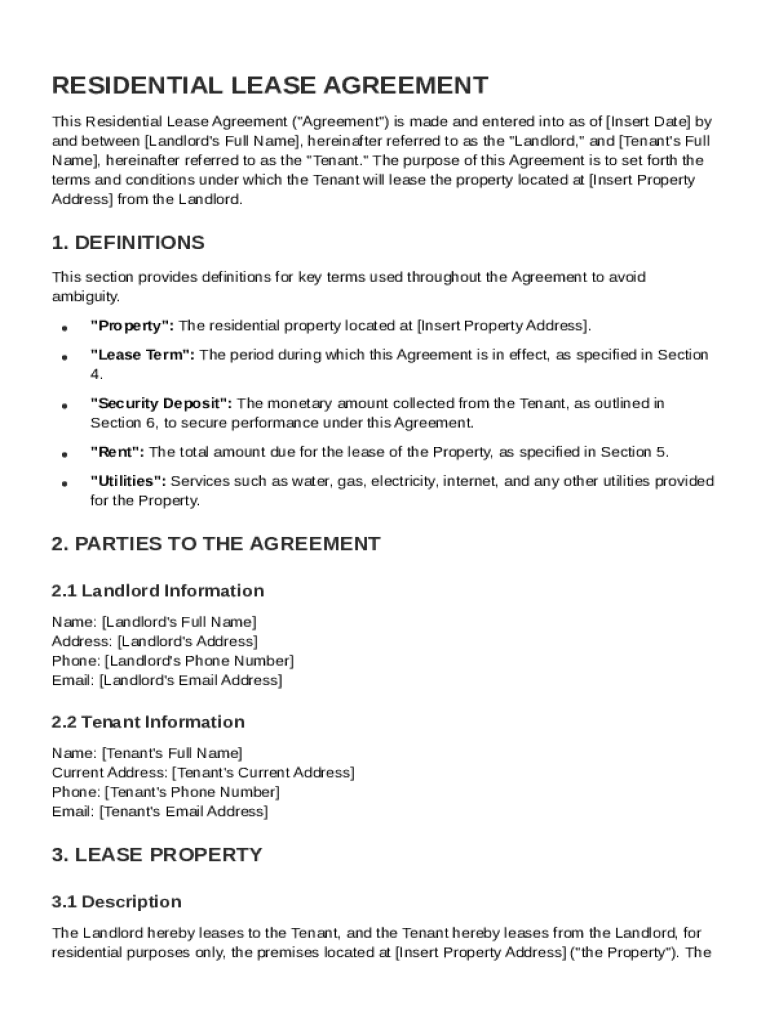







Definition & Meaning
A House Lease Contract Template is a standardized document used to formalize the rental agreement between a landlord and a tenant. Typically structured to include essential elements such as terms and conditions, it delineates responsibilities, obligations, and rights of both parties involved in leasing residential property. The template serves to protect both the landlord's and the tenant's interests by clearly defining expectations regarding rent payments, maintenance duties, and other pertinent aspects. This clarity helps to prevent misunderstandings and provides a legal foundation in case disputes arise.
Components of a Typical House Lease Contract Template
- Terms of Lease: Specifies the duration of the lease, including start and end dates.
- Rental Amount: Outlines the agreed-upon monthly rent and payment due dates.
- Security Deposit: Details the amount required as a security deposit and conditions for its return.
- Property Maintenance: Defines responsibilities for property upkeep and repairs.
- Utilities: Clarifies which utilities are included in the rent and who is responsible for payment.
- Rules and Restrictions: Includes restrictions on property use, such as no-smoking policies or pet allowances.
Key Elements of the House Lease Contract Template
The House Lease Contract Template comprises several critical elements designed to ensure a comprehensive and enforceable agreement between parties.
Essential Clauses
- Identification of Parties: Clearly identifies the landlord and tenant, including contact details.
- Description of Premises: Provides a detailed description of the property being leased, including any furnishings or equipment.
- Rent Payment Details: Includes instructions on how and when rent should be paid, including preferred payment methods and late payment penalties.
- Renewal and Termination Procedures: Specifies the procedures for lease renewal and the terms under which the lease may be terminated by either party.
Protective Measures
- Insurance Requirements: Often stipulates the need for tenant insurance to cover liability and personal property.
- Access and Entry: Describes the landlord’s right to enter the property for inspections or repairs, typically requiring prior notice to the tenant unless in an emergency.
- Dispute Resolution: Includes mechanisms for resolving disputes, such as mediation or arbitration clauses.
How to Use the House Lease Contract Template
Using a House Lease Contract Template effectively involves several key steps to ensure it meets the specific needs of both landlord and tenant.
- Review Local Laws: Before using a template, review state or local laws to ensure compliance with regional rental regulations.
- Customize the Template: Adjust terms such as rent amount, lease duration, and tenant responsibilities according to the specific rental agreement.
- Gather Information: Collect all pertinent information from both parties, including identification details and financial conditions.
- Complete the Template: Input all necessary information into the template, ensuring accuracy and completeness.
- Review and Sign: Both parties should review the contract thoroughly. Once both parties are satisfied, sign the document to make it legally binding.
Important Considerations
- Legal Advice: Consult with a legal professional if uncertain about any terms or conditions within the template.
- Documentation: Ensure all communications and updates to the lease are documented in writing and appended to the template as needed.
Legal Use of the House Lease Contract Template
Legally, the House Lease Contract Template must comply with local, state, and federal rental laws. It's essential to ensure all terms and conditions within the template adhere to these regulations to be enforceable.
Compliance with U.S. Rental Laws
- Fair Housing Act: The lease must not violate the Fair Housing Act, which prohibits discrimination based on race, color, national origin, religion, sex, familial status, or disability.
- Landlord-Tenant Acts: Each state has specific landlord-tenant laws dictating the legal rights and obligations included within a lease.
- Security Deposit Regulations: States may have specific requirements regarding the handling and return of security deposits.
Legal Protections
- Legally Binding: Once signed, the lease becomes a legally binding contract, enforceable in a court of law if disputes arise.
- E-Signature Legitimacy: Electronic signatures on the lease are typically considered valid under the ESIGN Act in the U.S.
Steps to Complete the House Lease Contract Template
Completing the House Lease Contract Template involves precise steps that ensure all necessary information is accurately captured and acknowledged by both parties.
- Preparation: Obtain the template and read through it to understand each section.
- Customization: Fill in property-specific details such as address, rental terms, and additional agreements unique to the property.
- Agreement Details: Include parties' names, rental amounts, and detailed payment instructions.
- Signature Collection: Use electronic signature capabilities where feasible to facilitate swift and secure completion.
- Distribution: Once completed and signed, provide copies to all parties involved.
Common Pitfalls to Avoid
- Incomplete Information: Ensure all necessary sections are filled out to prevent ambiguity.
- Non-Compliance with Legal Standards: Align the contract with current laws to avoid legal invalidation.
State-Specific Rules for the House Lease Contract Template
The House Lease Contract Template may need adjustments based on the specific requirements and laws of different U.S. states. These state-specific rules influence various aspects of the lease agreement.
Examples of State Variations
- Security Deposit Limits: States like California have caps on the amount a landlord can charge for a security deposit.
- Notice Requirements: The period required for notifying tenants of changes or lease termination can vary significantly.
- Rent Control Laws: Certain jurisdictions may have rent control regulations that impact rent increases within a lease term.
Important Terms Related to the House Lease Contract Template
Understanding terminology used within the House Lease Contract Template can simplify the process of negotiating and finalizing the lease.
Glossary of Key Terms
- Lessee and Lessor: "Lessee" refers to the tenant, while "lessor" is the landlord.
- Quiet Enjoyment: A legal term assuring tenants can reside in the property without disturbances by the landlord.
- Subletting: Refers to the tenant's ability to rent out the leased property to another party under specified conditions.
- Holdover Tenant: A tenant who remains in the property after the lease term has expired, potentially subject to additional legal action or rental terms.
Examples of Using the House Lease Contract Template
Practical application of the House Lease Contract Template can vary depending on property type, tenant requirements, and other conditions.
Real-World Scenarios
- Single-Family Homes: A lease created using the template can accommodate individual families, specifying terms for garden maintenance and large property upkeep.
- Apartments: For an apartment rental, the template can outline community rules and shared space regulations.
- Commercial Properties: Adaptations of the lease template might include more extensive clauses on use of space and longer-term agreements common in commercial settings.
By considering these structured sections, individuals engaging with a House Lease Contract Template can ensure they are optimizing the legal protections and formalizing the rental process comprehensively and effectively.




