
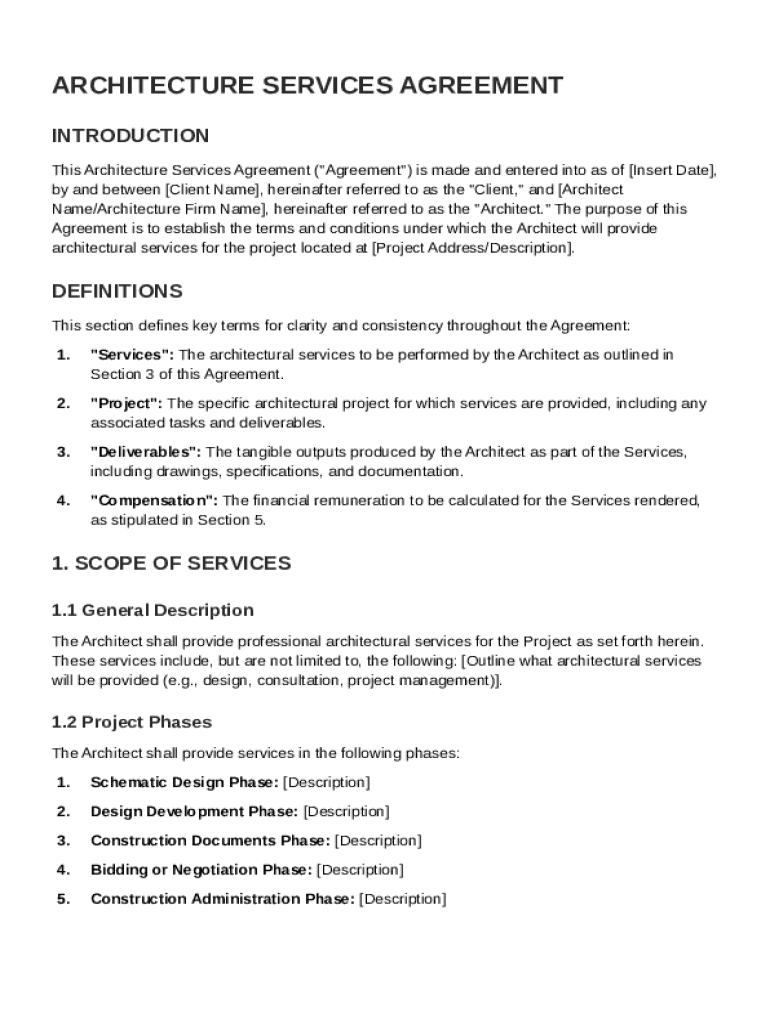







Definition and Meaning of the Architecture Contract Template
The Architecture Contract Template is a legal document used to establish the terms and conditions between an architect and a client for architectural services. It outlines the project scope, responsibilities, compensation, and other essential elements to ensure clarity and mutual understanding. By clearly defining these aspects, the template helps prevent misunderstandings or disputes throughout the project's lifecycle. This contract is a critical instrument in managing expectations and documenting agreements in the U.S. architectural industry.
Key Components of the Contract
- Scope of Services: Specifies the architectural tasks to be performed, such as design, consultation, and project management.
- Client and Architect Responsibilities: Details the obligations each party has agreed to fulfill, which may include providing information, ensuring access to sites, and adhering to deadlines.
- Compensation and Payment Terms: Clarifies how, when, and what the architect will be paid for their services.
- Confidentiality and Intellectual Property: Establishes how project data will be protected and who retains ownership of created drawings and designs.
How to Use the Architecture Contract Template
Using the Architecture Contract Template effectively requires understanding its core sections and customizing them to fit the specific project. The goal is to align the template with the specific needs and conditions of your architectural project, ensuring that it serves both parties' interests adequately.
Steps to Using the Template
- Review Each Section Thoroughly: Understand the purpose of each section and how it applies to your project.
- Tailor the Template: Customize the scope, timelines, and payment terms to reflect specific agreements.
- Consult Legal Counsel if Necessary: Especially for unique terms or large projects, professional advice can ensure all provisions are legally sound.
Practical Applications
- For New Projects: Use when initiating a new architecture project to formally set all project roles and responsibilities.
- For Existing Projects in Need of Formalization: Apply to ongoing projects where previously informal agreements need to be legally documented.
Steps to Complete the Architecture Contract Template
Completing the Architecture Contract Template involves systematically filling out each section to reflect agreed-upon terms between the architect and client. This systematic approach ensures all necessary information is included and understood by both parties.
Detailed Process
- Gather Information: Collect all relevant data, including project details, timelines, and costs.
- Fill Out Client and Architect Details: Start with the basic information of the parties involved.
- Define the Scope of Services: Clearly outline what services will be provided and any exclusions.
- Specify Payment Terms and Schedule: Determine the payment structure, frequency, and method.
- Address Confidentiality and Ownership: Indicate how information should be handled and who retains ownership of the work.
Common Errors to Avoid
- Ambiguity in Terms: Ensure all language is specific to avoid vague interpretations.
- Unset Deadlines: Clearly set timelines for deliverables and payment milestones.
Important Terms Related to Architecture Contract Template
Understanding key terms in the Architecture Contract Template is crucial for ensuring clarity and legal compliance. These terms help define the roles, responsibilities, and expectations between the client and the architect.
Common Terms Explained
- Client Representation: Assurances made by the client about project readiness and information accuracy.
- Force Majeure: Circumstances that exempt parties from liability due to events beyond their control.
- Subcontracting: Conditions under which the architect may hire third parties to perform parts of the project.
Contextualizing Terms
- Terms like "Indemnification" and "Liability" should be interpreted within the framework of protecting both parties from potential risks or damages.
Legal Use of the Architecture Contract Template
The legal utilization of the Architecture Contract Template ensures that both the architect and client operate within the bounds of U.S. laws. This involves adhering to regulations set out in architectural practice and contract law.
Essential Legal Considerations
- Compliance with Local and Federal Laws: Ensure the contract adheres to relevant statutes and regulations.
- Legally Binding Provisions: Confirm that all clauses are enforceable in the U.S. jurisdiction concerned.
- ESIGN Act Compliance for Digital Signatures: If signing electronically, ensure the template complies with the ESIGN Act for signature legality.
Example Scenarios
- When Terminating Services: Proper clauses allow for lawful termination if one party fails to meet obligations.
- For Dispute Resolution: Provides procedures for resolving conflicts without resorting to litigation.
Key Elements of the Architecture Contract Template
The Architecture Contract Template comprises several critical elements that establish a comprehensive framework for the contract. Each section is designed to address specific aspects of the project, ensuring a holistic understanding and agreement.
Core Elements
- Ownership of Deliverables: Clarifies who holds the rights to the architectural designs and drawings.
- Project Timeline: Outlines key milestones and expected completion dates.
- Dispute Resolution Mechanisms: Details steps to be taken in case of disagreements during the project.
Nuances and Variations
- Custom Clauses: Depending on the project’s complexity or specific client requirements, additional clauses can be included to address unique issues.
Digital vs. Paper Version Formats
With technological advances, the Architecture Contract Template can be utilized in both digital and paper formats, each offering distinct advantages. This flexibility aids in catering to different preferences and accessibility needs.
Comparative Analysis
- Digital Format: Allows for easy distribution, edits, and electronic signatures; ideal for remote collaboration.
- Paper Version: Preferred for those who require physical records or in situations where digital tools are inaccessible.
Integration with Software Solutions
- Digital contracts can often be integrated into document management systems for streamlined storage and retrieval.
Software Compatibility and Integrations
The Architecture Contract Template should be compatible with popular software solutions to facilitate ease of use, integration, and management. This compatibility ensures that the template can be seamlessly utilized within various workflow environments.
Compatible Software Platforms
- DocHub: Provides extensive tools for editing and signing digital documents, supporting formats like PDF and DOC.
- Google Workspace Integration: Allows quick import/export from Google Drive, enhancing productivity for users in cloud-based environments.
Benefits of Software Integration
- Enhanced Collaboration: Software tools enable real-time collaboration and updates, essential for projects requiring input from multiple stakeholders.
- Automatic Synchronization: Ensures all parties have access to the most current version of the contract.
This comprehensive exploration of the Architecture Contract Template provides in-depth insights into its usage, legal implications, and practical applications. By understanding these aspects, both architects and clients can leverage the template to ensure successful project execution.




