Definition and Meaning of the Executed Lease Agreement Template
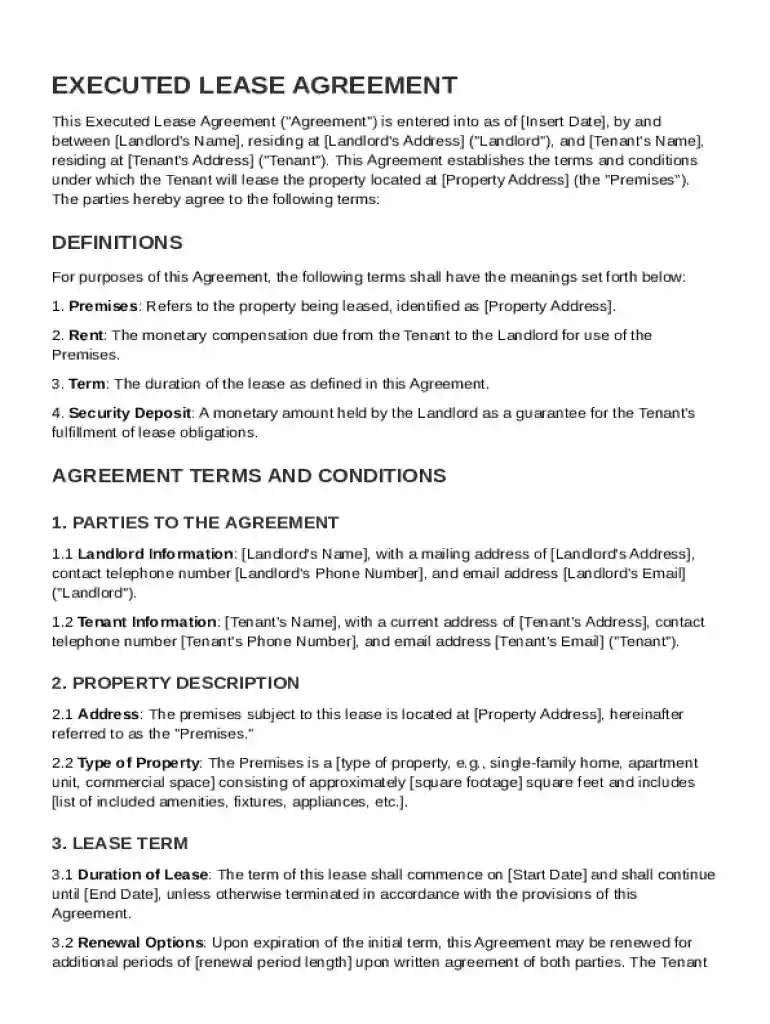
An Executed Lease Agreement Template serves as a structured legal document that formalizes the rental terms between a landlord and tenant. This agreement outlines the rights and responsibilities of both parties, ensuring clarity and preventing potential disputes. It includes vital information such as property description, lease duration, rent obligations, and conditions for property use. The template is a practical tool designed to streamline the drafting process, allowing individuals to create a robust and legally sound lease agreement efficiently.
Importance of a Clear Definition
- Legal Clarity: Provides a clear understanding of the legal implications for both parties.
- Consistency: Ensures that all necessary lease terms are systematically documented.
- Time-Saving: Offers a ready-to-use format, reducing the need to draft agreements from scratch.
Key Elements of the Executed Lease Agreement Template
A well-crafted Executed Lease Agreement Template comprises several critical components to protect the interests of both landlords and tenants. These elements collectively ensure that the lease agreement is detailed and legally binding.
Essential Components
- Property Description: Detailed identification of the property being leased.
- Lease Duration: Specifies the start and end dates of the lease.
- Rent Details: Includes the amount, due dates, and payment methods.
- Security Deposit: Conditions regarding the deposit amount and return policies.
- Use and Occupancy: Defines permissible uses of the property.
- Maintenance Duties: Specifies party responsibilities for maintaining the premises.
- Termination Conditions: States conditions under which the lease can be terminated.
Examples of Use
- In residential leases, the lease template may include specific clauses about pet policies.
- Commercial leases might incorporate unique terms concerning the tenant's business operations.
Steps to Complete the Executed Lease Agreement Template
Filling out an Executed Lease Agreement Template requires attention to detail to ensure accuracy and compliance. Following a structured approach can aid in producing a complete and effective agreement.
- Gather Necessary Information: Compile all relevant details about the property, landlord, and tenant before starting the document.
- Fill in Property Details: Enter a precise description of the property, including address and any additional features.
- Specify Lease Terms: Clearly define the lease duration, rent amount, and payment schedule.
- Outline Responsibilities: Detail maintenance obligations and property use restrictions for both parties.
- Signatures: Ensure all parties sign and date the agreement to finalize it.
Practical Tips
- Use plain language: Avoid overly complex terminology for clarity.
- Double-check details: Verify that all information is accurate and complete.
Legal Use of the Executed Lease Agreement Template
The Executed Lease Agreement Template serves as a legally binding document when correctly executed. It provides a framework for both parties to understand and meet their contractual obligations.
Compliance and Legality
- Adherence to Law: Ensure the template complies with local, state, and federal laws governing lease agreements.
- Binding Agreement: Once signed, the lease becomes enforceable in a court of law.
Points of Consideration
- State-Specific Regulations: Different states may have particular rules affecting lease agreements.
- Legal Advice: Consult a legal professional if uncertain about any aspect of the lease template.
Important Terms Related to the Executed Lease Agreement Template
Understanding the specific terminology used within a lease agreement is crucial for both landlords and tenants. Familiarizing oneself with these terms can aid in comprehending the agreement's scope and implications.
Core Terms to Know
- Premises: The property that is rented out.
- Lessee and Lessor: Refers to the tenant and landlord, respectively.
- Default: Failure to fulfill any terms of the lease agreement.
- Notice Period: The duration required to notify the other party of certain intentions like termination.
Example Situations
- A tenant defaults when they miss two consecutive rent payments; the lease outlines the notice period for eviction.
Who Typically Uses the Executed Lease Agreement Template
The Executed Lease Agreement Template is a versatile tool deployed across various types of property rentals, catering to both individual and commercial needs.

Primary Users
- Residential Landlords: Utilize templates to manage rental properties with consistent agreements.
- Property Management Companies: Standardize leasing terms across multiple properties.
- Commercial Leasees: For businesses renting office or retail space.
Situations Where It Is Used
- Landlords standardizing agreements across different properties to streamline operations.
- Tenants seeking a clear understanding of their rental obligations and rights.
State-Specific Rules for the Executed Lease Agreement Template
State laws can influence the construction and enforcement of lease agreements, requiring modification or attention to specific clauses in the template.
State Variations
- Security Deposits: Variation exists in maximum deposit amounts allowed by state law.
- Notice Requirements: Differences in required notice periods for termination.
- Rent Control Laws: Some states have specific rent control statutes impacting lease terms.
Customizing the Template
- Research specific state laws to ensure the template's compliance with local regulations.
- Adapt clauses within the template to meet specific state requirements where applicable.
Examples of Using the Executed Lease Agreement Template
Real-life scenarios often illustrate the practicality and effectiveness of using an Executed Lease Agreement Template. Such examples highlight its flexibility and the assurance it provides to both landlords and tenants.
Common Use Cases
- Residential Lease: A young couple renting their first apartment would use the template to clearly define rental terms, such as monthly rent and security deposit requirements.
- Commercial Lease: A startup company uses the template to ensure a clear understanding of space utilization rights and obligations, promoting a healthy business environment.
Benefits Observed
- Reduced disputes between parties due to clearly outlined terms.
- Quick and efficient generation of lease agreements tailored to specific needs.