




Definition & Meaning
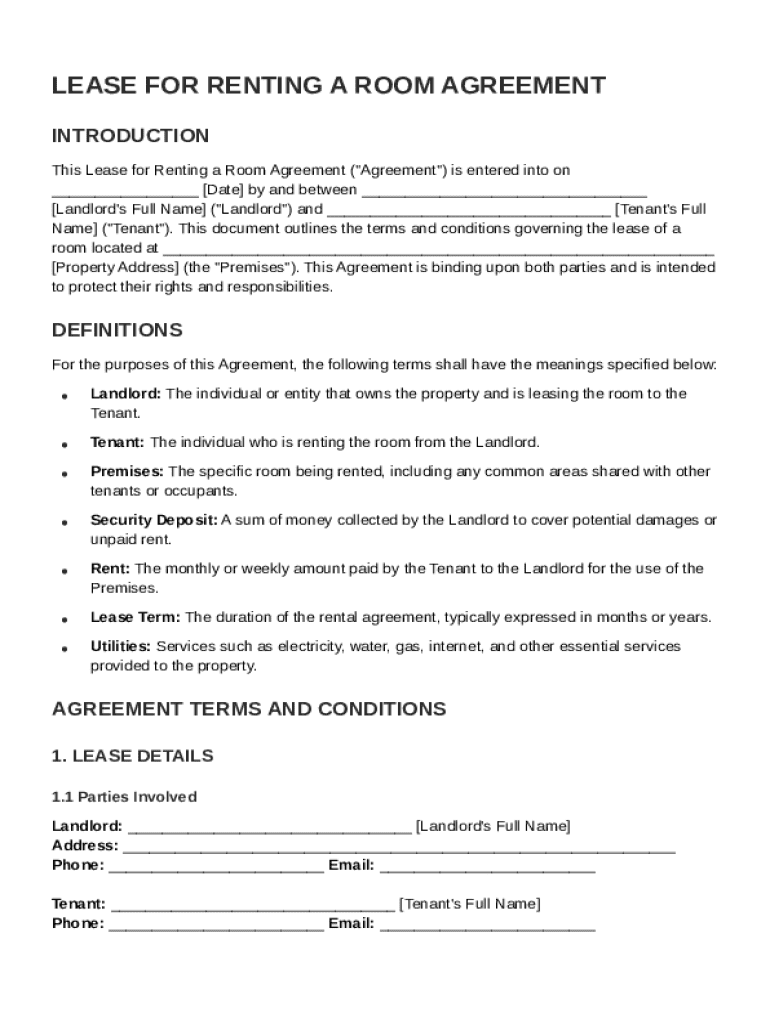
The Lease for Renting a Room Agreement Template is a legal document used to outline the terms and conditions of renting a specific room within a property. This contract establishes a binding agreement between the landlord (or property owner) and the tenant, detailing rights and obligations of both parties. It covers aspects such as rent amount, lease duration, and responsibilities for utilities and maintenance. This template serves as a customizable guideline, allowing parties to modify the document according to their specific agreements while ensuring legal protection.
Key Elements of the Lease for Renting a Room Agreement Template
A comprehensive Lease for Renting a Room Agreement Template includes several essential elements that define the terms of the rental. Key elements typically incorporated in these templates are:
- Lease Duration: Defines the start and end dates of the rental period.
- Rent Payment: Specifies the monthly rental amount, due date, and payment methods accepted.
- Security Deposit: Outlines the deposit amount, its purpose, and conditions for its return.
- Utilities: Details which utilities are included in the rent and which are the tenant's responsibility.
- Maintenance Responsibilities: Allocates maintenance duties for both landlord and tenant, covering general upkeep and repairs.
- Use of Premises: Sets rules for using the rented room and common areas, including policies on guests.
- Termination Procedures: Describes the process for terminating the lease, including notice periods and potential penalties.
- Governing Law: Indicates which jurisdiction’s laws apply to the agreement.
Who Typically Uses the Lease for Renting a Room Agreement Template
The Lease for Renting a Room Agreement Template is widely used by both landlords and tenants in the residential rental market. It is particularly beneficial for:
- Landlords: Property owners who are leasing out individual rooms within a home or apartment, especially in shared housing scenarios.
- Tenants: Individuals seeking flexible living arrangements or temporary housing, such as students, professionals, or individuals in transition.
- Property Managers: Professionals managing rental properties on behalf of landlords, facilitating standardized lease agreements across multiple tenants.
- Roommates: Co-tenants looking to formalize their living arrangements and shared responsibilities within a rented space.

Steps to Complete the Lease for Renting a Room Agreement Template
To ensure a comprehensive and legally sound rental agreement, follow these steps to complete the Lease for Renting a Room Agreement Template:
-
Review and Customize: Begin by thoroughly reading the template. Customize it to fit the specific terms agreed upon by both parties, ensuring accurate reflection of the rental terms.
-
Fill in Tenant and Landlord Information: Input the full names and contact information of both landlord and tenant to establish the identities of the contractual parties.
-
Detail Financial Terms: Include specific financial details, such as rent amount, due dates, payment methods, and security deposit conditions.
-
Specify Lease Terms: Define the lease start and end dates, along with any conditions for renewal or extension of the lease agreement.
-
Outline Responsibilities: Clearly state who is responsible for utilities, maintenance, and repairs, and detail these responsibilities within the agreement.
-
Include Governing Law and Signature Section: Ensure the template specifies the governing jurisdiction and includes designated areas for signatures from both parties to finalize the agreement.
Important Terms Related to Lease for Renting a Room Agreement Template
Understanding the key terms associated with a Lease for Renting a Room Agreement is crucial for effective negotiation and compliance:
-
Lessor and Lessee: Lessor refers to the landlord, while lessee refers to the tenant. These terms define the parties involved in the lease.
-
Premises: The specific room being rented, along with any shared access to common areas, such as kitchens or bathrooms.
-
Default: A breach of any terms outlined within the lease agreement, which might lead to penalties or termination of the lease.
-
Subleasing: A clause within the agreement determining whether a tenant is allowed to rent out the room to another individual.
Legal Use of the Lease for Renting a Room Agreement Template
When using a Lease for Renting a Room Agreement Template, it is vital to comply with legal requirements to safeguard the rights of both parties:
-
Legal Enforceability: The template must comply with local, state, and federal housing laws to ensure it is legally enforceable in case of disputes.
-
Discrimination Laws: Ensure that the agreement does not contain discriminatory clauses and abides by fair housing laws.
-
Amendments: Any modifications made post-signing must be documented formally and signed by both parties for continued legal validity.
State-Specific Rules for the Lease for Renting a Room Agreement Template
Rental agreements can vary significantly from state to state due to differing real estate laws and regulations. Consider the following:
-
Security Deposit Limits: Some states have specific limits on the amount that can be charged as a security deposit and conditions on its return.
-
Notice Requirements: Lease termination and renewal notice periods can differ, impacting how much advance notice is required from either party.
-
Rent Control Laws: Understanding whether rent control laws apply within the respective state or city is critical.
Each section should be thoroughly interpreted and tailored to align with the regulations within the state where the property is located.
Why Use a Lease for Renting a Room Agreement Template
Utilizing a Lease for Renting a Room Agreement Template offers significant advantages for both landlords and tenants:
- Legal Protection: Establishes a formal, written contract that safeguards the interests of both parties and minimizes potential disputes.
- Clarity on Terms: Provides a clear outline of the expectations and responsibilities of both the landlord and tenant.
- Peace of Mind: Ensures that all involved have a clear understanding of the terms, reducing potential conflicts and misunderstandings throughout the lease duration.
- Efficiency: Streamlines the lease setup process, saving time and effort over drafting a custom agreement from scratch.