Definition & Meaning
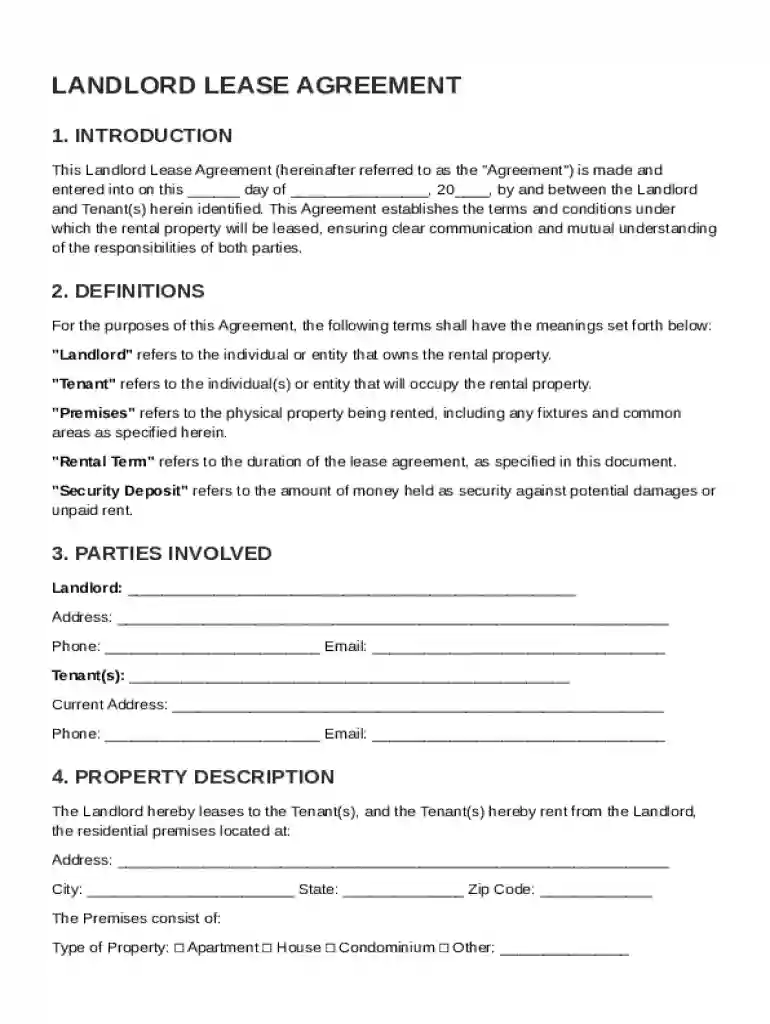
The Landlord Lease Agreement Template is a formal legal document that delineates the terms and conditions under which a property is leased by a landlord to a tenant. This agreement serves as a foundational contract, setting out the responsibilities and rights of both parties during the term of the lease. It typically includes details such as rent amount, payment schedules, lease duration, maintenance obligations, and terms for property use. By using this template, landlords can ensure clear communication with tenants, thereby reducing potential disputes and fostering a professional rental relationship.
Key Elements of the Landlord Lease Agreement Template
A comprehensive Landlord Lease Agreement Template includes several critical components that define the landlord-tenant relationship:
- Property Description: Clearly outlines the rental property, including its address and any specific features or fixtures included in the lease.
- Lease Duration: Specifies the start and end dates of the lease, including any renewal terms or month-to-month options.
- Rent Details: States the amount of rent due, payment methods accepted, due dates, and any applicable late fees.
- Security Deposit: Details the amount required, conditions for its use, and terms for refund upon lease termination.
- Utilities and Maintenance: Clarifies the responsibilities of both parties regarding utility payments and property upkeep.
- Access Rights: Outlines the conditions under which the landlord may enter the property, ensuring compliance with privacy laws.
- Termination Clause: Describes the conditions for ending the lease early, including notice periods and any applicable penalties.
Steps to Complete the Landlord Lease Agreement Template
Creating a lease agreement involves several steps to ensure the document is complete and legally sound:
- Gather Required Information: Collect all necessary details about the property, tenants, and terms of the lease.
- Fill out the Template: Use the section headings to systematically input relevant information, ensuring accuracy and completeness.
- Review and Confirm Details: Double-check each section for errors or omissions. Ensure that all parties understand and agree to the terms.
- Sign the Agreement: Once reviewed, the landlord and tenant(s) should sign the document, making it legally binding.
- Store and Distribute Copies: Keep a signed copy for your records and provide copies to the tenant(s) for their reference.
How to Use the Landlord Lease Agreement Template
Using the Landlord Lease Agreement Template from DocHub streamlines the process of creating a legally sound lease:
- Start with a Template: Choose a pre-made template to save time and ensure all standard terms are included.
- Customize as Needed: Adjust the template to address specific aspects of your rental property or unique terms agreed upon with the tenant.
- Leverage Interactive Fields: Use DocHub’s features to add fillable fields for ease of use, ensuring all necessary information is captured efficiently.
- Digital Signatures: Utilize DocHub’s electronic signature capabilities to finalize the agreement quickly and securely.
Legal Use of the Landlord Lease Agreement Template
Landlord Lease Agreements must adhere to current legal standards to be enforceable:
- Compliance with Laws: Ensure the template aligns with federal, state, and local rental laws, including habitability standards and anti-discrimination policies.
- Confidentiality Provisions: Respect tenant privacy by including terms that comply with applicable privacy laws and regulations.
- Legal Representation: Consider consulting with a legal professional to review the agreement if unsure of its suitability or compliance.
State-Specific Rules for the Landlord Lease Agreement Template
Landlord Lease Agreements can vary significantly depending on state laws and regulations:
- Deposit Regulations: States have different requirements for security deposit limits, handling, and returns.
- Notice Periods: Notification requirements for lease termination or rent increases differ by state.
- Property Access: State laws govern when and how landlords may access rental properties for inspections or repairs.
Software Compatibility
DocHub ensures compatibility with various file formats and integrations to enhance workflow efficiency:
- File Formats: Supports PDF, DOC, PPT, XLS, and TXT files, allowing seamless import and modification of templates.
- Cloud Integration: Easily work within your existing ecosystem by integrating with Google Drive, Dropbox, and OneDrive.
- Mobile Accessibility: DocHub’s platform works on multiple devices, ensuring you can manage documents on either desktop or mobile browsers.
Examples of Using the Landlord Lease Agreement Template
Practical applications of the Landlord Lease Agreement Template illustrate its versatility and functionality:
- Residential Leases: Perfect for creating agreements for individual apartments, condos, or single-family homes.
- Commercial Properties: Adapt the template for business leases with modifications to accommodate commercial terms and conditions.
- Short-term Rentals: Customize the template for vacation rentals or short-term leases by specifying different conditions under the lease duration and obligations of both parties.