
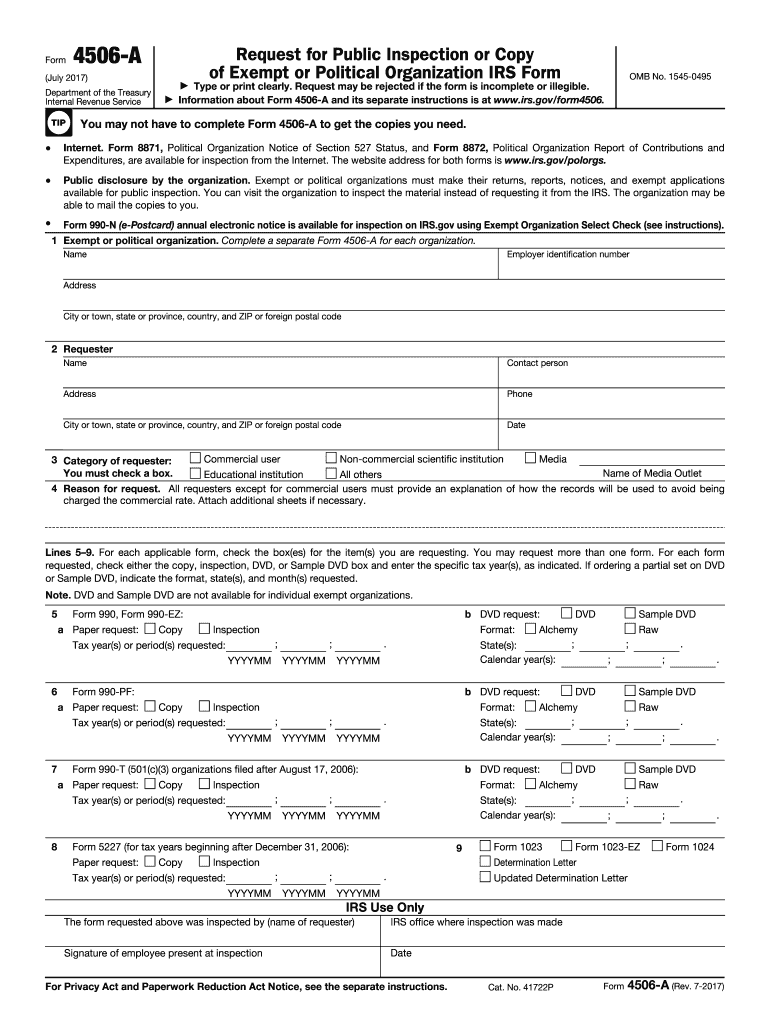







Definition and Purpose of Form 4506-A
Form 4506-A is utilized by individuals or organizations requesting access to specific tax documents related to exempt or political organizations. This form allows the public to inspect or acquire copies of certain documents, which can include annual information returns and exemption applications. The form's primary function is to provide transparency and accountability, enabling interested parties to review these organizations' operations and financial activities. Form 4506-A is commonly used by researchers, journalists, and other entities interested in nonprofit financial health or compliance.
How to Obtain Form 4506-A
The form can be obtained directly from the IRS website, ensuring that applicants use the most current version available. Additionally, the form is typically available at IRS offices or through professional tax preparers. For those seeking a digital process, downloading the form as a PDF from the IRS site is recommended, facilitating straightforward completion and submission.
Steps to Complete Form 4506-A
-
Fill in Personal Information: Begin by providing your name, address, and contact information. Ensure that all entries are accurate to avoid delays in processing.
-
Specify the Organization: Clearly state the name of the exempt organization and its Employer Identification Number (EIN), if known.
-
Identify the Documents Needed: Select the type of documents you wish to access, such as annual returns or exemption applications.
-
Choose the Delivery Method: Indicate whether you wish to receive the documents digitally or through mail. Include relevant details, such as an email address for electronic delivery.
-
Sign and Date: Ensure that the form is signed and dated to verify the authenticity of the request. Unsigned forms will not be processed.
Legal Use of Form 4506-A
The form is strictly for lawful purposes, meaning the information obtained should not be used for any illegal activities, such as identity theft or fraud. It serves an essential role in maintaining transparency for exempt organizations under IRS regulations. When filling out the form, applicants must adhere to privacy practices and respect the confidentiality of information obtained.
IRS Guidelines for Form 4506-A
The IRS has explicit guidelines on processing requests via Form 4506-A. These include accurate completion of all fields, proper identification of the documents sought, and compliance with any fee requirements for copies. The IRS typically provides organizations’ documents for the most recent three years, aligning with statutory requirements.
Important Terms Related to Form 4506-A
- Exempt Organization: A group or entity that is not required to pay federal income tax because it operates for certain philanthropic, educational, or similar purposes.
- Annual Return: This document reports the organization's financial activities and operational achievements for a given fiscal year.
- Exemption Application: The initial filing an organization submits to qualify for tax-exempt status under IRS rules.
Penalties for Non-Compliance
Failure to comply with the conditions or legal usage of documents requested via Form 4506-A may result in legal repercussions. This includes penalties for misuse of information, failure to complete the form accurately, or using obtained information beyond its intended scope, as defined by IRS guidelines.
Software Compatibility
While Form 4506-A itself is not typically associated with mainstream tax preparation software like TurboTax or QuickBooks, the information it provides can be used alongside such platforms for comprehensive financial analysis. These tools often cater to individual or corporate tax needs but might indirectly assist in analyzing exempt organizations' data.
Business Entity Types Benefiting from Form 4506-A
While Form 4506-A is not used by businesses in their tax filing processes, businesses working with or partnering with exempt organizations might utilize this form. For example, corporations engaging in sponsorships or partnerships with nonprofits may review financial disclosures to ensure transparency and proper alignment with corporate values and goals.




