
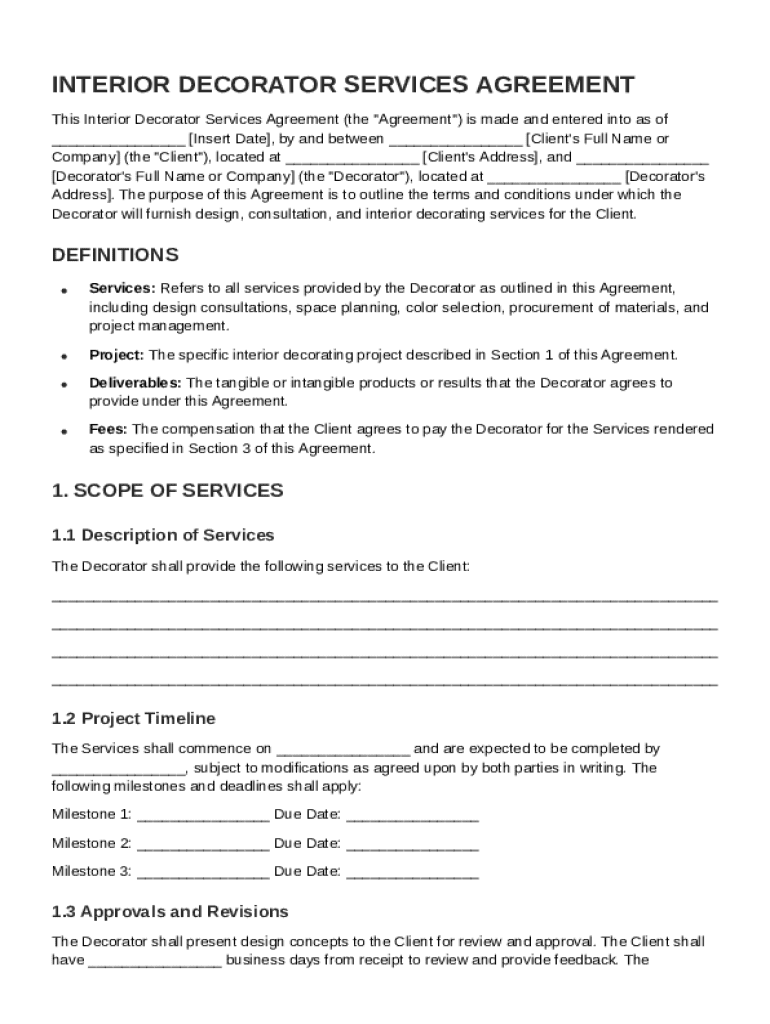







Definition and Meaning of the Interior Decorator Contract Template
An Interior Decorator Contract Template is a pre-designed document that outlines the formal agreement between a client and an interior decorator. This template serves as a blueprint for defining the roles and responsibilities of each party involved in an interior design project. The contract typically includes sections such as the scope of services, project timelines, payment terms, and conditions for termination. By providing a standardized format, the template simplifies the process of drafting contracts for interior decorating projects and ensures that all necessary legal and procedural details are covered from the outset.
Key Features of the Template
- Project Scope and Details: Defines the specific services and deliverables the decorator agrees to provide.
- Compensation Structure: Outlines how and when the decorator will be paid, whether by a flat fee, hourly rate, or milestone payments.
- Confidentiality and Ownership: Details the ownership rights of design materials and any confidentiality clauses relevant to the project.
How to Use the Interior Decorator Contract Template
Utilizing the Interior Decorator Contract Template involves several steps to customize it according to the specific needs of the project and parties involved. This ensures the document reflects tailored agreements suitable for particular arrangements.
- Download and Review: Begin by accessing the template from a credible source, such as a legal forms database or professional service platform like DocHub.
- Personalization: Modify the sections related to client and decorator details, including contact information, project location, and specific design tasks.
- Scope of Work Details: Clearly outline what the project entails, specifying the starting point, phases involved, and completion criteria.
- Payment Terms Adjustments: Adjust the compensation section to reflect agreed terms, whether hourly, per project, or monthly billing cycles.
- Legal Provisions and Signatures: Ensure that all clauses comply with applicable state laws and that both parties sign and date the agreement, validating its legality.
Key Elements of the Interior Decorator Contract Template
The Interior Decorator Contract Template incorporates numerous critical sections that constitute its core framework. Each element ensures a comprehensive and clear agreement is achieved.
Project Scope and Services
- Description of Work: Detailed breakdown of decorations or improvements, room by room if needed.
- Timeline: Start and end dates along with key milestones.
Compensation and Payment Terms
- Fee Structure: Explanation of the payment arrangement, with any conditions for upfront deposits or progressive payments.
- Additional Costs: How expenses outside of fixed fees will be handled, such as materials or third-party services.
Legal and Compliance
- Termination Clause: Conditions under which either party can terminate the contract early.
- Dispute Resolution: Mechanism for resolving disagreements, such as mediation or arbitration.
- Liability and Insurance: Details on liability insurance and other protections against damage or loss.
Who Typically Uses the Interior Decorator Contract Template
This template is used by a variety of professionals and clients within the interior design industry. These users benefit from its structured approach to establishing clear agreements.


Common Users
- Professional Interior Decorators: Ensures clarity and protection in client engagements.
- Homeowners and Business Owners: Use the template when hiring decorators to have a documented agreement of expectations.
- Design Agencies: Streamline their contract processes for multiple projects.

Steps to Complete the Interior Decorator Contract Template
Completing the Interior Decorator Contract Template is a multi-step process that transforms it from a generic document into a customized contract.
- Identify Project Requirements: Ensure all decorator services are discussed and agreed upon with the client.
- Fill in Template Details: Enter both parties’ information, project description, and specifics on the scope of work in the provided fields.
- Agree on Payment Terms: Discuss and finalize the payment schedule, inserting details into the compensation section of the template.
- Legal Considerations: Include any necessary legal verbiage specific to the jurisdiction and customize dispute resolution strategies.
- Review and Confirm: Check the entire document carefully with both parties for accuracy and comprehensiveness before finalizing.
Important Terms Related to the Interior Decorator Contract Template
Understanding the terminology used in an Interior Decorator Contract Template is crucial for both drafting and interpreting the contract effectively.
Common Terms
- "Scope of Work" (SOW): Specifies the tasks to be completed by the interior decorator.
- "Milestone Payments": Payments made contingent on reaching specific phases in the project.
- "Change Order": Formal amendment to the project scope, often affecting the timeline and budget.
Legal Use of the Interior Decorator Contract Template
Ensuring the legal enforceability of the Interior Decorator Contract Template is critical in contract creation and management.
Legal Considerations
- State Laws Compliance: Make sure the contract aligns with the laws of the state in which services are provided.
- Contractual Capacity: Confirm that all signatories are legally able to enter into a binding agreement.
Consequences of Non-Compliance
- Failing to comply with local regulations or contract terms can lead to disputes, legal fees, and financial loss.
Examples of Using the Interior Decorator Contract Template
The template provides a versatile framework adaptable to various scenarios in the interior designing field.
Practical Examples
- Residential Remodel: A homeowners' association might use the template for common area renovations.
- Commercial Decor: A business engages a decorator for office space revitalization.
- Consultant Agreement: Interior design consultants might use the template for offering design strategies to clients beyond direct implementation services.
By following these guidelines, decorators and clients can ensure their projects are grounded in clear, legally sound agreements tailored for success.




