



01. Edit your form online
Type text, add images, blackout confidential details, add comments, highlights and more.

Type text, add images, blackout confidential details, add comments, highlights and more.

Draw your signature, type it, upload its image, or use your mobile device as a signature pad.

Send it via email, link, or fax. You can also download it, export it or print it out.
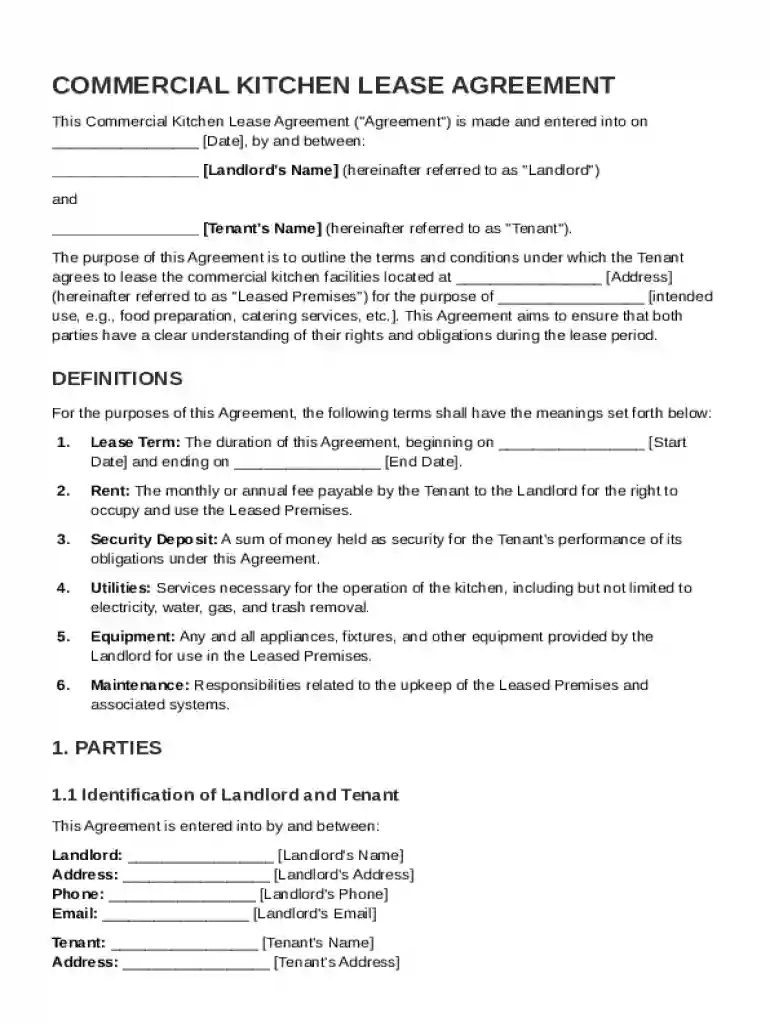
The Commercial Kitchen Lease Agreement Template is a standardized document that outlines the terms and conditions for leasing a commercial kitchen space between a landlord and tenant. This template serves to clarify the rights and responsibilities of each party involved in the lease, facilitating a smoother transaction. Key sections typically include general terms, definitions, rent details, and permitted activities, ensuring both parties have a mutual understanding of what the agreement entails.
Terms and Conditions: This component defines the boundaries and expectations within which both the landlord and tenant must operate. It usually covers key aspects like lease duration, payment terms, maintenance obligations, and any restrictions related to the use of the kitchen space.
Legal Definitions: Clarity on specific legal terms is crucial for ensuring that both parties fully understand their obligations and rights. This section eliminates ambiguity by offering specific definitions for terminology used in the document.
Rights and Obligations: It delineates the specific responsibilities of the landlord and the tenant, from upkeep and maintenance to compliance with health and safety regulations.
Utilizing the Commercial Kitchen Lease Agreement Template effectively can streamline the leasing process and avoid potential misunderstandings. Here’s a step-by-step guide on how to use it:
Review the Template: Begin by examining all sections of the template to understand its structure and content. This initial review is essential for identifying any modifications you might need to make the document applicable to your specific situation.
Customize the Details: Tailor specific sections to reflect the actual lease terms, such as the rental rate, lease term, and any unique stipulations agreed upon by both parties.
Consult Legal Advice: Given the legal implications of lease agreements, consulting with a legal professional to ensure that the contract conforms with state laws and accurately represents all negotiated terms is advisable.
Finalize and Sign: After reaching a consensus on all terms, both parties should sign and date the document, making it a binding contract.
A Commercial Kitchen Lease Agreement Template comprises several critical components that structure the relationship between a landlord and tenant. These sections ensure the document covers all necessary legal and practical considerations.
Lease Term Details: Specifies the lease period, including start and end dates, and provisions for renewal or termination.
Rental Payment Terms: Outlines the financial obligations of the tenant, including rent amount, payment schedule, and acceptable forms of payment.
Use of Premises: Details the intended use of the kitchen space, defining any specific conditions or limitations regarding activities that can be conducted.
Maintenance and Repairs: Assigns responsibilities for maintaining the kitchen, specifying which party is responsible for what maintenance tasks and repairs.
Insurance Requirements: Stipulates the need for various insurance policies to protect both landlord and tenant interests.
Termination Clauses: Defines the conditions under which the lease can be terminated by either party, including breach of contract scenarios.
The legal application of the Commercial Kitchen Lease Agreement Template ensures compliance with applicable laws and offers legal recourse in cases of dispute. Key aspects include:
Compliance with State Laws: Lease agreements must conform to state and local regulations concerning commercial property leases. It's vital to customize the template to align with these legal obligations.
Enforceability: By clearly defining each party's rights and obligations, the agreement becomes enforceable in a court of law in the event of disagreements or breaches.
Risk Mitigation: Proper legal documentation minimizes the risk of misunderstandings or misrepresentations, providing a framework for resolving disputes amicably.
Understanding the terminology used in a Commercial Kitchen Lease Agreement Template is crucial for properly interpreting its provisions. Some key terms include:
Acquiring the Commercial Kitchen Lease Agreement Template involves specific steps and considerations:
Online Resources: Users can find downloadable templates from document management platforms like DocHub and legal websites specializing in commercial leasing documents.
Legal Services: Professional legal services often provide access to customized templates tailored to meet specific state requirements and individual lease situations.
Direct from Landlords or Real Estate Agents: Some landlords or their representatives offer their proprietary templates, reflecting industry standards and specific preferences.
Lease agreements often vary by state due to differing local regulations and requirements. Understanding these variations ensures that the agreement is legally sound and applicable.
State Compliance: Each state may have specific statutes governing lease agreements, affecting what terms can be included.
Disclosure Requirements: Some jurisdictions mandate the disclosure of particular information, such as previous health inspections for kitchen facilities.
Tax Obligations: State-specific tax implications such as sales tax on rent or food service taxes should be considered.
Filling out the Commercial Kitchen Lease Agreement Template involves several methodical steps to ensure all necessary information is accurately captured:
Gather Necessary Information: Collect all pertinent details for the lease, such as property address, tenant and landlord information, and financial terms.
Fill in Basic Template Information: Start by inputting the names of the parties involved, the legal property description, and the intended lease start date.
Specify Financial Terms: Enter the rent amount, security deposit, and other financial obligations.
Outline Responsibilities: Clearly define maintenance duties, insurance requirements, and indemnifications.
Review and Edit: Have each party review the completed document for accuracy and completeness.
Legal Validation: Ensure the agreement complies with state laws by consulting legal advice to make necessary adjustments.
At DocHub, your data security is our priority. We follow HIPAA, SOC2, GDPR, and other standards, so you can work on your documents with confidence.


BdocHub or Default: User must correct any violation, bdocHub or failure to keep or perform any conditions of this agreement or the Rental and Use Policies within.
Mar 6, 1996 A rental agreement is a legally binding contract between you and your landlord. It should state the rights and responsibilities of both of the


