




01. Edit your form online
Type text, add images, blackout confidential details, add comments, highlights and more.

Type text, add images, blackout confidential details, add comments, highlights and more.

Draw your signature, type it, upload its image, or use your mobile device as a signature pad.

Send it via email, link, or fax. You can also download it, export it or print it out.
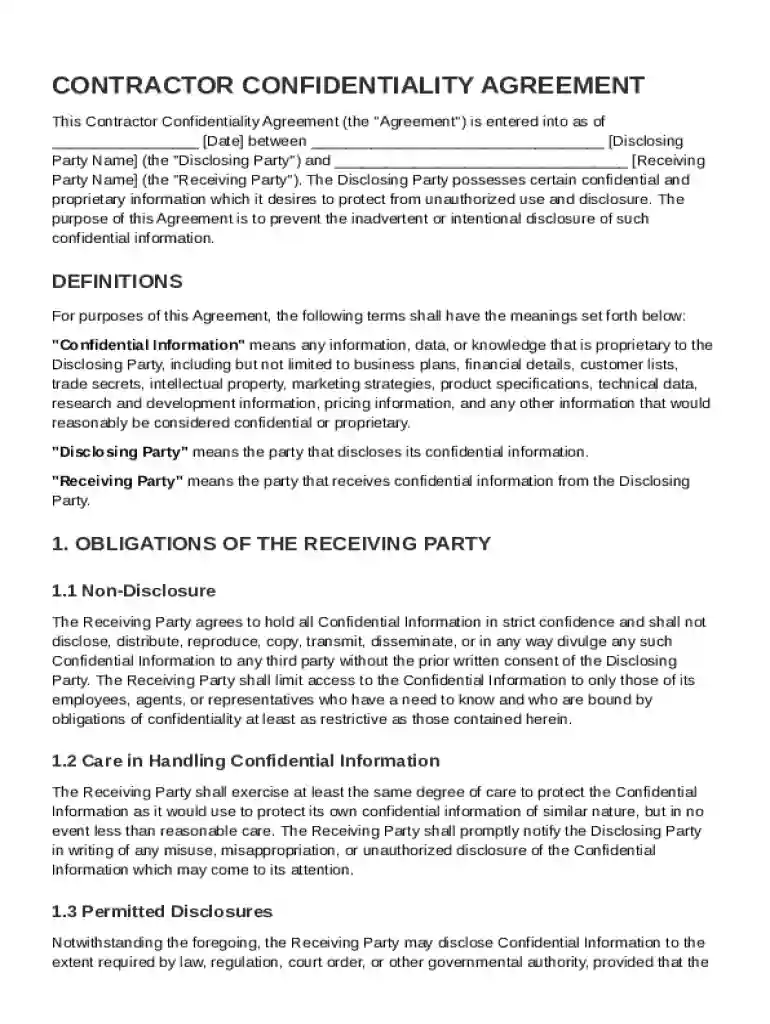
A Contractor Confidentiality Agreement Template is a legal document that establishes a binding agreement between two parties: the Disclosing Party, who shares confidential information, and the Receiving Party, often a contractor, who agrees to protect that information. The template outlines the definition of "Confidential Information," which can include trade secrets, business strategies, or proprietary data. It specifies the obligations of the Receiving Party to maintain confidentiality and outlines terms under which information can be disclosed.
Using a Contractor Confidentiality Agreement Template involves customizing the document to fit the specific needs of both parties involved. Key sections should be reviewed and tailored to ensure compatibility with the business relationship and the nature of the information being protected.
The legal foundation of the Contractor Confidentiality Agreement Template ensures that both parties understand their rights and obligations. Legal use involves adhering to state-specific laws and regulations in the United States, making the document binding and enforceable.
An effective Contractor Confidentiality Agreement Template comprises several critical sections that ensure protection and compliance. Understanding these elements can aid in constructing a robust agreement.
While the core elements of a Contractor Confidentiality Agreement remain consistent, state-specific laws in the United States can influence how these agreements are enforced. It is important to consider these differences when drafting or executing a confidentiality agreement.
Practical applications of the Contractor Confidentiality Agreement Template vary across industries and business scenarios. Real-world examples illustrate its utility and importance.
Clarity in important terminology within the Contractor Confidentiality Agreement Template is essential. These terms provide the framework that guide responsibilities and expectations.
Various business entities and professionals rely on the Contractor Confidentiality Agreement Template as a standard for safeguarding sensitive data. Understanding who uses these agreements can illustrate their widespread importance.



The choice between digital and paper versions of a Contractor Confidentiality Agreement Template has implications for execution, storage, and accessibility.
Various versions and alternatives to the Contractor Confidentiality Agreement Template exist, providing flexibility to accommodate different situations and parties' preferences.
At DocHub, your data security is our priority. We follow HIPAA, SOC2, GDPR, and other standards, so you can work on your documents with confidence.


The parties are independent contractors. This Agreement does not create a partnership, joint venture, agency or other similar relationship between the parties.
Mar 24, 2022 #9. Secure Confidentiality. Any consulting agreement must include a language requiring confidentiality. You wouldnt want the consultant to
This Agreement begins retroactively to the beginning of Signators relationship with Company and remains in effect at all times during any consulting,


