




01. Edit your form online
Type text, add images, blackout confidential details, add comments, highlights and more.

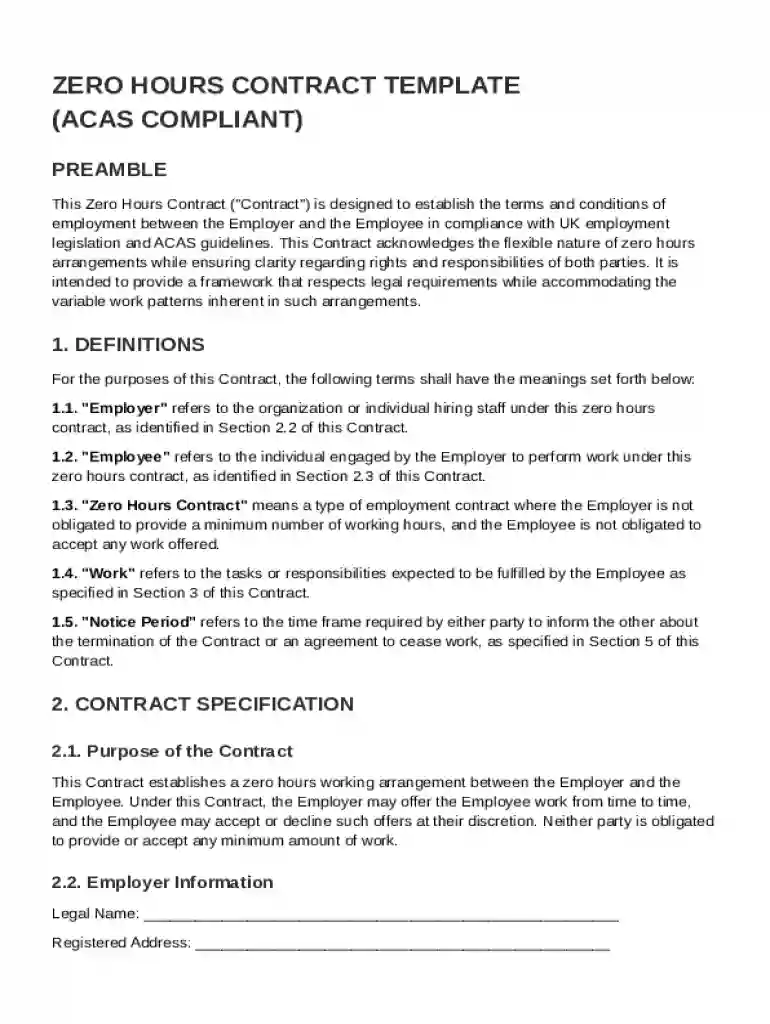
Type text, add images, blackout confidential details, add comments, highlights and more.

Draw your signature, type it, upload its image, or use your mobile device as a signature pad.

Send it via email, link, or fax. You can also download it, export it or print it out.
The Zero Hours Acas Contract Template is a legally structured document designed to formalize employment arrangements where no specific set hours are guaranteed. This type of contract is particularly flexible, allowing employers to offer work as needed, and employees to accept it depending on their availability. It complies with UK employment legislation and Acas guidelines, ensuring that both parties understand their rights and responsibilities in relation to work hours, pay, and conditions. By using this template, both employers and employees can establish clear parameters for their engagement without the expectation of guaranteed work or income.
The template covers critical aspects of employment, structured to ensure all parties are transparent about their obligations. Key sections include:
Using the template involves several steps to ensure it aligns with both employer and employee expectations:
Understanding key terms within the contract is vital for clarity:
Completing the contract template involves key steps that ensure all necessary information is captured accurately:
The template serves as a legally binding document once signed, adhering to UK employment law. It is designed to protect both parties by setting clear expectations and legal recourse for disagreements. Employers using this contract must ensure that they comply with minimum wage requirements and employment rights, while employees are assured of their rights to decline work without penalty. Legal experts often recommend that this template be used in sectors with fluctuating workloads, like retail or hospitality, where flexible labor allows for efficient workforce management.
This template is commonly utilized by businesses and organizations that experience variable staffing needs:


While the Zero Hours Acas Contract Template is based on UK guidelines, its application may vary slightly according to state-specific employment laws in the US if considered for adaptation. However, it's fundamentally designed to align with general principles of labor flexibility recognizable in different jurisdictions. Employers in the US must ensure compliance with local minimum wage laws and overtime regulations and seek adaptation in consultation with a labor law expert to ensure legal compatibility within their state.
The template finds its application across various scenarios:
At DocHub, your data security is our priority. We follow HIPAA, SOC2, GDPR, and other standards, so you can work on your documents with confidence.



Dec 2, 2017 Adjustments, with the employees agreement, might include: Flexible working hours or changes to their start and/or finish times; Changes to
Sep 1, 2024 The Air Cargo Advance Screening (ACAS) program evaluates air shipments for threats to aviation. Messages describing upcoming shipments are
This essay argues about workers and employees and discusses how Zero hours contact is used to undermine employment law.


