
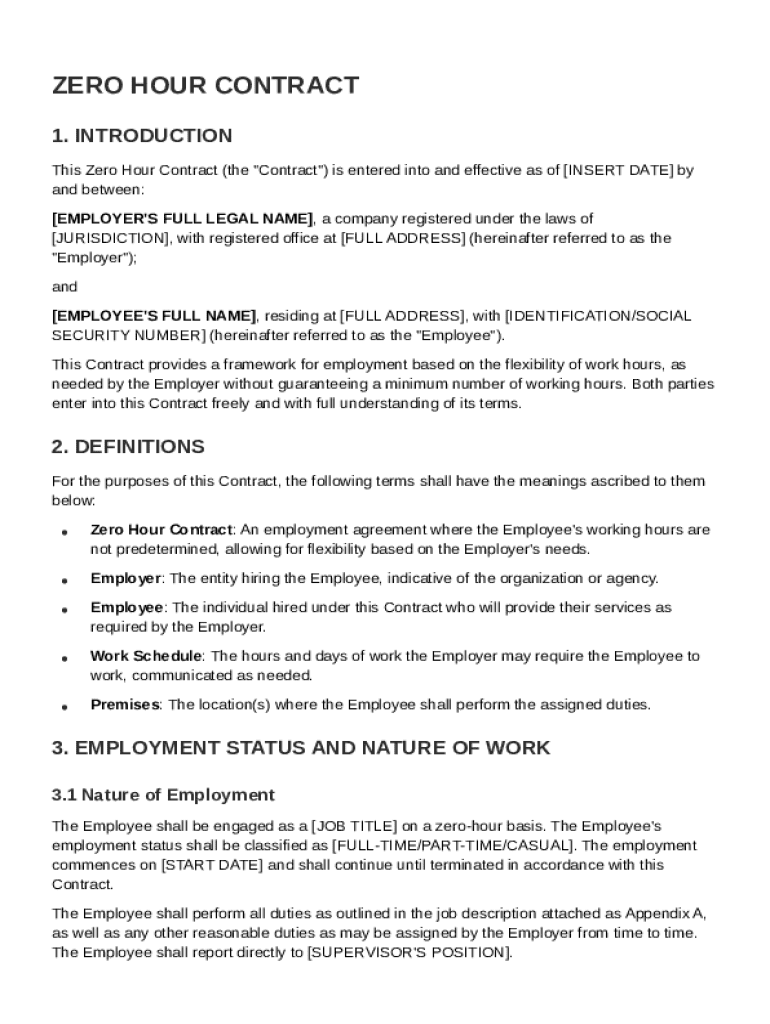







Definition & Meaning
A Zero Hour Contract Template outlines the employment terms between an employer and an employee where there is no guaranteed minimum number of working hours. These contracts are typically used in flexible work arrangements, allowing the employer to offer work to the employee as needed without committing to a specific number of hours. The nature of such contracts reflects the understanding that the work schedule will be irregular and dependent on the employer’s needs.
Zero hour contracts are commonly employed in industries like hospitality and retail, where there may be fluctuating demand for workers. While these contracts can offer flexibility, they also require a clear mutual understanding of the rights and obligations of both parties. Key elements typically include work conditions, compensation, confidentiality, and termination processes.
Key Elements of the Zero Hour Contract Template
Zero hour contracts must include certain fundamental clauses to ensure they serve their intended purpose while protecting both employer and employee. These elements generally cover:
- Employment Terms: Details regarding the nature of the employment, including the lack of guaranteed hours and the flexible availability expected of the employee.
- Compensation Structure: Explanation of how and when the employee will be paid, often hourly or based on work completed rather than fixed salaries.
- Rights and Responsibilities: Both parties' rights and obligations, including employment rights such as statutory sick pay, holiday entitlements, and minimum wage adherence.
- Termination Conditions: Process and notice required for termination of the contract by either party.
- Confidentiality and Data Protection: Terms outlining the handling of sensitive information and adherence to data protection laws.
Each clause should be tailored to meet legal requirements and the specific operational needs of the business.
How to Use the Zero Hour Contract Template
Using a Zero Hour Contract Template involves customizing it to fit the particular needs of a business. Here is a step-by-step guide:
- Download and Review: Obtain a reliable template, ensuring it includes all necessary sections for a zero hour contract.
- Customize Employment Details: Adjust the template to specify your business details and the nature of work expected from the employee.
- Set Payment Terms: Clearly define how payment is calculated and ensure it complies with minimum wage laws.
- Clarify Rights and Obligations: Amend sections on rights and responsibilities to reflect mutual obligations, including compliance with labor laws.
- Consult Legal Advice: Have a legal expert review the completed contract to ensure compliance with applicable employment laws.
- Finalize and Implement: Once validated, both parties should sign the contract, and it should be distributed to them for their records.
Every step must be conducted meticulously to avoid potential disputes and legal complications.
Important Terms Related to Zero Hour Contract Template
Understanding key terminology is crucial when working with zero hour contracts. Here are some essential terms:
- Flexibility: Refers to the irregular working hours that the employee agrees to.
- On-Call Work: Describes the availability requirement without a fixed schedule.
- Minimum Wage Compliance: Ensures all compensations adhere to statutory minimum wage laws.
- Statutory Rights: Legal rights under national labor laws, such as holiday pay and sick leave.
- Confidentiality: The requirement to keep business information secure and private.
Being familiar with these terms ensures clearer communication and a better understanding of the contract’s framework.
Legal Use of the Zero Hour Contract Template
Zero hour contracts must be employed within legal frameworks to avoid exploitation or misunderstanding:
- Employment Law Compliance: Contracts should adhere to labor laws concerning payment, anti-discrimination, and workers' rights, such as the Fair Labor Standards Act (FLSA).
- Equality Considerations: Ensure the contract does not create unfair working conditions, especially concerning worker availability and compensation.
- Documented Agreements: All terms must be documented, with both employer and employee maintaining copies.
- Regular Review and Update: Maintain compliance with any changes in employment law to ensure continued legality.
Legal oversight is recommended to avoid potential litigation and disputes.
Examples of Using the Zero Hour Contract Template
Various scenarios illustrate the practical use of zero hour contracts:
- Hospitality Industry: Seasonal fluctuation requires businesses to employ staff on a zero hour basis, particularly during festivals or vacations.
- Event Management: Temporary staff needed for particular events where workload is project-based.
- Healthcare: On-call medical staff for unpredictable demand in hospitals or nursing homes.
These examples show how zero hour contracts provide staffing flexibility around variable business needs.
Steps to Complete the Zero Hour Contract Template
Completing a Zero Hour Contract Template involves several essential steps:
- Identify Job Role: Clearly define what role the employee will fulfill and what tasks are expected.
- Outline Flexibility: Clearly document the expected availability and any on-call requirements.
- Specify Compensation: Define how payment rates are determined and any overtime policies.
- Include Legal Advisories: Specify adherence to statutory rights, especially concerning worker safety and data protection.
- Refer to Governing Law: Explicitly mention the legal jurisdiction under which the contract falls.
Following these precise steps will ensure the contract is comprehensive and enforceable.
Business Types That Benefit Most from the Zero Hour Contract Template
Certain industries benefit particularly from zero hour contracts due to the nature of their operations:
- Retail Chains: With fluctuating customer numbers, such businesses use zero hour contracts to adjust staffing levels accordingly.
- Restaurants and Catering Services: As demand varies daily, flexible staffing helps address peak times efficiently.
- Call Centers: To manage call volumes without understaffing or overstaffing, firms often rely on such flexible contracts.
- Logistics Companies: Employing zero hour contracts allows for coverage of unexpected delivery demands.
These business types use zero hour contracts to optimize staffing efficiencies related to unpredictable demand patterns.




