
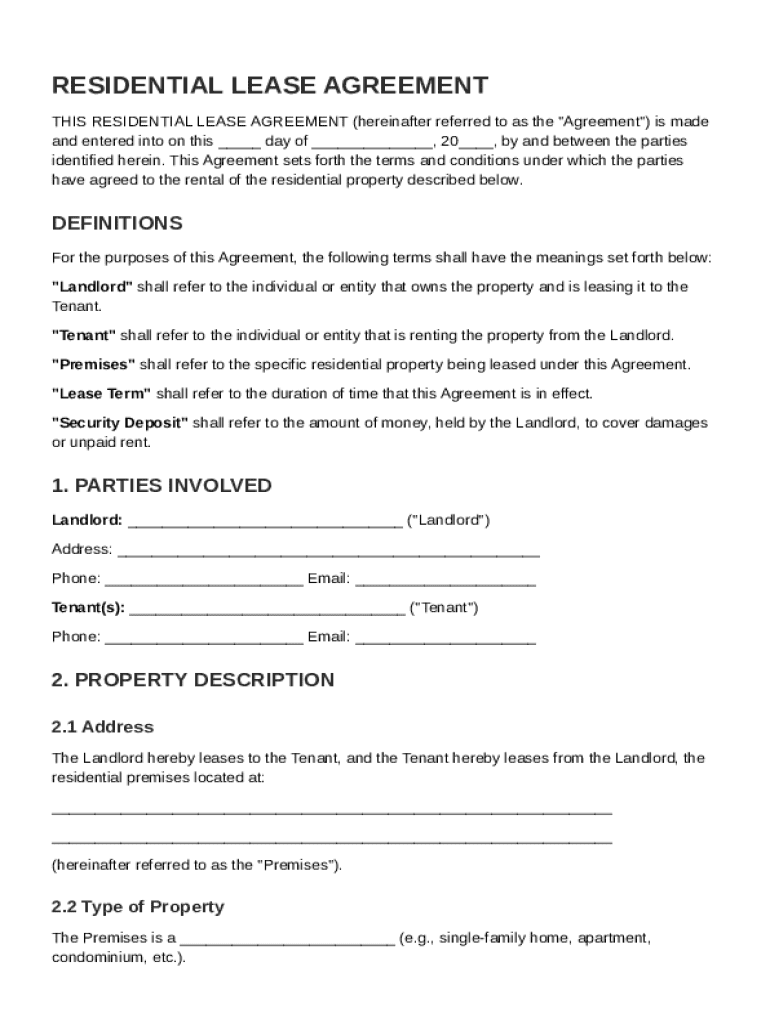







Definition and Meaning
A Residential Contract Template serves as a standardized document to formalize agreements between landlords and tenants concerning the rental of residential properties. This template outlines all essential terms and conditions, specifying the rights and responsibilities of both parties involved in the lease. Key components typically include definitions of relevant terms, details of the property, the duration of the lease, and financial obligations, such as rent payments and security deposits. Utilizing a standardized template helps ensure that all critical details are addressed consistently, fostering a transparent and legally sound agreement.
Key Elements of the Residential Contract Template
The Residential Contract Template comprises several vital components:
- Parties Involved: Clearly identifies the landlord and tenant, including names and contact information.
- Property Description: Provides a detailed description of the residential property, including address and specific features.
- Lease Term: Specifies the duration of the lease, whether it is month-to-month or a fixed term.
- Rent Details: Outlines the rent amount, due date, and acceptable payment methods.
- Security Deposit: Details the amount required for the security deposit and conditions for its return.
- Maintenance Responsibilities: Describes the maintenance duties of both landlord and tenant.
- Rules and Regulations: Includes clauses on pets, noise, and other property-specific rules.
These sections ensure that both parties have a clear understanding of their obligations and the framework of the rental agreement.
How to Use the Residential Contract Template
Using the Residential Contract Template involves several straightforward steps:
- Download the Template: Available from trusted legal document platforms or through real estate agents.
- Customize the Fields: Enter specific details such as names, property address, rent amount, and lease term.
- Review the Clauses: Ensure all terms align with state laws and personal agreements between parties.
- Final Review: Both parties should carefully review the completed agreement.
- Sign the Document: Ensure both landlord and tenant sign to validate the contract.
By following these steps, users can efficiently establish a clear and enforceable leasing agreement that meets legal standards.
Who Typically Uses the Residential Contract Template
The Residential Contract Template is primarily employed by:
- Landlords: Individuals or companies renting out residential properties.
- Tenants: Individuals entering a leasing agreement to reside in a rented property.
- Real Estate Agents: Professionals facilitating rental transactions.
- Property Management Firms: Companies overseeing rental properties for landlords.
These users rely on the template to formalize rental agreements while ensuring all legal and practical requirements are met.


State-Specific Rules for the Residential Contract Template
The use of Residential Contract Templates is subject to state-specific regulations. Key variations often include:
- Security Deposit Limits: Different states impose varying limits on security deposit amounts.
- Notice Requirements: States have distinct rules on the notice period for terminating a lease.
- Rental Increases: Regulations govern how and when rent can be increased.
- Habitability Standards: States enforce different standards for property maintenance and habitability.
Understanding these state-specific rules is crucial for ensuring compliance and avoiding legal disputes.
Steps to Complete the Residential Contract Template
Completing the Residential Contract Template involves detailed steps:
- Gather Required Information: Collect all necessary information, such as party details and property specifics.
- Access the Template: Obtain the template from a legal document platform.
- Input Data: Carefully fill in all fields, ensuring accuracy.
- Review Legal Clauses: Check alignment with state laws and personal terms.
- Finalize and Sign: Conduct a final review and have all parties sign the completed document.
Adhering to these steps ensures the efficient completion and legality of the agreement.
Legal Use of the Residential Contract Template
The legal use of a Residential Contract Template involves several considerations:
- Compliance with State Laws: Ensure terms comply with local landlord-tenant laws.
- Clear Definitions: Use precise language to prevent ambiguity.
- Enforcement Provisions: Include clauses outlining actions in case of breach of contract.
These factors contribute to a legally enforceable and valid rental agreement.
Examples of Using the Residential Contract Template
Real-world scenarios demonstrate the utility of the Residential Contract Template:
- Single-Family Homes: Easy customization for standard home leases.
- Apartments and Condominiums: Adaptable to multi-unit residential properties with added clauses for shared amenities.
- Short-Term Rentals: Useful for vacation rentals requiring detailed, temporary agreements.
These examples showcase the template's versatility across various residential leasing situations, providing a consistent framework for agreements.




