




01. Edit your form online
Type text, add images, blackout confidential details, add comments, highlights and more.

Type text, add images, blackout confidential details, add comments, highlights and more.

Draw your signature, type it, upload its image, or use your mobile device as a signature pad.

Send it via email, link, or fax. You can also download it, export it or print it out.
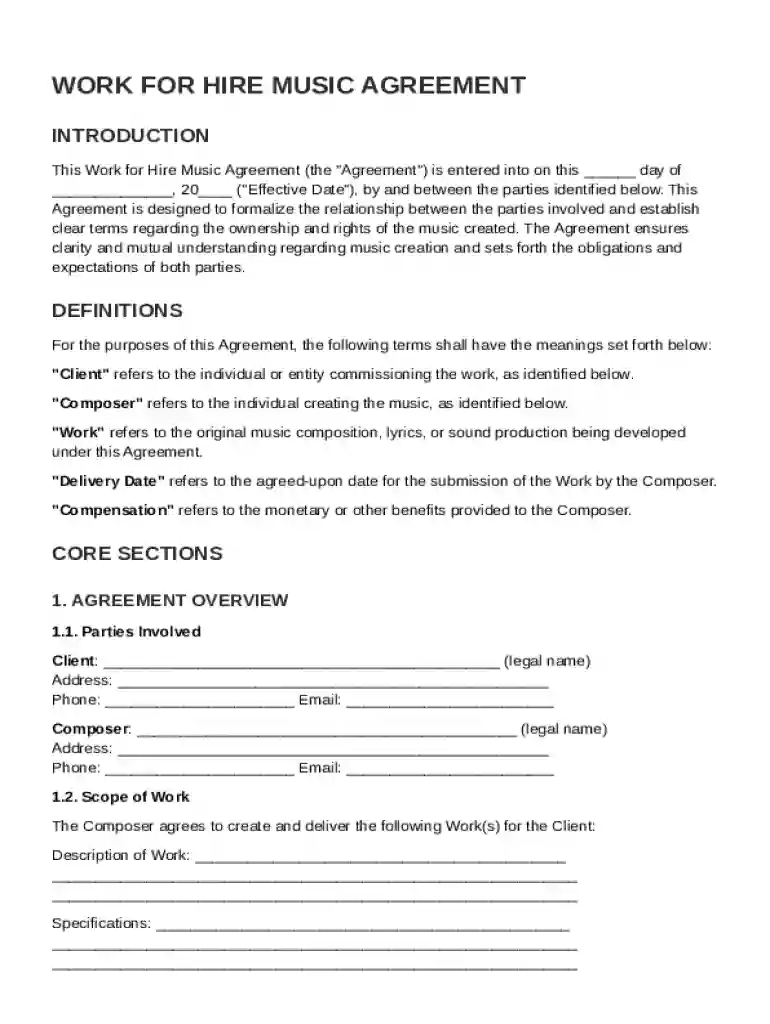
The Work for Hire Music Agreement Template is a legally binding contract between a client and a composer, where the composer creates original music intended to be a 'work for hire'. This means the client holds the rights to the music, transferring ownership from the composer. The primary purpose of this agreement is to clearly delineate the expectations, obligations, and rights of both parties, ensuring smooth collaboration and proper compensation while respecting the legal framework governing intellectual property in the United States.
A comprehensive Work for Hire Music Agreement Template includes several critical components:
Each of these elements is crucial for providing a clear framework of collaboration, reducing potential disputes.
The template serves as a starting point to outline the terms between the client and the composer. It can be customized to fit the specific needs of the project or legal requirements. Here's how to effectively use it:
Completing this agreement involves several important steps:
This template is predominantly used by:


The agreement adheres to legal standards, particularly concerning intellectual property rights and contractual obligations in the U.S. By formally recording the transfer of rights and agreement conditions, the template mitigates legal risks and aids in dispute resolution. Users must ensure the template's adherence to both federal and state laws.
Understanding the terminology within the agreement is essential:
Each term plays a crucial role in defining the agreement's legal boundaries and expectations.
While this template generally adheres to U.S. federal law, variations might exist based on state-specific rules:
It is essential to adjust the agreement to comply with the relevant state laws where the contract is executed.
At DocHub, your data security is our priority. We follow HIPAA, SOC2, GDPR, and other standards, so you can work on your documents with confidence.




For good and valuable consideration, the parties agree as follows: 1. TITLE AND ASSIGNMENT: Any and all works created by Artist pursuant to this. Agreement (
Producer engages Engineer to perform studio engineering services in connection with the audio recording of the work,. (Name of Title) by. (Name of Author) (the.


