
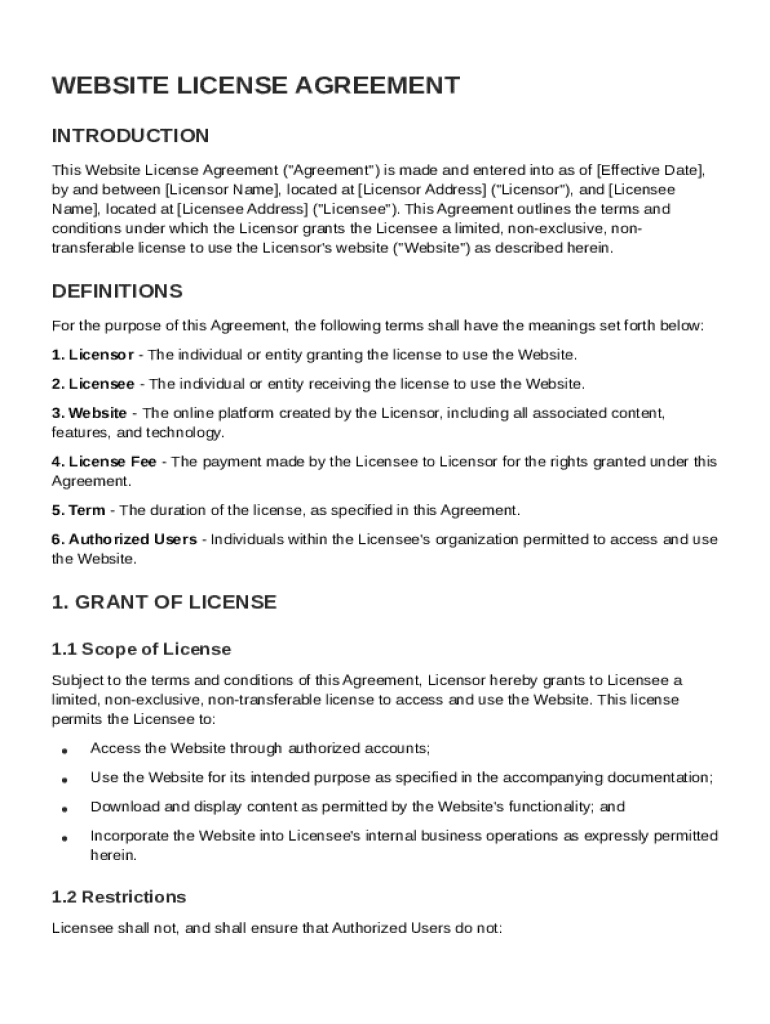







Key Elements of the Website License Agreement Template
The Website License Agreement Template establishes the terms and conditions under which a website license is granted. It typically includes the following key elements:
-
License Grant: Outlines the scope of the license, often as a limited, non-exclusive, and non-transferable right to use the website. This section may specify what the licensee can and cannot do with the website.
-
Payment and Fees: Details any associated costs, such as license fees, and the payment schedule. This section ensures both parties agree on financial obligations.
-
Term and Termination: Defines the duration of the license and conditions under which it can be terminated by either party. This includes scenarios like breach of terms or mutual agreement.
-
Intellectual Property Rights: Clarifies that all rights to the website remain with the licensor, and the licensee doesn't gain ownership. This often includes trademarks and copyrighted material.
-
Confidentiality: Obligates the licensee to maintain the confidentiality of certain information, protecting proprietary or sensitive data from disclosure.
How to Use the Website License Agreement Template
Using the Website License Agreement Template effectively requires understanding the template's structure and customization options:
-
Review: Start by thoroughly reading the template to understand its provisions and how they apply to your specific situation.
-
Customize: Modify the template to reflect the particular terms of your agreement. This includes specifying the parties, adjusting the scope of the license, and setting payment terms.
-
Consultation: Consider seeking legal advice to ensure the agreement accurately protects your interests and complies with applicable law.
-
Distribution: Once finalized, both parties should review and sign the agreement. Keep copies for your records and distribute them as necessary for reference.
Steps to Complete the Website License Agreement Template
Completing the Website License Agreement Template involves several steps to ensure all legal and operational aspects are covered:
-
Information Gathering: Collect necessary details, such as the licensor and licensee names, website description, and any specific terms.
-
Template Modification: Adjust the template to fit the gathered information, ensuring modifications align with both parties' intentions.
-
Review: Conduct a comprehensive review to catch inconsistencies or gaps. This may involve cross-checking with related agreements or consultations with legal advisors.
-
Approval and Signatures: Obtain signatures from authorized representatives of both parties. Electronic signatures can be used if both parties agree, ensuring legal validity.
-
Storage and Distribution: Store copies in a secure location, and distribute approved versions to relevant stakeholders.
Who Typically Uses the Website License Agreement Template
The Website License Agreement Template is used by various entities that engage in licensing website use:
-
Web Developers and Designers: Protect their intellectual property when licensing websites to clients.
-
Businesses: Utilize the template when acquiring rights to use a website owned by another entity.
-
Content Creators: Define terms when allowing others to use their online platforms or content under specific conditions.
-
Legal Professionals: Aid clients in drafting agreements that protect their online assets during licensing arrangements.


Legal Use of the Website License Agreement Template
Understanding the legal framework governing the Website License Agreement Template is crucial for compliance:
-
ESIGN Act Compliance: Ensures electronic signatures are valid. Agreements created using this template can be legally binding if executed correctly.
-
Governing Law: Specified within the agreement to determine which jurisdiction's laws apply to the contract, impacting how disputes are resolved.
-
Regulatory Compliance: Ensure the agreement complies with relevant state and federal regulations, protecting both parties' interests.
Important Terms Related to the Website License Agreement Template
Familiarity with key terms enhances comprehension of the Website License Agreement Template:
-
"Licensor": The owner of the website who grants the license.
-
"Licensee": The party receiving the rights to use the website.
-
"Non-Exclusive License": Allows the licensor to grant similar licenses to other parties.
-
"Termination Clause": Outlines conditions for ending the agreement, crucial for managing risk and expectations.
State-Specific Rules for the Website License Agreement Template
While the template provides a standard format, state-specific laws may influence its content and execution:
-
Variations in Contract Law: Different states have unique requirements for contract formation and enforcement, which may necessitate adjustments to the template.
-
Consumer Protection Laws: States may have specific statutes protecting consumers in licensing agreements, impacting enforceability.
-
Business Licensing Requirements: Licensing agreements may need to meet state-specific business licensing regulations.
Examples of Using the Website License Agreement Template
Real-world scenarios showcase the practical application of the Website License Agreement Template:
-
Tech Start-Up: A start-up licenses a website for internal use, customizing the agreement to include terms for software integration and user access limits.
-
Educational Institution: A university licenses a student-developed website for educational purposes, incorporating clauses related to student privacy and data usage.
-
E-commerce Business: An online retailer licenses a website template for their shopfront, utilizing a customized agreement to ensure compliance with their e-commerce operation standards.




