
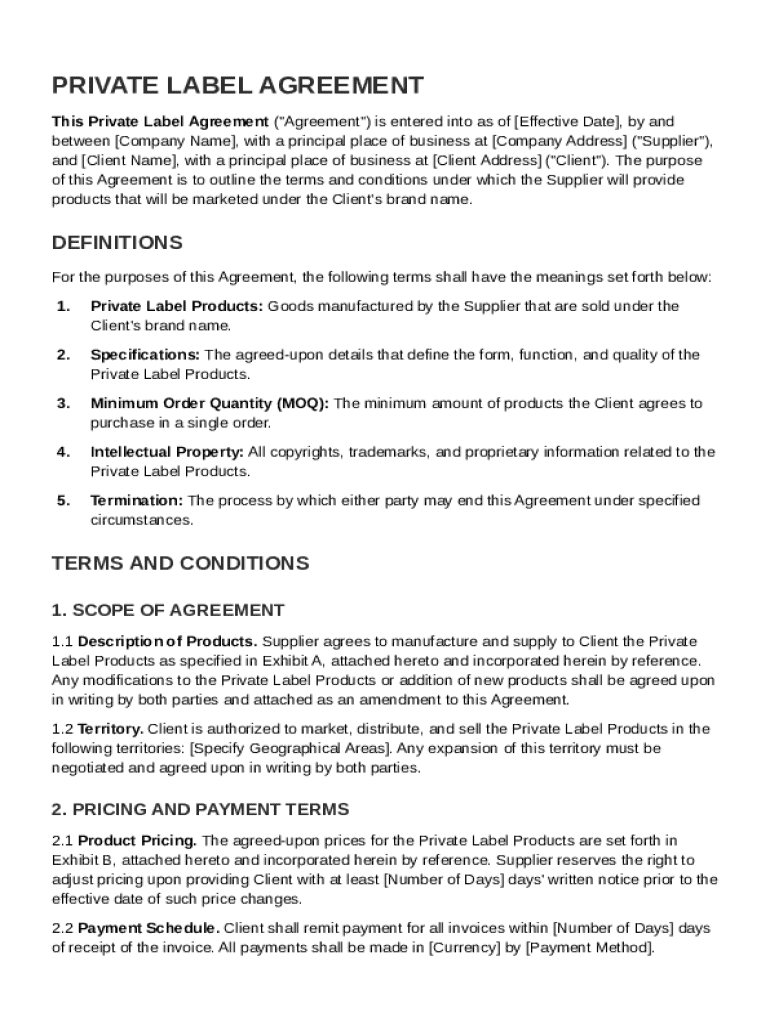







Definition and Purpose
A private label contract template is a standardized agreement used between a supplier and a client for manufacturing and marketing products under the client's brand name. This contract outlines various terms and conditions necessary for the partnership, facilitating clear communication and legal protection for both parties. It involves setting expectations regarding the scope of work, pricing, payment structures, and intellectual property rights.
Components of the Agreement
- Scope of Agreement: Defines the boundaries of what each party agrees to undertake, clarifying roles and responsibilities.
- Pricing and Payment Terms: Details pricing structures, payment schedules, and conditions for financial transactions.
- Intellectual Property Rights: Protects the client's brand and design elements, ensuring the supplier acknowledges these rights.
Real-world scenarios where these components play a crucial role include clarifying the extent of a supplier's manufacturing duties or protecting a client's brand designs from unauthorized use by the supplier.
How to Use the Private Label Contract Template
Utilizing a private label contract template involves several strategic steps to ensure its effectiveness and legal standing. It serves as a blueprint, streamlining the creation of a detailed agreement tailored to specific business relationships.
Steps to Customize the Template
- Review Terms: Begin by carefully reading each section of the template to understand the default terms.
- Modify Details: Adjust specifics such as party names, pricing, delivery schedules, and jurisdiction clauses to fit the unique business situation.
- Include Additional Clauses: Depending on industry standards or specific business needs, additional clauses may be necessary, such as exclusivity agreements or special quality standards.
Practical examples include modifying a delivery schedule to align with seasonal demand or adding a confidentiality clause for sensitive market strategies.
Key Elements of the Private Label Contract Template
The key elements of a private label contract template define the operational framework of the agreement. Understanding these components ensures both parties have aligned expectations and responsibilities.
Core Sections
- Quality Assurance Standards: Specifies the quality levels products must meet, including testing procedures and compliance with industry regulations.
- Confidentiality Obligations: Outlines measures to protect confidential information exchanged during the business relationship.
- Termination Conditions: Details the grounds upon which the contract can be terminated by either party, including notice periods and repercussions.
These elements are critical in maintaining product integrity and safeguarding sensitive business information, especially in sectors where brand reputation is paramount.
Steps to Complete the Private Label Contract Template
Completing a private label contract template involves precise steps to ensure all necessary information is accurately represented, protecting both parties' interests.
Detailed Completion Process
- Gather Information: Collect all necessary details such as contact information, product specifications, and financial terms.
- Complete Each Section: Methodically fill in each part of the template, ensuring accuracy in legal and operational details.
- Consult Legal Advisors: Engage legal professionals to review the completed contract, ensuring compliance with local laws and industry standards.
For instance, ensuring that all financial aspects are clearly documented prevents any future disputes related to payment terms or financial obligations.
Legal Use of the Private Label Contract Template
A well-drafted private label contract upholds legal standards, offering protection and enforceability to the agreement. Understanding how to legally apply the template is essential for its successful implementation.
Legal Considerations
- Compliance with Laws: Ensure that the contract adheres to all relevant legal requirements and industry regulations both locally and nationwide.
- Enforcement: The contract should clearly state the jurisdiction and legal mechanisms for resolving disputes.
- Amendment Procedures: Include clauses that allow for agreement modifications under mutual consent.
Examples of legal considerations include ensuring compliance with federal trade regulations or understanding jurisdictional laws that affect the enforceability of the contract.
Important Terms Related to Private Label Contract Template
Familiarity with the terminology used within a private label contract is crucial for comprehending the rights and obligations bestowed by the agreement. Clear understanding avoids potential misinterpretations that could affect business operations.
Common Terms
- Minimum Order Requirements: Defines the smallest quantity of product orders permissible under the agreement.
- Liability Limitations: Sets boundaries on the amount or type of damage a party can be held responsible for.
- Dispute Resolution Processes: Details preferred methods for resolving conflicts, such as mediation or arbitration.
Grasping the importance of these terms aids in effectively negotiating contract elements and setting realistic expectations for partnership outcomes.
Software Compatibility and Digital Considerations
When creating and managing contract documents, understanding software compatibility is vital for ensuring ease of use and data integrity. DocHub's integration aids in this area efficiently.
Ensuring Compatibility
- Supported Formats: DocHub accommodates diverse file types including PDF, DOC, and TXT, ensuring seamless workflow integration.
- Cloud Storage Sync: Files can be accessed and modified via Google Drive or Dropbox, maintaining document integrity across platforms.
- Digital Signing: Electronic signatures within DocHub are legally binding, simplifying the signing process for parties involved globally.
These features provide practical solutions for businesses that need to manage and execute contracts promptly while navigating the digital landscape.
State-Specific Considerations for Private Label Contracts
In the United States, state-specific laws can influence how private label contracts are drafted, enforced, and interpreted. Awareness of these differences is crucial for compliance.
Navigating State Variations
- Jurisdictional Clauses: Depending on the state, clauses on jurisdiction may vary, influencing where legal disputes are resolved.
- Regulatory Compliance: Some states may have additional regulations affecting the terms of business transactions or consumer protections.
- State Taxes and Levies: Understanding state-specific tax implications can affect financial aspects of the agreement.
For example, a business operating in California may need to comply with stricter consumer protection laws compared to other states, impacting how contracts are structured and enforced.




