




Definition & Meaning
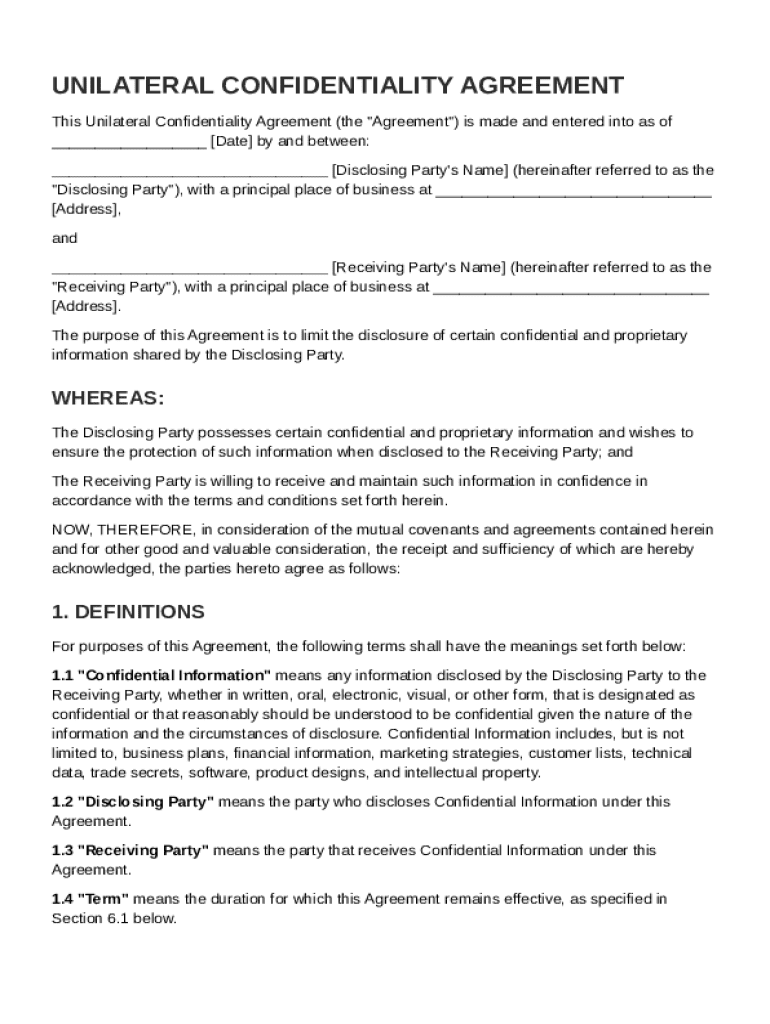
A Unilateral Confidentiality Agreement Template is a legal document used to protect sensitive information that one party, known as the Disclosing Party, shares with another, the Receiving Party. This template sets out the conditions under which the information may be used, primarily ensuring it is only utilized for specified purposes and kept confidential. Typically, the document includes provisions about the proprietary nature of the information, exceptions to confidentiality obligations, and the rights of termination. This agreement clarifies that no transaction will occur unless a definitive contract is completed, ensuring both parties recognize their responsibilities and limits. In contexts such as business negotiations or product development discussions, this template is invaluable in safeguarding trade secrets and proprietary data.
Key Elements of the Unilateral Confidentiality Agreement Template
The template covers several critical components to ensure comprehensive protection of confidential information:
- Definitions of Confidential Information: Clearly specifies what constitutes confidential information to avoid ambiguity.
- Obligations of the Receiving Party: Details the duty of the Receiving Party to protect the information and not disclose it unauthorizedly.
- Permitted Use: Outlines the specific purposes for which the information can be used.
- Duration of Confidentiality: States the period during which the confidentiality obligations exist, which might extend beyond the termination of the agreement.
- Exceptions: Lists scenarios where confidentiality obligations do not apply, such as information already in the public domain or obtained independently by the Receiving Party.
- Ownership Rights: Asserts the Disclosing Party's ownership of the information.
How to Use the Unilateral Confidentiality Agreement Template
- Download the Template: Obtain the template in a compatible file format (e.g., DOC, PDF) from a trusted platform like DocHub.
- Identify the Parties: Clearly state the names and contact information of both the Disclosing and Receiving Parties.
- Detail the Confidential Information: Accurately describe what specific information is considered confidential under this agreement.
- Customize Usage Terms: Modify the template to reflect the specific purpose for which the confidential information is shared and any particular obligations.
- Set Timeframes: Establish the confidentiality period and any relevant timelines for the information's use.
- Include Exceptions and Termination Clauses: Adapt sections that specify exceptions to confidentiality and the rights of termination to suit the specific agreement context.
- Review and Execute: Both parties should thoroughly review the terms, negotiate adjustments if required, and formally sign the document.
Important Terms Related to the Unilateral Confidentiality Agreement Template
- Disclosing Party: The entity providing the confidential information.
- Receiving Party: The entity receiving the information and agreeing to keep it secret.
- Confidential Information: Data, knowledge, or material deemed proprietary and protected under the agreement terms.
- Indemnification: A clause that may provide protection against loss or damage caused by a breach of confidentiality.
- Non-Disclosure: Another term often used interchangeably with confidentiality, emphasizing the obligation not to reveal shared information.
Legal Use of the Unilateral Confidentiality Agreement Template
Legally, this template serves to formalize the intent to keep specified data confidential, providing a contractual basis for recourse if terms are violated. It supports compliance with U.S. business norms, safeguarding intellectual property and sensitive business details during negotiations, partnerships, or when engaging consultants. By clearly defining legal obligations, expectations, and potential liabilities, this template helps prevent disputes and ensures both parties comply with their obligations, maintaining trust in professional relationships.
Examples of Using the Unilateral Confidentiality Agreement Template
- Startup Collaborations: Protecting innovative ideas when pitching to investors or seeking partnerships.
- Outsourcing Projects: Securing proprietary methodologies or client lists shared with third-party service providers.
- Employment Contracts: Safeguarding strategies and trade secrets when onboarding new employees.
- Business Mergers: Ensuring that private company data remains confidential during merger discussions.
Steps to Complete the Unilateral Confidentiality Agreement Template
- Read Through the Template: Familiarize yourself with each section and its implications.
- Fill in Party Details: Include all relevant contact information and roles of the Disclosing and Receiving Parties.
- Specify the Information: Clearly demarcate the scope of what is considered confidential.
- Agree on Terms: Discuss and adjust the usage terms, duration of confidentiality, and exceptions as needed.
- Legal Review: Seek legal counsel to assess risks, adequacy, and compliance with applicable laws.
- Execute: Have both parties sign the agreement electronically or in writing, as part of a standard business practice.
Who Typically Uses the Unilateral Confidentiality Agreement Template
This template is often utilized by:
- Businesses and Corporations: To protect trade secrets during exploratory talks or transactions.
- Startups and Entrepreneurs: To safeguard innovative ideas while seeking investment.
- Consultants and Freelancers: When engaging with clients who share sensitive proprietary information.
- Researchers: In academic or corporate settings, to protect confidential research findings.

State-Specific Rules for the Unilateral Confidentiality Agreement Template
Different U.S. states may have specific statutes that impact the enforceability of confidentiality agreements. Familiarizing yourself with local laws regarding trade secret protection and employee confidentiality obligations is crucial. For instance, California has unique provisions that affect non-compete and confidentiality claims, influencing how these agreements are structured to comply with state legislation. Consulting a legal professional knowledgeable in state-specific regulations can help tailor the agreement to be legally binding and enforceable in the relevant jurisdiction.