






Definition and Purpose of the Homeowner Contractor Agreement Template
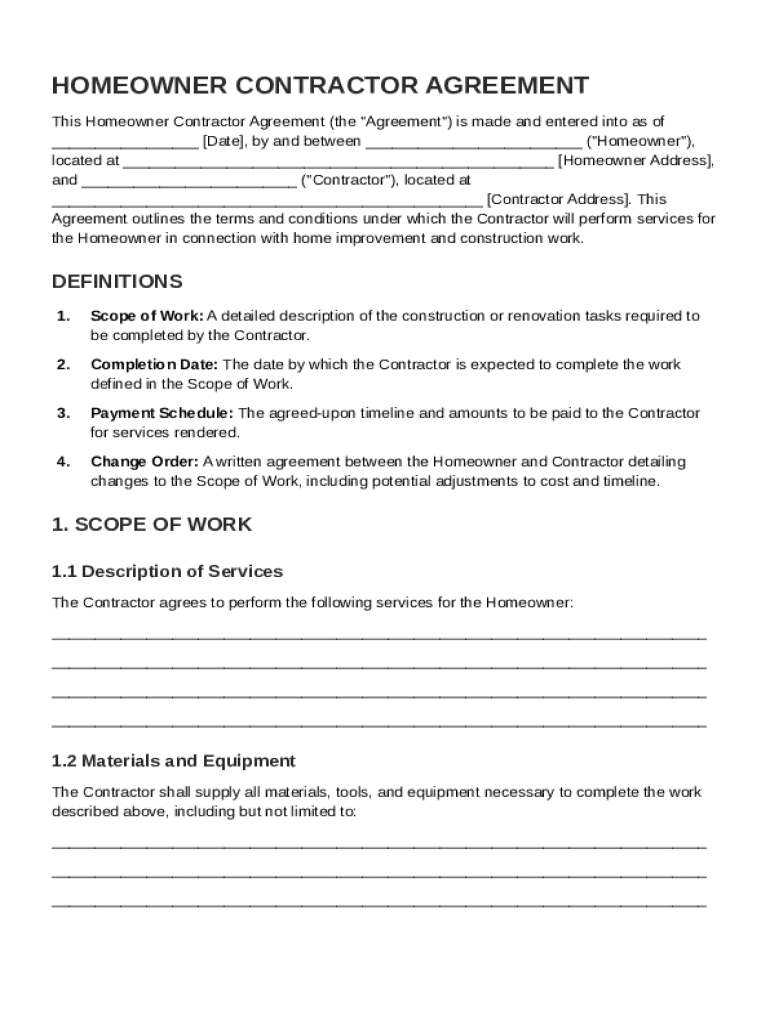
The Homeowner Contractor Agreement Template is a legal document designed to outline the terms and conditions under which a contractor will perform construction or home improvement services for a homeowner. This agreement includes essential details such as the project scope, payment terms, and responsibilities of both parties. The aim is to ensure clarity, prevent misunderstandings, and provide a legal framework for resolving any disputes that may arise during the project.
- Scope of Work: Clearly defines the tasks the contractor is responsible for completing as part of the project. This section ensures both parties have a mutual understanding of the work to be done.
- Payment Terms and Schedules: Details how and when payments will be made throughout the project. This can include advance payments, installments, and final payments upon completion.
- Responsibilities and Obligations: Outlines the specific duties of both the homeowner and the contractor. This includes any permits or insurance the contractor must maintain and the homeowner's responsibility for providing access to the property.
How to Use the Homeowner Contractor Agreement Template
To effectively use the Homeowner Contractor Agreement Template, follow a structured approach to customize it according to the specific requirements of your project:
- Identify Parties Involved: Start by clearly identifying both the homeowner and the contractor, including full names and contact information.
- Define Project Scope and Timelines: Provide a detailed description of the work and establish deadlines. Ensure all tasks are described to avoid potential disputes.
- Outline Payment Details: Specify the total cost, payment schedule, and any conditions related to payment. Consider including penalties for late payment or project delays.
- Specify Responsibilities: Detail the homeowner's and contractor's responsibilities, such as site preparation by the homeowner or cleanup by the contractor.
- Include Termination and Dispute Resolution Clauses: Specify under what conditions the agreement may be terminated and outline the process for resolving any disputes.
Key Elements of the Homeowner Contractor Agreement Template
The Homeowner Contractor Agreement Template is comprehensive, covering several key elements that ensure all aspects of the contractual relationship are addressed:
- Identification of Parties: Contact details and addresses for both the homeowner and contractor.
- Scope of Work: A detailed list of tasks and deliverables expected from the contractor.
- Payment Terms: The total project cost, payment schedule, and methods of payment accepted.
- Project Timeline: Start and end dates, including milestones and deadlines.
- Termination Clause: Conditions under which the contract can be terminated by either party.
- Dispute Resolution Process: Steps to be taken if a disagreement arises, which may include mediation or arbitration.
Important Terms Related to Homeowner Contractor Agreement Template
Understanding the terminology used within the Homeowner Contractor Agreement is crucial for both homeowners and contractors:
- Change Order: A formal amendment to the contract, outlining changes to the scope or cost.
- Lien Waiver: A document offering assurance that the contractor will not place a lien on the property for unpaid services or materials.
- Retainage: A percentage of the contract price withheld until the project is completed satisfactorily.
Legal Use of the Homeowner Contractor Agreement Template
Legally, the Homeowner Contractor Agreement serves to protect both parties by providing a clear record of the terms agreed upon:
- Legally Binding Contract: Once signed, the agreement is legally enforceable in court.
- Compliance with State Laws: Tailor the agreement to comply with local laws concerning construction and home improvements.
- Disclosure Requirements: Ensure all necessary disclosures are made, such as any known hazards or violations that could affect the project.
Steps to Complete the Homeowner Contractor Agreement Template
Completing the template requires attention to detail to ensure accuracy and completeness:
- Gather Necessary Information: Collect all relevant details about the project, payments, and parties involved.
- Fill Out the Template: Input information in the appropriate sections of the template, ensuring clarity and precision.
- Review and Revise: Both parties should review the agreement for accuracy and mutual agreement.
- Sign and Date the Agreement: The document must be signed and dated by both the homeowner and contractor to become legally binding.
Examples of Using the Homeowner Contractor Agreement Template
The template can be applied to various scenarios, providing flexibility in its use:
- Home Renovations: Used for projects like kitchen renovations, bathroom updates, or room additions.
- New Home Constructions: Applicable for comprehensive projects like building a new home from scratch.
- Minor Repairs and Maintenance: Suitable for smaller projects such as roof repairs, painting, or landscaping.
State-Specific Rules for the Homeowner Contractor Agreement Template
Different states have varying requirements and regulations concerning contractor agreements:
- Licensing Requirements: Some states require contractors to be licensed, which should be verified before entering an agreement.
- Consumer Protection Laws: States may have laws protecting homeowners from deceptive practices, influencing contract terms.
- State-Specific Clauses: Certain states may mandate specific clauses within the agreement, like cancellation rights or arbitration clauses.