




Definition & Meaning
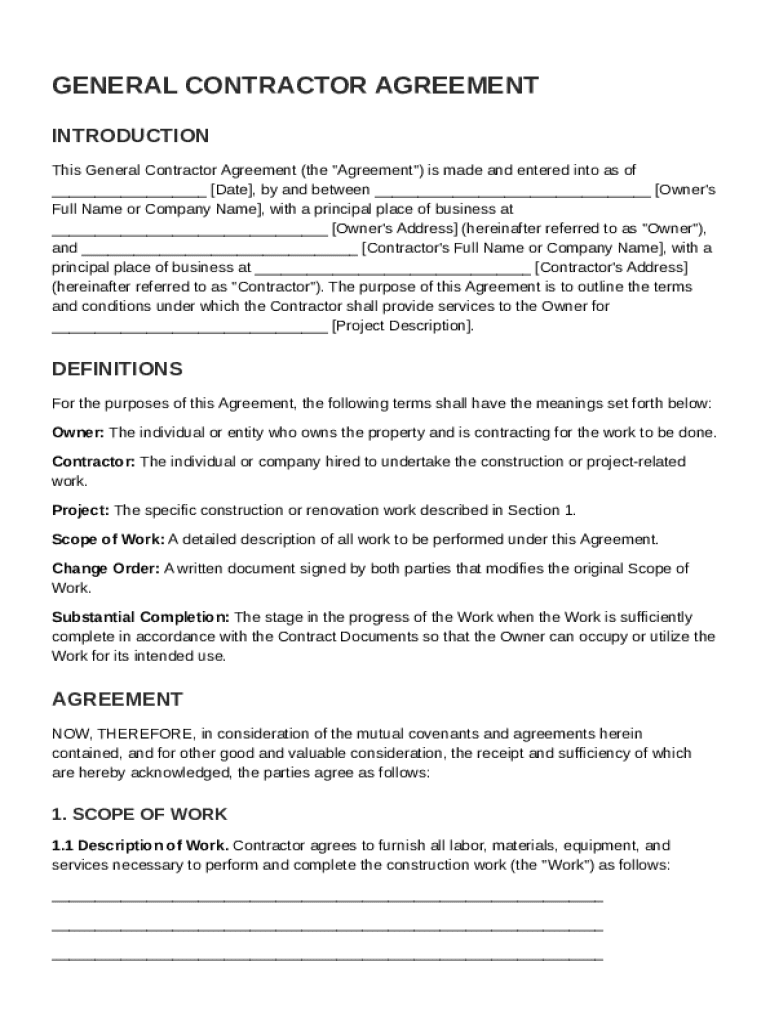
The General Contractor Agreement Template is a legal document that outlines the specific terms and conditions under which a contractor will perform construction or renovation work for an owner. This agreement provides comprehensive guidelines on the scope of the project, detailing the obligations and responsibilities of each party involved. It ensures that all parties have a clear understanding of the work to be performed, timelines, costs, and procedures, thus minimizing potential disputes and project delays.
Key Components
- Parties Involved: Defines who the contracting parties are, including their contact information and official titles.
- Project Scope: Specifies the detailed work to be completed, including architectural designs, materials to be used, and quality standards.
- Payment Terms: Details the payment schedule, including installments, milestone payments, and any penalties for late payments.
- Timeline: Establishes the start and completion dates, as well as any key milestones that must be met during the project.
Key Elements of the General Contractor Agreement Template
A thorough General Contractor Agreement Template consists of several critical elements that establish the legal and operational framework for a construction project.
Major Clauses
- Responsibilities: Lists the duties of both the contractor and the owner, such as site preparation, adherence to construction schedules, permits, and approvals.
- Warranties: Outlines any guarantees regarding the quality and durability of materials used or the workmanship involved.
- Insurance Requirements: Specifies the types of insurance required, including liability and workers’ compensation.
Additional Provisions
- Termination Clauses: Describes the conditions under which the project can be terminated, either by breach of contract or mutual agreement.
- Dispute Resolution: Defines the methods for resolving disagreements, such as mediation, arbitration, or litigation.
How to Use the General Contractor Agreement Template
Using a General Contractor Agreement Template effectively involves understanding the needs of your project and ensuring all relevant details are correctly filled out.
Steps to Follow
- Customize the Template: Adapt the template to fit the specific details of your project by filling in information like parties' names, project description, and timelines.
- Review Clauses: Carefully evaluate each section, particularly regarding payment terms and responsibilities, to ensure they align with your expectations.
- Seek Legal Advice: It’s advisable to have the document reviewed by a legal expert to avoid potential legal issues.
Practical Example
For a residential renovation project, include details like room layouts, types of materials, and specific deadlines for each stage of the work. This detailed customization ensures both parties have the same expectations.
Important Terms Related to the General Contractor Agreement Template
Understanding key phrases and terminology within the General Contractor Agreement is necessary to ensure clarity and compliance with legal and industry standards.
Common Terms
- Subcontractor: An individual or business hired by the contractor to perform part of the work outlined in the agreement.
- Change Order: A formal document that outlines modifications or adjustments to the original contract’s scope of work.
- Indemnity: A provision that requires one party to compensate the other for any harm, liability, or loss resulting from the project.
Clarifications
- Force Majeure: A clause that frees both parties from liability or obligation when an extraordinary event beyond their control occurs.
- Retainage: A percentage of the agreed contract price deliberately withheld until the project completion to ensure contractors’ obligations are fulfilled.
State-Specific Rules for the General Contractor Agreement Template
Contract laws and regulations related to construction can vary significantly from one state to another in the U.S., affecting contractor agreements.
Examples of Variations
- Lien Laws: State-specific regulations dictating the procedures and timelines for filing a lien, which protects the contractor’s right to payment if the owner fails to pay as agreed.
- License Requirements: Different states have varying licensing necessities for general contractors, impacting who can legally undertake certain projects.
California vs. Texas
In California, contractors must follow specific protocols for disclosure of changes in project scope, while in Texas, termination clauses might need particular emphasis due to local practices.
Legal Use of the General Contractor Agreement Template
The legal enforceability of a General Contractor Agreement Template is contingent upon several factors, including compliance with applicable laws and fulfillment of all procedural requirements.
Ensuring Legality
- Signatures: Both parties must sign the agreement for it to be legally binding.
- Compliance: Must adhere to federal, state, and local laws regarding construction practices, employment, and environmental regulations.
- Record Keeping: Maintain copies of the agreement and any related amendments for a designated period as required by law.
Case Study
In a notable court case in Florida, the ruling centered around the enforceability of an unsigned contractor agreement. The court ruled that without signatures, the document was not binding, underlining the importance of adhering to procedural norms.
Who Typically Uses the General Contractor Agreement Template
This template is widely utilized by various parties within the construction industry to formalize agreements and set project expectations.

Key Users
- Real Estate Developers: Utilize the agreement to establish terms for projects ranging from single-family homes to multi-unit complexes.
- Homeowners: Employ these contracts when engaging a contractor for renovations or new construction to safeguard interests.
Use in Commercial Projects
In commercial developments, larger-scale contractors often rely on these documents to ensure clear communication and adherence to project specifications among all parties involved.
Steps to Complete the General Contractor Agreement Template
Completing a General Contractor Agreement Template involves several methodical steps to ensure accuracy and completeness.
Process Overview
- Gather Information: Collect all relevant details, including project scope, timelines, and budget estimates.
- Fill in Details: Precisely input the information into the template, ensuring all fields are completed accurately.
- Review: Proofread the document to ensure no critical details are missing and that all information is correct.
Detailed Steps
- Initial Meeting: Discuss initial terms and clarify project details with the contracting party.
- Draft Agreement: Utilize the template to create the first draft of the agreement.
- Consult Legal Counsel: Have the agreement reviewed by a lawyer for legal compliance.
- Finalize and Sign: Once all parties agree to the terms, sign the document to formalize the agreement.
By following these steps, users can create a comprehensive and legally binding General Contractor Agreement that meets all necessary requirements.